Aaron's beard
Hypericum calycinum L.
Aaron’s beard spreads through underground stems, forming a low cover rather than a single upright bush. Its foliage can remain evergreen in mild winters, while colder conditions may kill the stems back to ground level. New growth returns in spring and carries the season’s flowers. NC State Extension: Hypericum calycinum
Botanical name
Hypericum calycinum L. is accepted by Kew in Hypericaceae, matching the catalog species. Kew POWO: Hypericum calycinum
Recognizing the plant
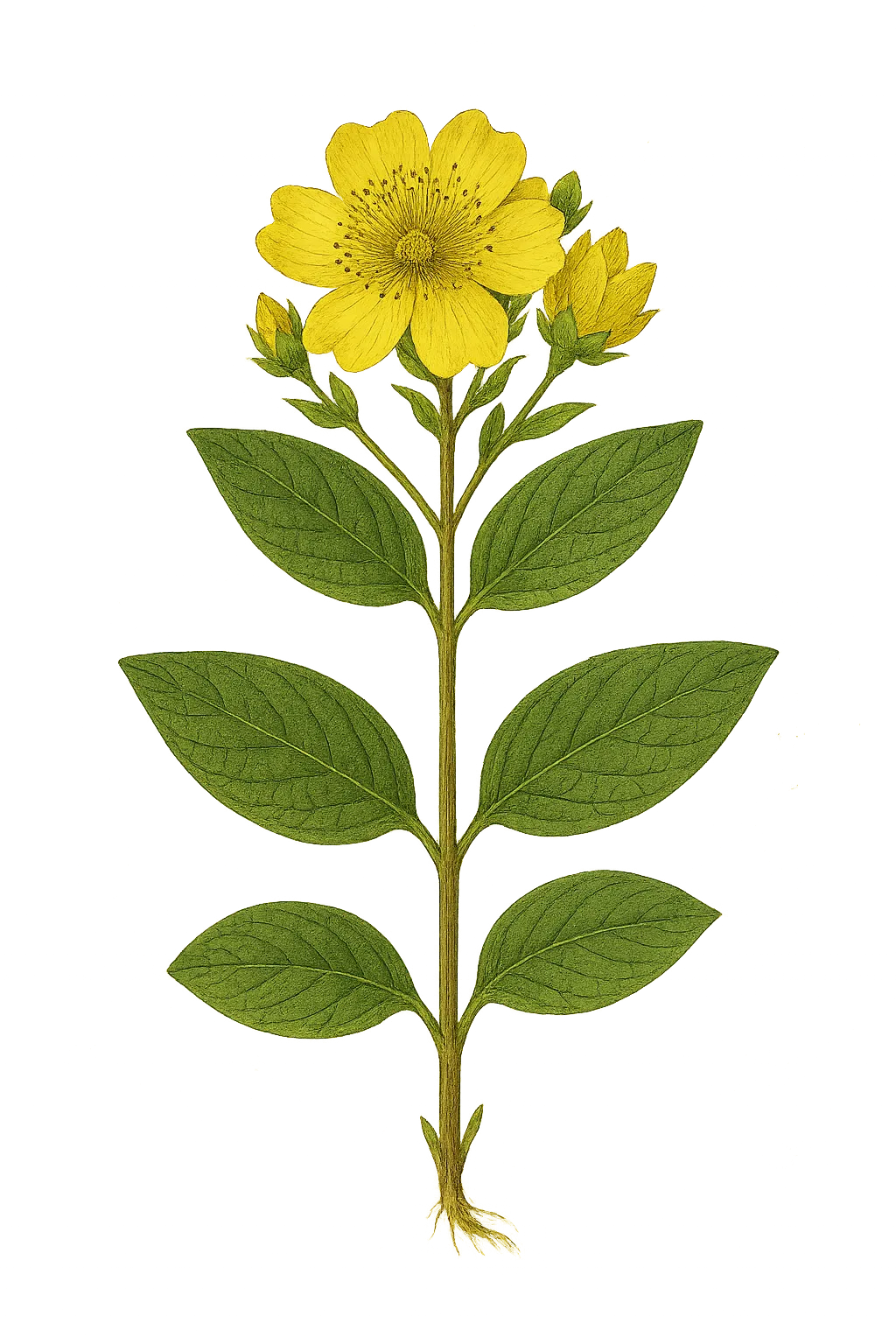
Broad oval to oblong leaves sit opposite one another or occasionally in whorls. Their upper surfaces are green and the undersides can appear bluish; autumn foliage may acquire purple tones. Large yellow flowers occur singly or in small groups. Five petals spread around a conspicuous mass of upright stamens, giving the centre a brushlike appearance. Young stems have ridges or angles that become less pronounced as they age. NC State Extension: Hypericum calycinum
Bloom window
North Carolina cultivation account
Summer is the principal flowering season recorded by the extension account. NC State Extension: Hypericum calycinum
Native range
Its native range is comparatively restricted, from southeastern Bulgaria into northwestern and northern Türkiye. Kew records introductions in several other European countries, New Zealand, Tasmania and Transcaucasia. In cultivation it tolerates shade, but flowers more freely with sun. Kew POWO: Hypericum calycinumNC State Extension: Hypericum calycinum
Ecological relationships
The extension account records butterfly attraction, without specifying the visiting species. NC State Extension: Hypericum calycinum
Botanical sources
Reviewed 2026-10-11. Seasonal development varies with location and growing conditions.