abelia
Abelia R.Br.
A genus overview; characteristics vary between its species.
Abelia is a small Asian genus in the honeysuckle family, with six species recognised by Kew. Its flowers range from white to purple-pink and may be fragrant or unscented. After flowering, the calyx remains attached to the slender dry fruit, contributing to its wind dispersal. Kew POWO: AbeliaLandrein and Farjon monograph via Kew: Abelia
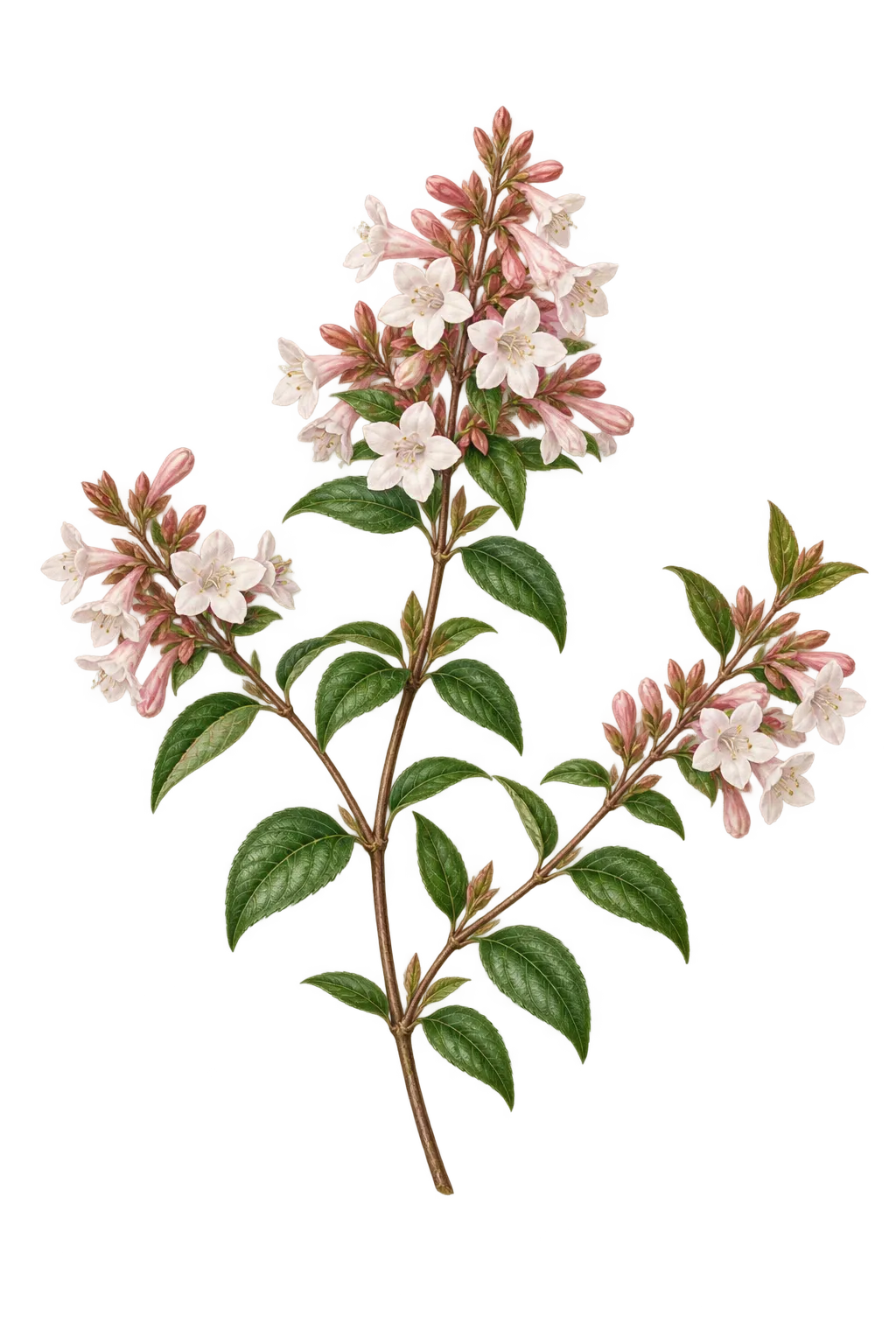
Botanical name
Abelia R.Br. is an accepted genus in Caprifoliaceae. This account retains the catalog’s genus rank. Kew POWO: Abelia
Recognizing the plant
The Kew monograph describes densely branched shrubs, deciduous to semi-evergreen, reaching about two metres. Leaves generally stand in opposite pairs, with some shoots carrying whorls of three or four. Brownish-grey bark develops lengthwise fissures. The flowers may stand alone, occur in pairs that open successively, or gather into denser clusters near shoot tips. Their five-lobed corollas range from funnel-like to bell-like, sometimes with orange markings inside. Surrounding them are commonly two or five reddish calyx lobes. Four stamens arise within the corolla tube, sometimes projecting well beyond its mouth. Landrein and Farjon monograph via Kew: Abelia
Native range
The genus is native from China into Vietnam and from Japan’s Nansei Islands to Taiwan. Kew’s treatment brings together mainland and island species within this eastern Asian distribution. Kew POWO: Abelia
Botanical sources
Reviewed 2026-10-11. Seasonal development varies with location and growing conditions.