Abert's buckwheat
Eriogonum abertianum Torr.
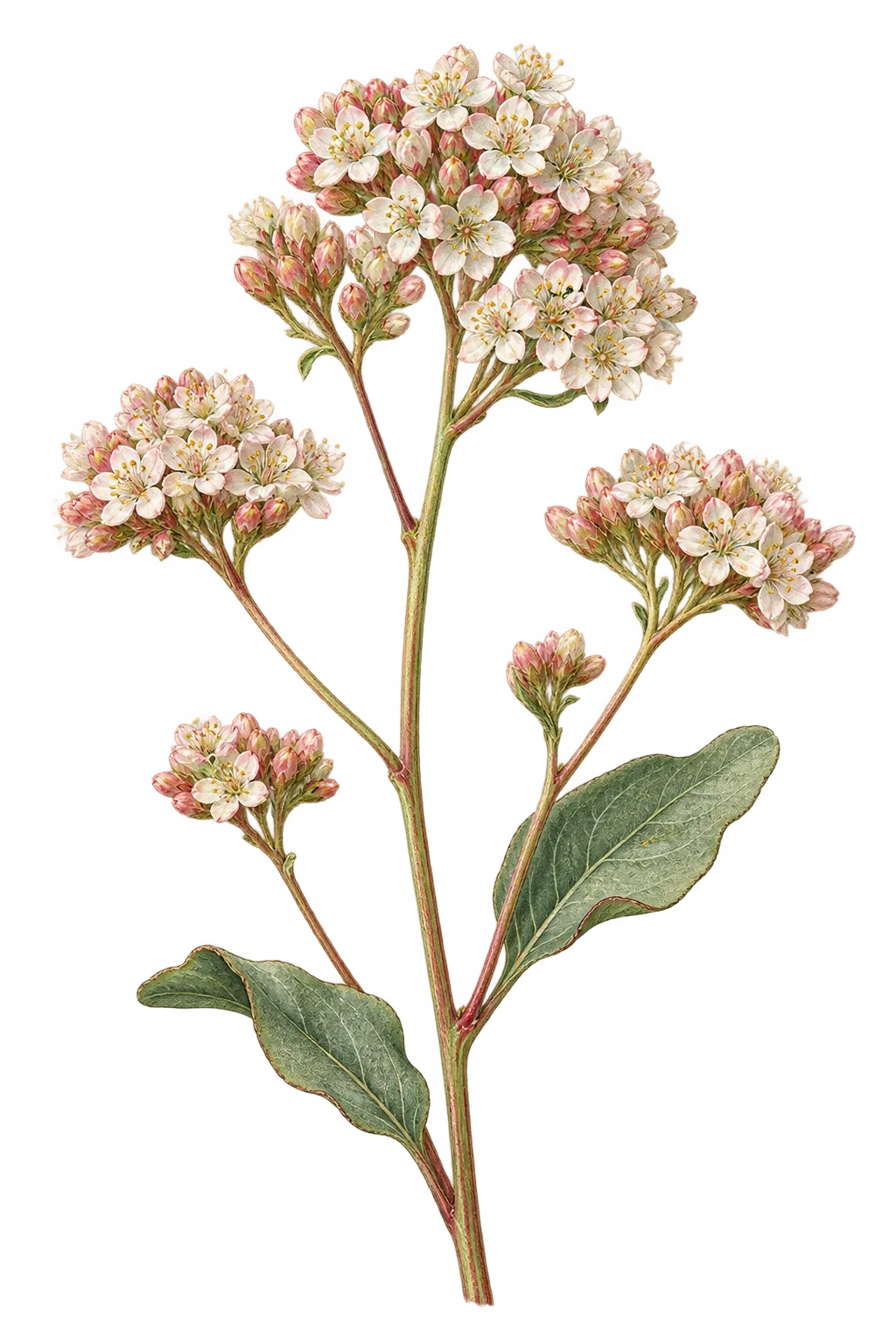
Abert’s buckwheat is an annual with branching, hairy stems that may stand upright or spread near the ground. In Arizona plants, the stem bases can be reddish. Long stalks carry rounded clusters of small flowers, giving the plant an open, airy outline rather than a single compact flowering head. University of Arizona Extension: Eriogonum abertianum
Botanical name
Eriogonum abertianum Torr. is an accepted species in Polygonaceae in the Flora of North America and ITIS treatments. This profile covers the species as a whole. ITIS: Eriogonum abertianum
Recognizing the plant
Basal leaves are broadly oval, while leaves on the stems tend to be narrower. The flowers measure only about 3–4.5 mm long. They begin white or pale yellow and develop rose or red tones with age, so one plant may display several shades at once. Each flower has six petal-like segments: the outer ones are rounded to heart-shaped, while the inner ones are narrower. The stamens usually project beyond them. Small brown, lens-shaped dry fruits follow the flowers. Flora of North America: Eriogonum abertianumUniversity of Arizona Extension: Eriogonum abertianum
Bloom window
Yavapai County, Arizona, United States
University of Arizona Extension reports flowering from March through September in Yavapai County, Arizona. University of Arizona Extension: Eriogonum abertianum
Native range
The species is native to the southwestern United States and northern Mexico. It occupies sandy, gravelly or clay-rich flats, washes and slopes in desert scrub, grassland, and open oak or conifer woodland, across a broad elevation range of roughly 400–2,500 m. Flora of North America: Eriogonum abertianum
Botanical sources
- ITIS: Eriogonum abertianum
- Flora of North America: Eriogonum abertianum
- University of Arizona Extension: Eriogonum abertianum
Reviewed 2026-10-11. Seasonal development varies with location and growing conditions.