Afghan pine
Pinus brutia var. eldarica (Medw.) Silba
Afghan pine usually keeps a dense, upright outline, with long green needles softening its strong branching framework. In cultivated landscapes it commonly reaches about 30–40 feet. The familiar name reflects the Afghan seed sources used for much American planting stock, rather than defining the limits of its wild origin. University of Florida IFAS: Pinus brutia var. eldaricaTrees of Stanford and Environs: Pinus brutia var. eldarica
Botanical name
Kew accepts Pinus brutia var. eldarica (Medw.) Silba. Pinus eldarica Medw. is its homotypic synonym, referring to the same taxon at species rank. Kew Plants of the World Online: Pinus brutia var. eldarica
Recognizing the plant
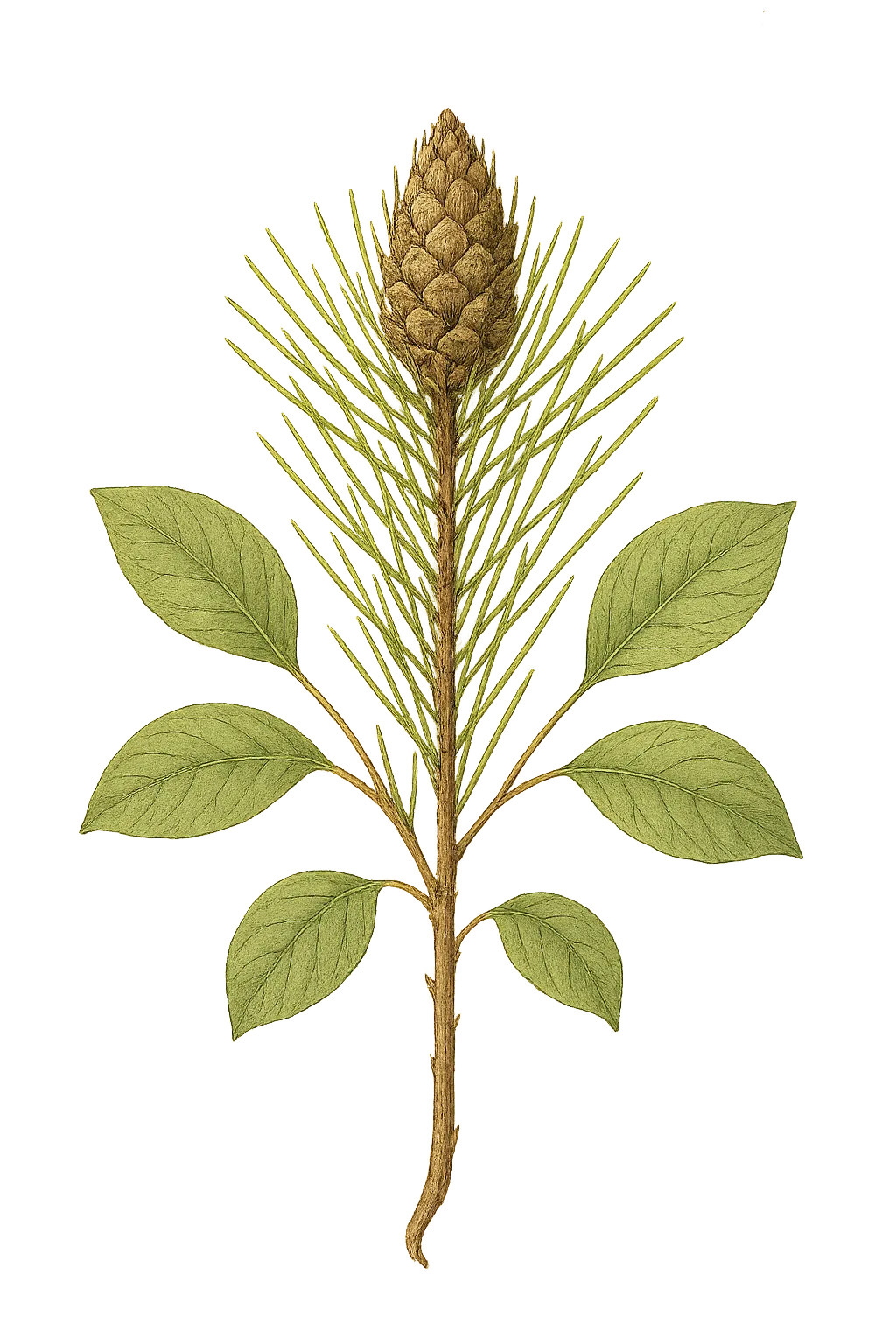
Needles usually occur in pairs and are commonly about 5–6.5 inches long. Compared with Aleppo pine, they tend to be longer, darker and stiffer. Woody cones project outward or forward along the branches, whereas mature Aleppo pine cones tend to point backward. The brown, roughly egg-shaped cones can remain visible in the crown for much of the year. University of Florida IFAS: Pinus brutia var. eldaricaTrees of Stanford and Environs: Pinus brutia var. eldarica
Cones and seasonal development
Stanford, California cultivation
Stanford’s campus account records cones remaining conspicuous through much of the year, including summer. Trees of Stanford and Environs: Pinus brutia var. eldarica
Native range
Kew places the native variety from Transcaucasia toward northwestern Iran, including records from Iraq. It has been planted widely in hot, dry landscapes, especially in the southwestern United States. Its tolerance of heat, drought and alkaline soils helps explain that horticultural distribution. Kew Plants of the World Online: Pinus brutia var. eldaricaUniversity of Florida IFAS: Pinus brutia var. eldaricaTrees of Stanford and Environs: Pinus brutia var. eldarica
Botanical sources
- Kew Plants of the World Online: Pinus brutia var. eldarica
- University of Florida IFAS: Pinus brutia var. eldarica
- Trees of Stanford and Environs: Pinus brutia var. eldarica
Reviewed 2026-10-11. Seasonal development varies with location and growing conditions.