Alabama croton
Croton alabamensis E.A.Sm. ex Chapm.
Alabama croton offers much of its interest through foliage. Green leaf surfaces contrast with silvery undersides, while older leaves can turn a rich orange in autumn. The crushed foliage has an apple-like or banana-like scent. It is a woody member of the spurge family rather than a tropical houseplant croton. NC State Extension: Alabama CrotonKew POWO: Croton alabamensis
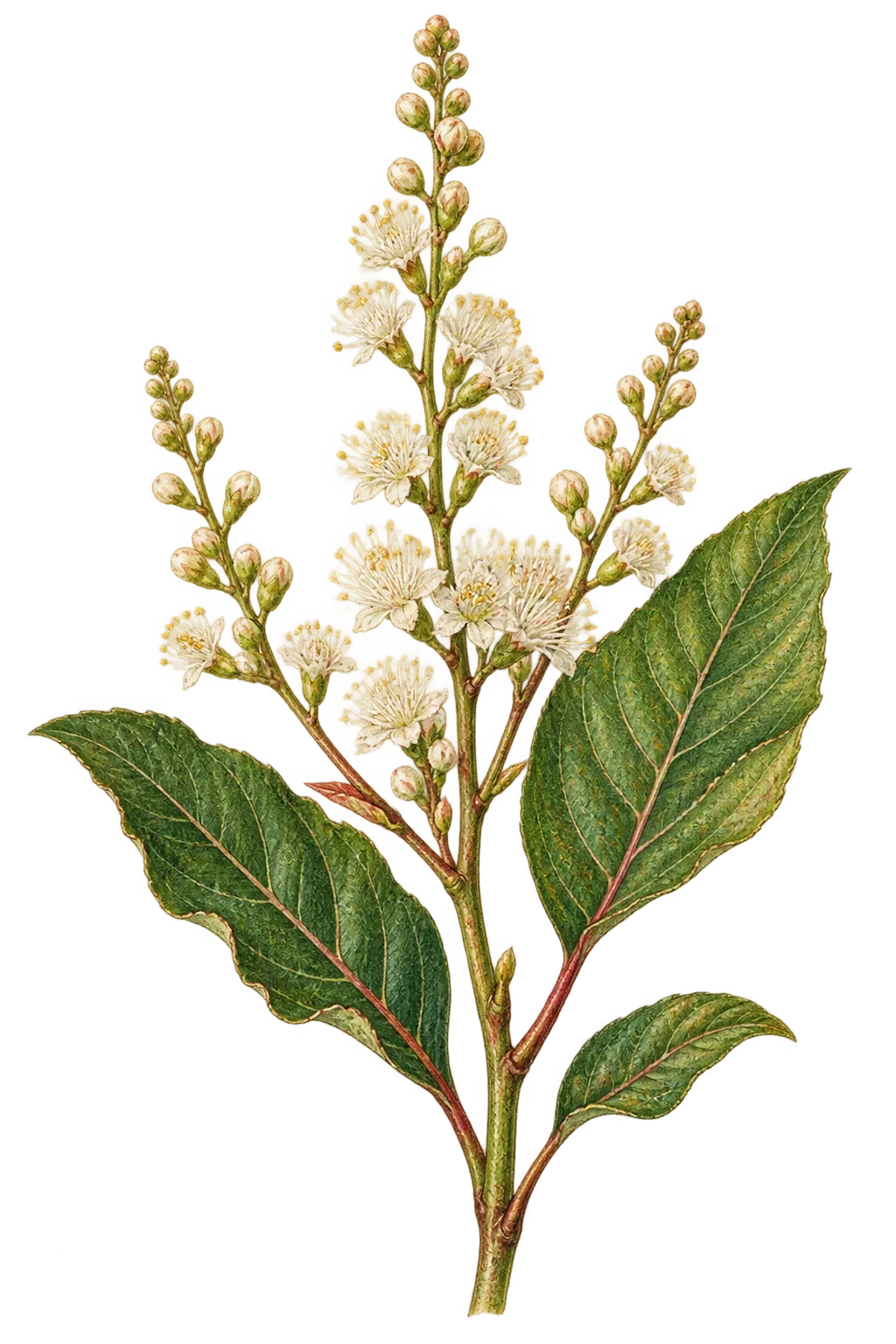
Botanical name
Kew accepts Croton alabamensis E.A.Sm. ex Chapm. and recognises two varieties within the species. Kew POWO: Croton alabamensis
Recognizing the plant
The shrub has an open, spreading outline and can reach around two metres or more. Leaves are simple, alternate and smooth-edged, often clustered toward branch ends. Their silver undersides are covered by reflective scales. Small yellow-green flowers occur in short clusters, with separate male and female flowers carried on the same plant. Three-parted fruits follow. In mild conditions some foliage can remain through winter, making its leaf persistence dependent on climate. NC State Extension: Alabama Croton
Bloom window
North Carolina Extension horticultural account
The account places the flower display in spring and the strongest orange leaf colour in autumn. NC State Extension: Alabama Croton
Native range
Kew records native populations in Alabama and Texas. Its recognition of both the typical variety and a Texas variety explains why the species’ geographical story extends beyond the state named in its common name. Kew POWO: Croton alabamensis
Botanical sources
Reviewed 2026-10-11. Seasonal development varies with location and growing conditions.