Alaskan wheatgrass
Elymus alaskanus (Scribn. & Merr.) Á.Löve
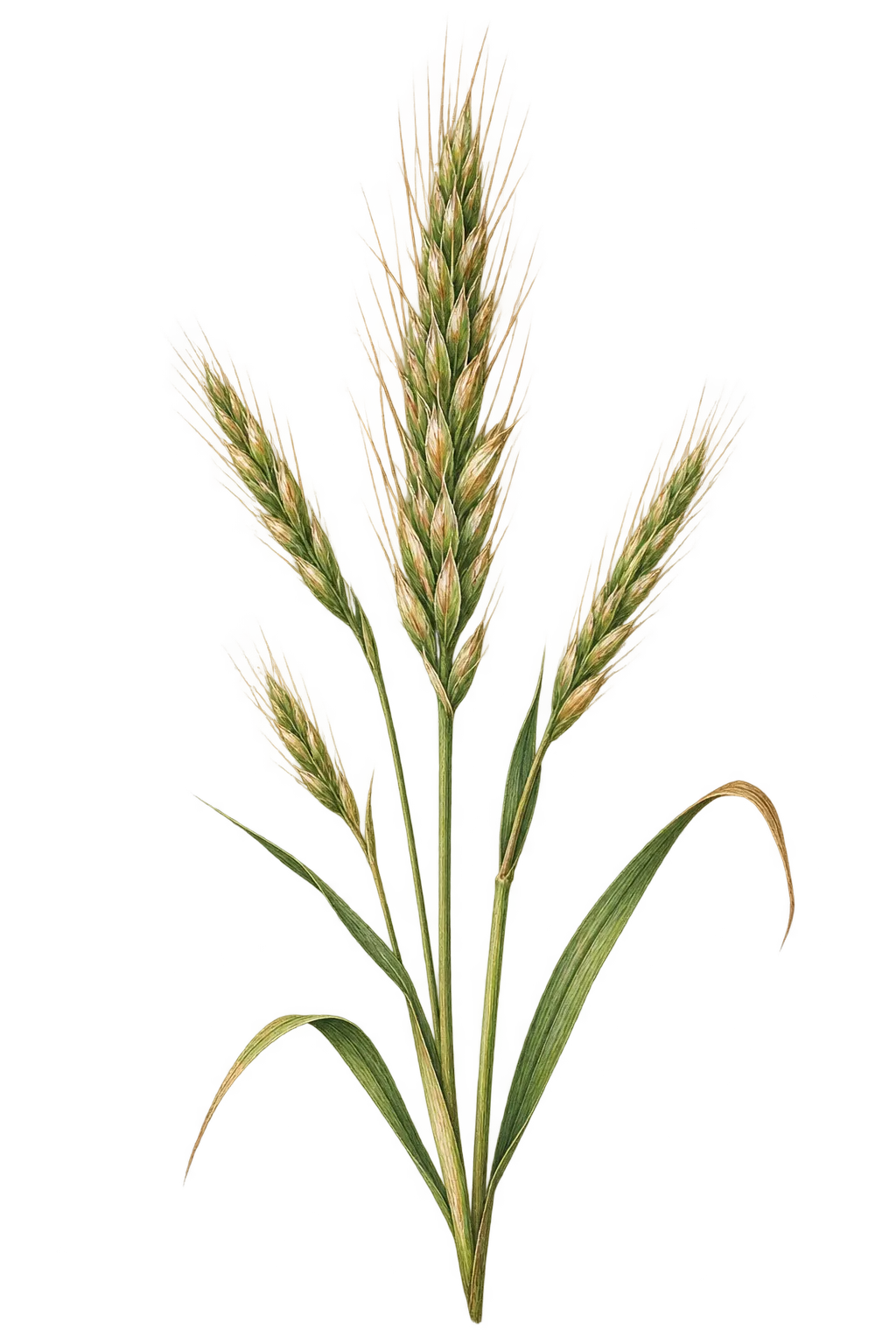
Alaskan wheatgrass grows as a tufted perennial rather than forming a conspicuous, widely spreading mat. Its underground stems are absent or short, and the flowering culms may stand upright or bend upward from a lower joint. Kew’s GrassBase description records a stature of roughly 20–90 cm, encompassing plants of quite different sizes. Kew Plants of the World Online and GrassBase: Elymus alaskanus
Botanical name
Kew accepts Elymus alaskanus (Scribn. & Merr.) Á.Löve in Poaceae. The supplied author citation differs only in spacing. The range here follows Kew rather than broader circumpolar aggregate treatments. Kew Plants of the World Online and GrassBase: Elymus alaskanus
Recognizing the plant
In the British Columbia regional account, the leaves are 2–5 mm wide, flat or slightly rolled inward, with scattered hairs. The leaf sheaths are open to their bases, and the tiny ligules are hairy. A narrow terminal spike carries a single spikelet at each node, commonly with four to six florets. The paired glumes have pale, translucent edges. Their broadest point lies toward the tip, a useful distinction from slender wheatgrass, whose glumes are broadest nearer the middle. These small features are best examined with magnification. British Columbia Ministry of Forests: Grasses of the Columbia Basin
Native range
Kew places the native range from Alaska to Manitoba, principally in subalpine or subarctic regions. In British Columbia’s Columbia Basin it occupies moist to dry sites, including localities along the Flathead River and on Limestone Ridge. Kew Plants of the World Online and GrassBase: Elymus alaskanusBritish Columbia Ministry of Forests: Grasses of the Columbia Basin
Botanical sources
- Kew Plants of the World Online and GrassBase: Elymus alaskanus
- British Columbia Ministry of Forests: Grasses of the Columbia Basin
Reviewed 2026-10-11. Seasonal development varies with location and growing conditions.