alkali sacaton
Sporobolus airoides (Torr.) Torr.
Alkali sacaton is a tough perennial grass that builds large bunches rather than a low lawn. It occurs on alkaline flats, prairies and sandy plateaus, and commonly follows drainage lines in desert and semidesert country. Suitable sites range from dry to moist. USDA NRCS Plant Guide: Alkali Sacaton
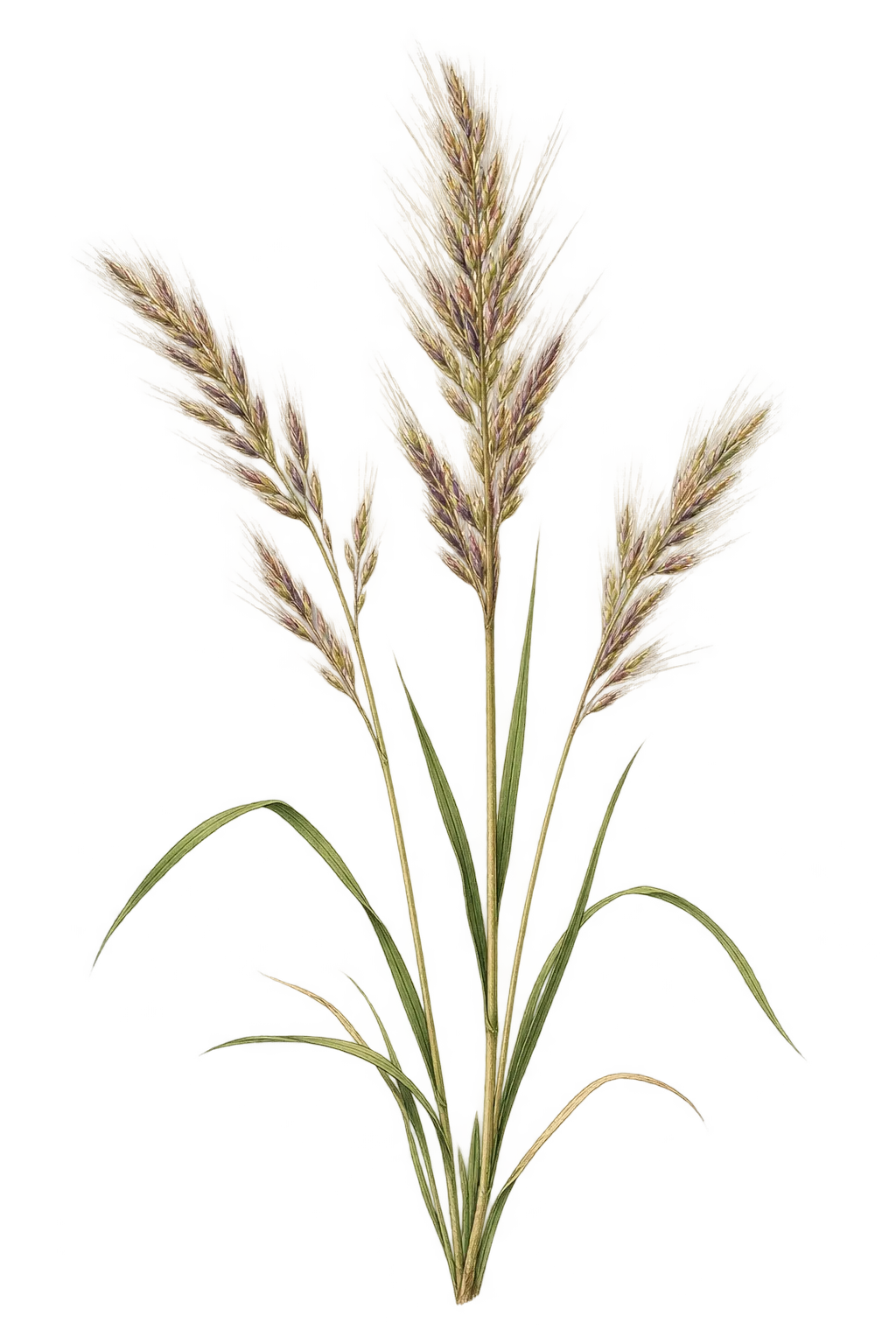
Botanical name
Kew accepts Sporobolus airoides (Torr.) Torr. as a species in Poaceae. Agrostis airoides Torr. is its homotypic synonym. Kew Plants of the World Online: Sporobolus airoides
Recognizing the plant
The grey-green blades begin flat and often roll inward, arching away from the clump. Above them, an open, pyramidal panicle spreads on fine, widely separated branches. Its purplish-green spikelets are individually stalked, each containing one floret without an awn. Seeds fall readily when mature. The fibrous root system lacks rhizomes, and old leaf sheaths can remain around the base. Santa Fe Botanical Garden, Garden Explorer: Sporobolus airoides
Native range
Its native distribution runs from western Canada into the United States and Mexico. Kew includes British Columbia, many western and central states, and parts of northeastern and southwestern Mexico within that range. Kew Plants of the World Online: Sporobolus airoides
Ecological relationships
Cattle, sheep and horses eat its abundant foliage. The USDA plant guide describes alkali sacaton as useful forage in lowland and alkaline grazing areas. USDA NRCS Plant Guide: Alkali Sacaton
Botanical sources
- Kew Plants of the World Online: Sporobolus airoides
- USDA NRCS Plant Guide: Alkali Sacaton
- Santa Fe Botanical Garden, Garden Explorer: Sporobolus airoides
Reviewed 2026-10-11. Seasonal development varies with location and growing conditions.