alpine aster
Aster alpinus L.
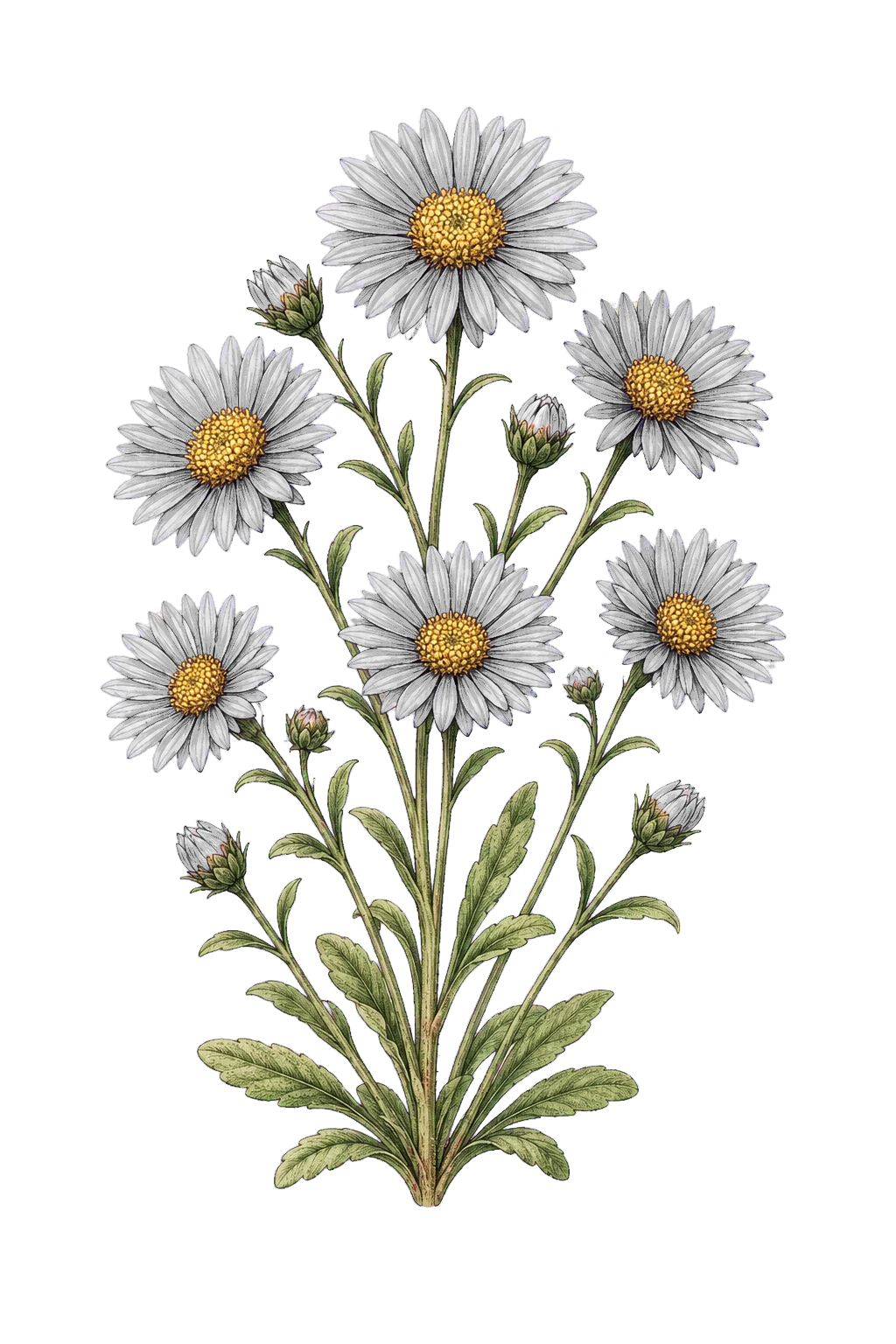
Alpine aster keeps its flower heads close to the ground. Sturdy rhizomes support a low perennial whose simple stems usually carry a single head at the tip. The broad leaves near the base and the reduced leaves above leave each flower head clearly outlined. Its rays range through several colours across its extensive mountain distribution. World Flora Online: Aster alpinus, Flora of China treatmentUniversity of British Columbia, E-Flora BC: Aster alpinus
Botanical name
The cited taxonomic authority accepts Aster alpinus L at species rank. Kew POWO: Aster alpinus
Recognizing the plant
Broader leaves gather low on the plant; those farther up the stem become narrower and smaller. What looks like one flower contains two kinds of floret. A ring of strap-shaped rays surrounds the yellow disc. Color varies: the Chinese flora describes purple, blue or reddish rays, while British Columbia's flora records white as well as violet or lavender. The fruits are small, hairy and topped with fine bristles. World Flora Online: Aster alpinus, Flora of China treatmentUniversity of British Columbia, E-Flora BC: Aster alpinus
Bloom window
China
Flora of China records flowering from June through August within its region. World Flora Online: Aster alpinus, Flora of China treatment
Native range
Aster alpinus belongs to the cool landscapes of Eurasia and northern North America. In northeastern British Columbia it occurs in calcareous meadows from mountain to alpine elevations. Kew POWO: Aster alpinusUniversity of British Columbia, E-Flora BC: Aster alpinus
Botanical sources
- Kew POWO: Aster alpinus
- World Flora Online: Aster alpinus, Flora of China treatment
- University of British Columbia, E-Flora BC: Aster alpinus
Reviewed 2026-10-11. Seasonal development varies with location and growing conditions.