amaryllis
Amaryllis L.
A genus overview; characteristics vary between its species.
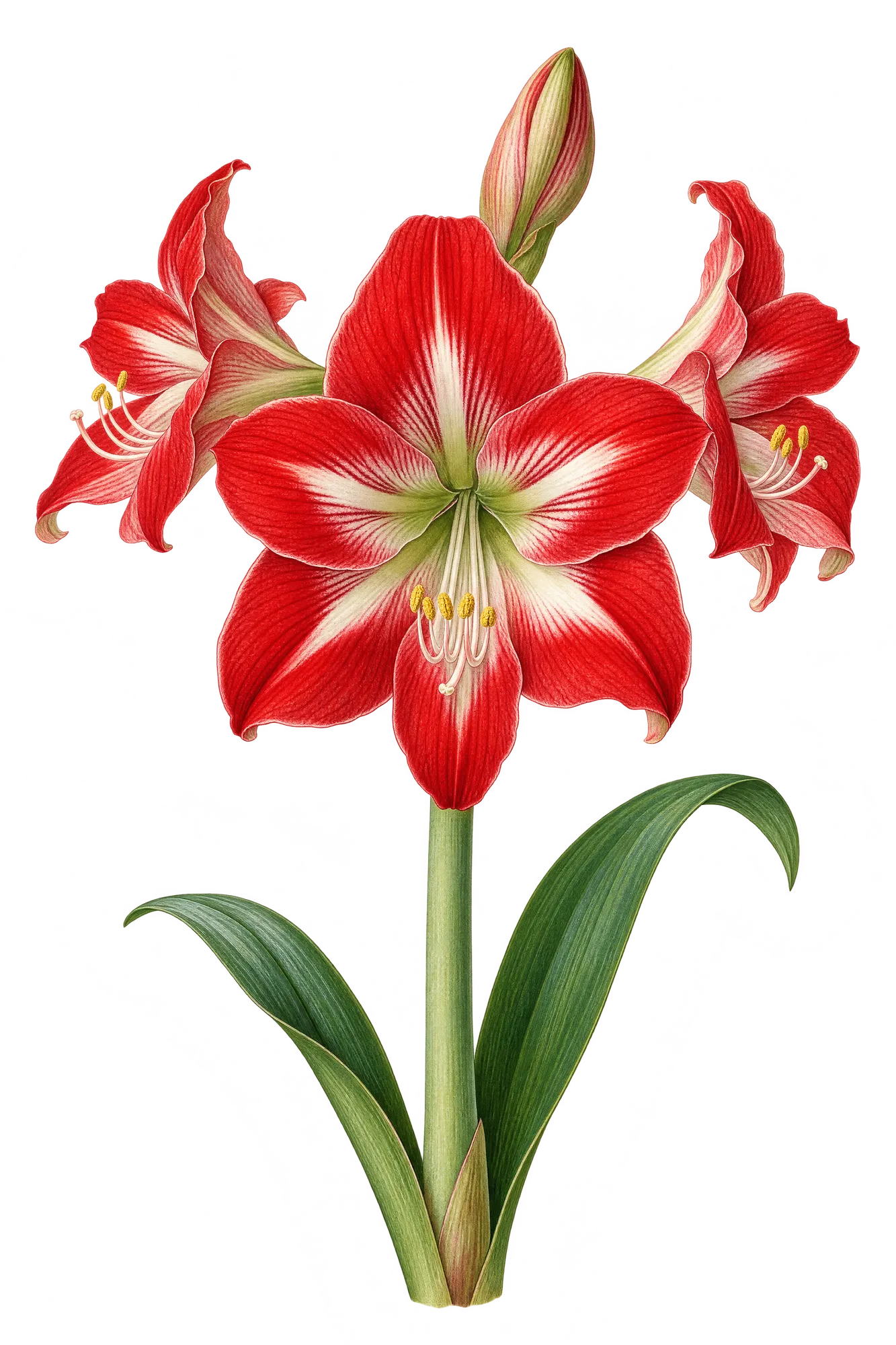
Amaryllis is a small bulbous genus with a famous name and a frequent identity mix-up. Its conspicuous flower clusters emerge before the leaves, creating the familiar effect of blossoms on bare stalks. Bulbs widely sold as indoor amaryllis usually belong to the separate genus Hippeastrum. The similar common names connect two botanically distinct groups. SANBI-hosted Veld & Flora: Amaryllis magicSANBI PlantZAfrica: Amaryllis belladonna
Botanical name
Amaryllis L is accepted in the cited taxonomic treatment. The supplied database name identifies the same genus. Kew Plants of the World Online: Amaryllis L.
Recognizing the plant
The two species differ in the arrangement of their foliage and flowers. A. belladonna has long, strap-shaped leaves and trumpet-shaped flowers often facing chiefly to one side. A. paradisicola has broader, shorter leaves and flowers distributed more evenly around the stalk. In both species, thick underground bulbs persist while the above-ground parts follow a strongly seasonal cycle. SANBI-hosted Veld & Flora: Amaryllis magicSANBI PlantZAfrica: Amaryllis belladonna
Seasonality across the genus
winter-rainfall Cape region, South Africa
In their native winter-rainfall region, flowering falls around late summer and early autumn, broadly February to April. Winter leaves replenish the bulb before the dry summer resting period. SANBI-hosted Veld & Flora: Amaryllis magic
Native range
Kew recognises two species native to South Africa’s Cape provinces: Amaryllis belladonna and Amaryllis paradisicola. The latter is associated with the arid Richtersveld. Their native geography belongs to the southwestern African region of winter rainfall. Kew Plants of the World Online: Amaryllis L.SANBI-hosted Veld & Flora: Amaryllis magicSANBI PlantZAfrica: Amaryllis belladonna
Botanical sources
- Kew Plants of the World Online: Amaryllis L.
- SANBI-hosted Veld & Flora: Amaryllis magic
- SANBI PlantZAfrica: Amaryllis belladonna
Reviewed 2026-10-11. Seasonal development varies with location and growing conditions.