angelica tree
Dendropanax arboreus (L.) Decne. & Planch.
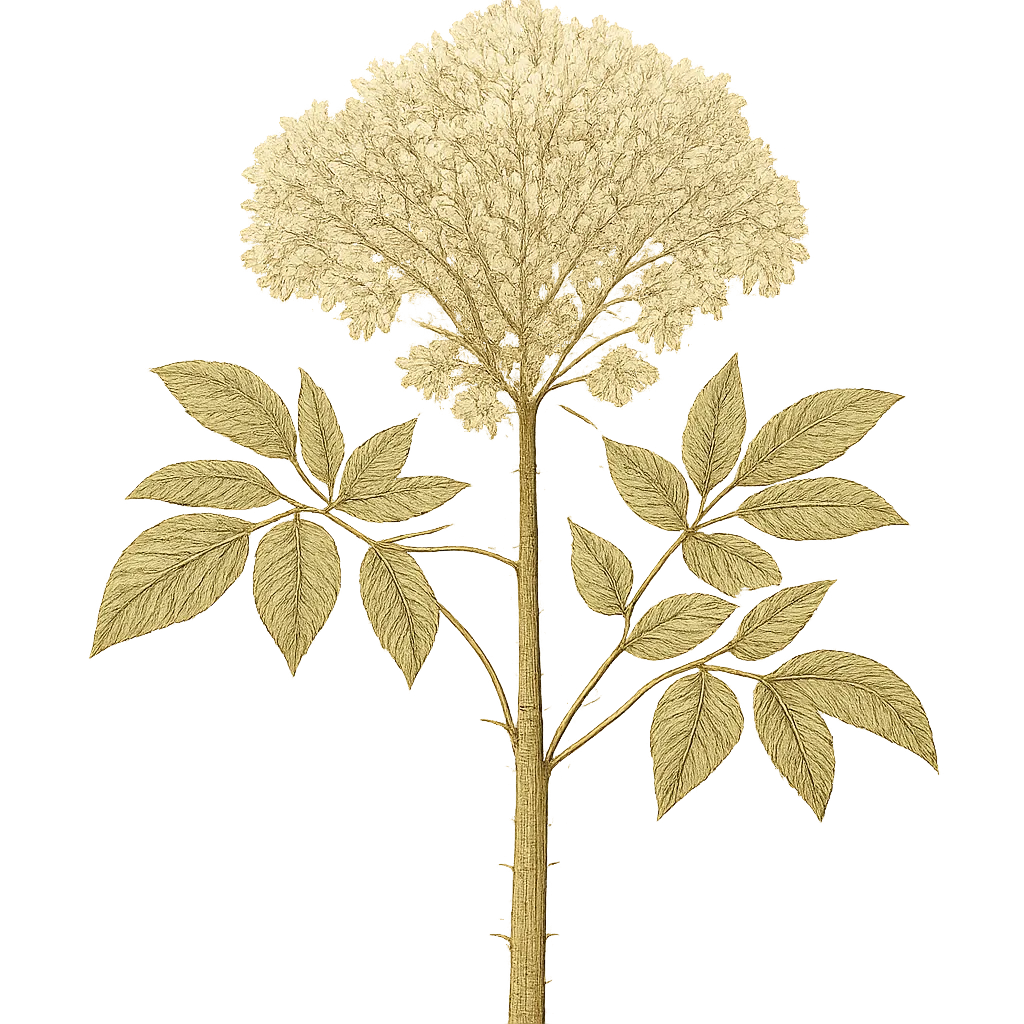
Angelica tree brings glossy foliage and small, pale flowers to Caribbean landscapes. The Cayman Islands flora describes a hairless mature tree reaching ten metres or more. Its smooth, buff-grey bark contrasts with the leaves above; a cut exposes white inner tissue and may release small drops of brownish-orange sap. Kew POWO: Dendropanax arboreus; Flora of the Cayman Islands
Botanical name
Kew accepts the Decaisne and Planchon authorship; NCBI links the supplied ex Britton variant to the same taxon. This profile follows the modern Caribbean circumscription. Kew POWO: Dendropanax arboreus taxonomy and distributionNCBI taxon cross-references: Dendropanax arboreusMorales and Idárraga-Piedrahita 2022: Nightmare on Dendropanax Street
Recognizing the plant
The leaves are mostly elliptic to oval-elliptic, with pointed tips and bases ranging from wedge-shaped to rounded. They can exceed fifteen centimetres in length and reach ten centimetres across. Their upper surfaces are glossy, and crushed leaves are faintly aromatic. Flower clusters terminate the shoots, on stalks roughly one-and-a-half to eight centimetres long. Green flowers turn yellowish and carry four to six petals. Small fruits become five- or six-angled as they dry. Kew POWO: Dendropanax arboreus; Flora of the Cayman Islands
Native range
Kew places the native species in the Caribbean, including the Cayman Islands, Cuba, Hispaniola, Jamaica, Puerto Rico and the Leeward Islands. Its principal setting is the wet tropical biome. Kew POWO: Dendropanax arboreus; Flora of the Cayman IslandsKew POWO: Dendropanax arboreus taxonomy and distribution
Botanical sources
- Kew POWO: Dendropanax arboreus; Flora of the Cayman Islands
- Kew POWO: Dendropanax arboreus taxonomy and distribution
- NCBI taxon cross-references: Dendropanax arboreus
- Morales and Idárraga-Piedrahita 2022: Nightmare on Dendropanax Street
Reviewed 2026-10-11. Seasonal development varies with location and growing conditions.