annual redspot monkeyflower
Diplacus parryi (A.Gray) G.L.Nesom & N.S.Fraga
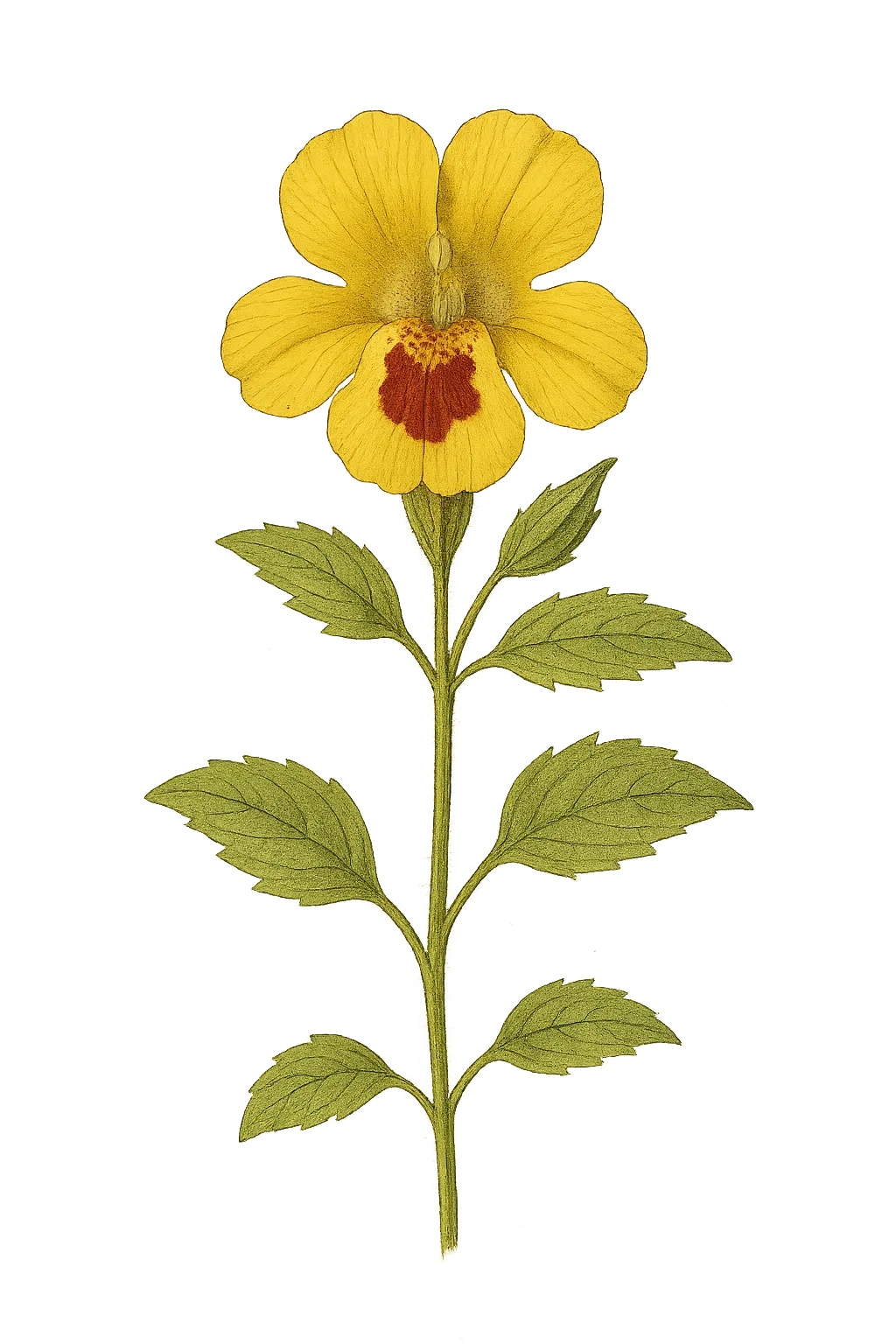
This small desert monkeyflower has an unusually clear-cut variation in flower color. Some plants produce magenta or violet blossoms with two yellow patches on the palate; others have yellow blossoms patterned with six to eight violet spots. Both forms can occur within the same population, without an intermediate series of colors. Ayers and colleagues: Phrymaceae of Arizona
Botanical name
The Arizona flora explicitly places Mimulus parryi A.Gray in synonymy under Diplacus parryi, preserving the identity of the supplied name. Calflora: Mimulus parryi
Recognizing the plant
The annual plant commonly stands only about 1.5–6 cm high, with a usually unbranched stem covered in short, stalked glandular hairs. Its narrow leaves are generally 8–14 mm long. Flowers arise singly or in pairs on short stalks. The flower tube opens into rounded or blunt-ended lobes, while the yellow throat carries purple or reddish speckles. The calyx has unequal teeth, with the upper central tooth especially broad and long. It becomes inflated around the developing capsule. Ayers and colleagues: Phrymaceae of Arizona
Bloom window
Arizona
In Arizona, flowers are recorded from April through June. Ayers and colleagues: Phrymaceae of Arizona
Native range
Native to the southwestern United States, it inhabits dry sandy washes and gravelly slopes. Arizona populations occur in Mohave County at roughly 500–1,100 m. Ayers and colleagues: Phrymaceae of ArizonaCalflora: Mimulus parryi
Botanical sources
Reviewed 2026-10-11. Seasonal development varies with location and growing conditions.