Apache hedgehog cactus
Echinocereus apachensis W.Blum & Rutow
Apache hedgehog cactus forms loose clusters of upright stems rather than a single towering column. A mature group can contain five to thirty stems and spread to about a metre across. LLIFLE: Echinocereus apachensis
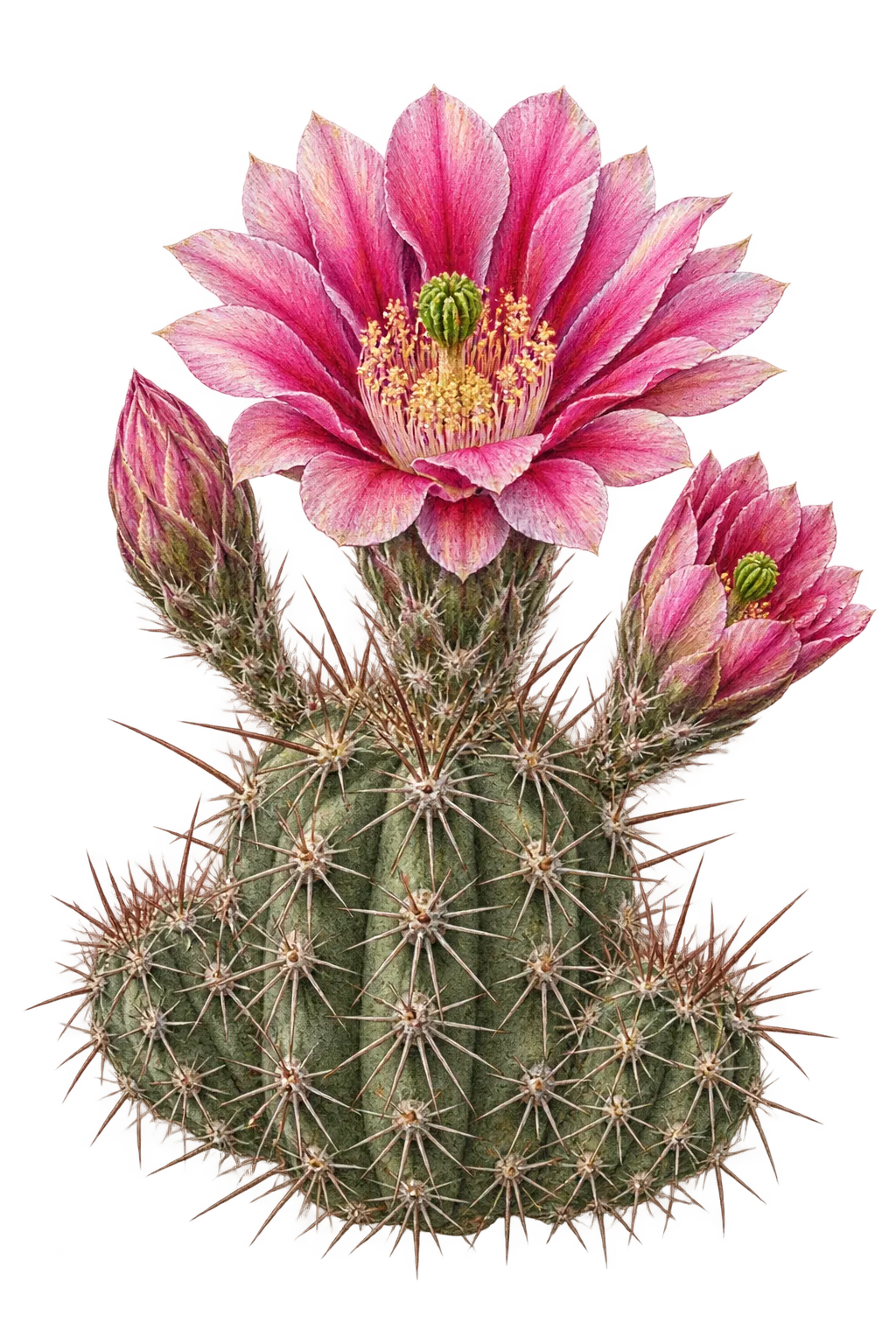
Botanical name
Kew accepts Echinocereus apachensis W.Blum & Rutow, resolving the abbreviated author in the supplied name. Other treatments place this same named taxon under E. bonkerae; the profile follows Kew at species rank. Kew Plants of the World Online: Echinocereus apachensis
Recognizing the plant
Green stems are cylindrical or somewhat egg-shaped, reaching about 50 cm long and 4–6 cm across, with twelve to eighteen low ribs. Each spine-bearing areole carries numerous short radial spines and fewer central ones. Central spines vary in length, with some conspicuously long and flexible. Broad funnel-shaped flowers arise toward the upper part of the stems. Their magenta to purple-pink segments surround a darker throat and yellow anthers. Rounded or egg-shaped fruits change from green to red or orange-red as they mature. LLIFLE: Echinocereus apachensis
Bloom window
Arizona, United States
In its Arizona habitat, flowering is reported from March through May, with fruit developing roughly two months later. LLIFLE: Echinocereus apachensis
Native range
Kew records the species as native to Arizona. The specialist account describes populations in the Pinal and Santa Catalina mountains, on stony desert grassland and upland chaparral sites. Kew Plants of the World Online: Echinocereus apachensisLLIFLE: Echinocereus apachensis
Botanical sources
Reviewed 2026-10-11. Seasonal development varies with location and growing conditions.