Apalachicola doll's daisy
Boltonia apalachicolensis L.C. Anderson
Apalachicola doll’s-daisy grows in southeastern floodplain forests. Its spreading and ascending branches carry groups of small daisy-like heads. The plant has no stolons or rhizomes in the Flora of North America description, but fallen stems frequently form roots where their nodes contact the ground. Flora of North America: Boltonia apalachicolensis
Botanical name
The cited authority recognizes Boltonia apalachicolensis L.C. Anderson as a species. Kew POWO: Boltonia apalachicolensis
Recognizing the plant
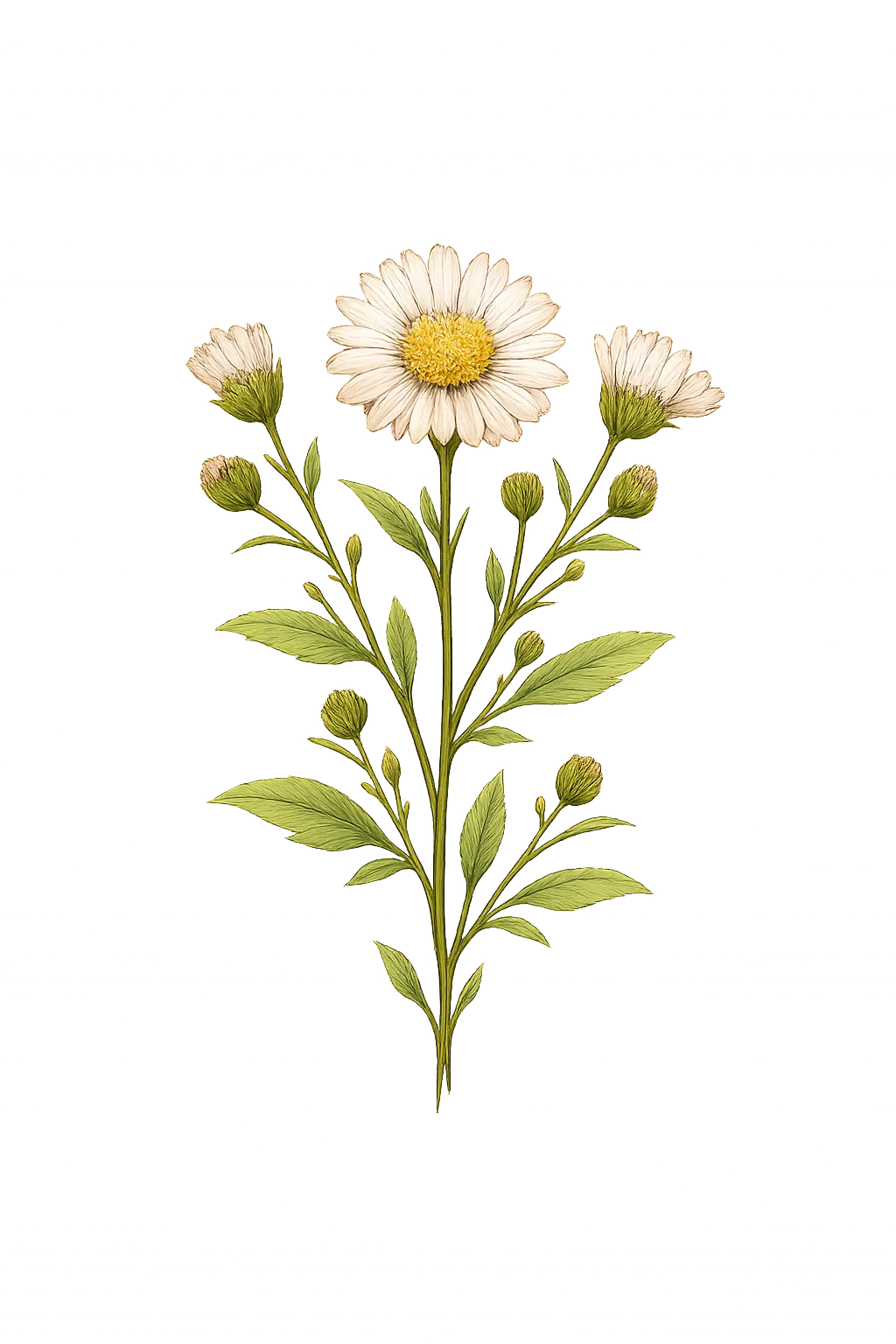
Plants reach fifty to one hundred eighty centimetres tall. Elongated stem leaves range from narrow to broader, spoon-like forms. Each flower head contains twenty to thirty-five white or lilac ray florets surrounding numerous disc florets. The small dry fruits have narrow wings and short awns at their tips. Most bracts among the branching flower heads remain leaflike. Flora of North America: Boltonia apalachicolensis
Bloom window
Southeastern United States
The floral display arrives relatively late: the North American flora records flowering from late September through December across its treated southeastern range. Flora of North America: Boltonia apalachicolensis
Native range
The species is native to Florida, Louisiana and Mississippi. Flora of North America records moist grey sand in partially or deeply shaded hardwood floodplain forests, at elevations close to sea level. Kew POWO: Boltonia apalachicolensisFlora of North America: Boltonia apalachicolensis
Botanical sources
Reviewed 2026-10-11. Seasonal development varies with location and growing conditions.