Appalachian gooseberry
Ribes rotundifolium Michx.
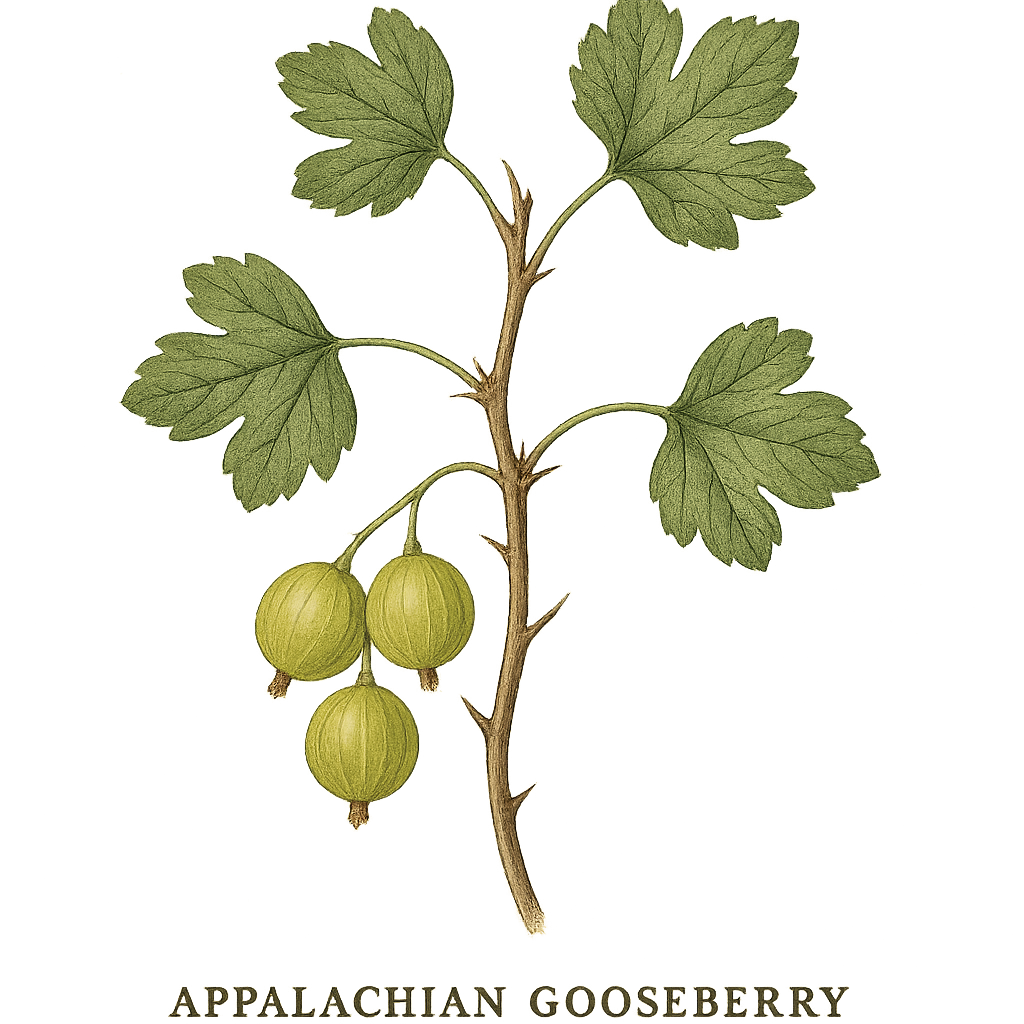
Appalachian gooseberry is a woody shrub of rich, rocky woodland. Its greenish-yellow flowers can be easy to overlook among the leaves, but their projecting stamens give them a distinctive, delicate outline. Compared with Missouri gooseberry, this species has shorter prickles and smaller blossoms. Native Plant Trust Go Botany: Ribes rotundifolium
Botanical name
USDA GRIN recognizes Ribes rotundifolium Michx.; Grossularia rotundifolia is a synonym based on the same name. USDA GRIN Taxonomy: Ribes rotundifolium
Recognizing the plant
The simple leaves alternate along the stems and have both lobes and teeth around their edges. The flower’s green to reddish-purple cup supports backward-bending sepals, small pale petals and conspicuously longer stamens. In the North American flora, the stamens are about two and a half to four times as long as the petals. Smooth berries ripen pale purple, generally measuring 7–12 mm across. Their lack of prickles contrasts with the armed fruits of some other gooseberries. Native Plant Trust Go Botany: Ribes rotundifoliumNEON Biorepository: Ribes rotundifolium, Flora of North America and Gleason–Cronquist accounts
Bloom window
New England
The regional Go Botany account records flowering in April and May. Native Plant Trust Go Botany: Ribes rotundifolium
Native range
The species occurs in the eastern United States, principally along the Appalachians. Rich forests, rocky slopes, boulder fields and some mountain balds provide habitat from low elevations to about 2,100 m. NEON Biorepository: Ribes rotundifolium, Flora of North America and Gleason–Cronquist accounts
Ecological relationships
Bees and hummingbirds visit the flowers. Native Plant Trust Go Botany: Ribes rotundifolium
Birds and mammals eat the fruits. Native Plant Trust Go Botany: Ribes rotundifolium
Botanical sources
- USDA GRIN Taxonomy: Ribes rotundifolium
- Native Plant Trust Go Botany: Ribes rotundifolium
- NEON Biorepository: Ribes rotundifolium, Flora of North America and Gleason–Cronquist accounts
Reviewed 2026-10-11. Seasonal development varies with location and growing conditions.