apple
Malus Mill.
A genus overview; characteristics vary between its species.
Malus brings together orchard apples and ornamental crabapples, grown for fruit or floral displays. Members are trees or shrubs, and garden selections range from broad-crowned trees to compact dwarf and narrow, columnar forms. North Carolina Extension Gardener Plant Toolbox: Malus
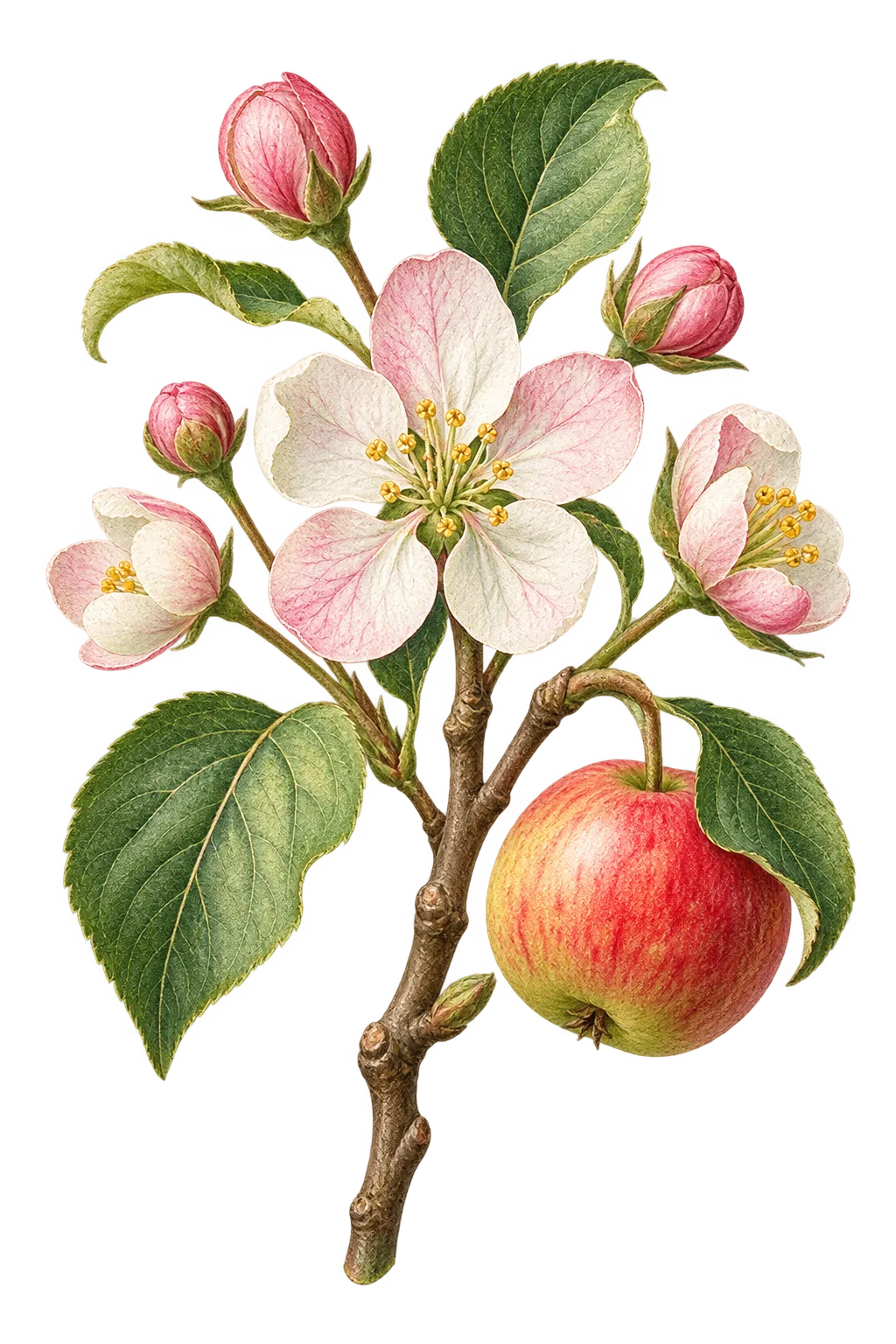
Botanical name
Malus Mill. is an accepted genus in Rosaceae. The stored record identifies the genus, rather than the cultivated apple species Malus domestica. Kew Plants of the World Online: Malus
Recognizing the plant
Leaves are simple and alternate, often with toothed or lobed margins. The flowers occur in clusters, typically with five white, pink or red petals and numerous stamens. The fleshy fruits are pomes, with seeds enclosed in a firm, cartilaginous core rather than a single stone. Flora of China, volume 9, page 179: Malus
Seasonality across the genus
North Carolina horticultural guidance; Malus coronaria example
Sweet crabapple, Malus coronaria, is one seasonal example: North Carolina Extension describes fragrant flowers in May, followed by fruit displayed from August through October. North Carolina Extension Gardener Plant Toolbox: Malus coronaria
Native range
The genus is native across the temperate Northern Hemisphere and extends south into northern Indochina. Its natural distribution includes North America, Europe and Asia, with individual species occupying different parts of that range. Kew Plants of the World Online: Malus
Ecological relationships
In sweet crabapple, Malus coronaria, floral nectar attracts native bees as well as honey bees. North Carolina Extension Gardener Plant Toolbox: Malus coronaria
That same species, Malus coronaria, is a larval food plant for butterflies including the Eastern Tiger Swallowtail. North Carolina Extension Gardener Plant Toolbox: Malus coronaria
Birds and mammals eat both wild and cultivated apples, and their feeding can help disperse seeds beyond the parent tree. Flora of North America: Malus
A growing note
When choosing culinary apples, check the variety’s winter-chilling needs and whether another compatible tree is required for cross-pollination. North Carolina Extension Gardener Plant Toolbox: Malus
Botanical sources
- Kew Plants of the World Online: Malus
- North Carolina Extension Gardener Plant Toolbox: Malus
- Flora of China, volume 9, page 179: Malus
- North Carolina Extension Gardener Plant Toolbox: Malus coronaria
- Flora of North America: Malus
Reviewed 2026-10-11. Seasonal development varies with location and growing conditions.