arctic bellflower
Melanocalyx uniflora (L.) Morin
Arctic bellflower was recorded during the Canadian Arctic Expedition of 1913–1918. Its published account drew attention to old plants whose wrinkled taproots and lengthening underground shoots revealed years of growth below the surface. Kew now places this former Campanula species in Melanocalyx. Kew POWO: Melanocalyx unifloraCanadian Museum of Nature: Flora of the Canadian Arctic Archipelago, Campanula uniflora
Botanical name
Kew accepts Melanocalyx uniflora (L.) Morin and lists Campanula uniflora L. as the homotypic synonym for the same species. Kew POWO: Melanocalyx uniflora
Recognizing the plant
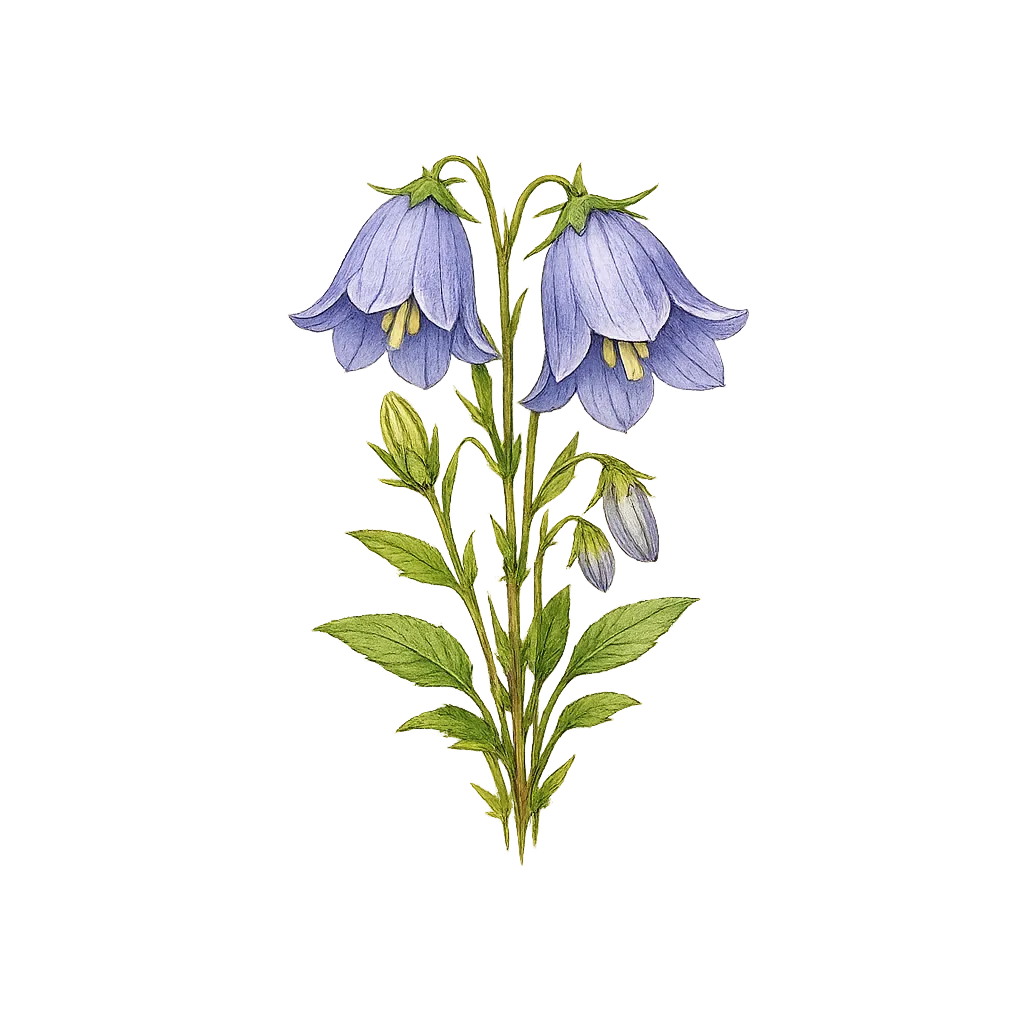
The Canadian Arctic flora describes a perennial often only five to ten centimetres tall, anchored by a taproot. Narrow leaves gather near the base and along the short stems. Each flowering stem carries one blue, narrowly bell-shaped flower, made from five joined petals. The flower nods slightly when open, lifting above the small leaves without becoming a tall plant. After flowering, a dry capsule develops beneath the persistent calyx and eventually opens by slits to release numerous tiny seeds. Canadian Museum of Nature: Flora of the Canadian Arctic Archipelago, Campanula uniflora
Native range
Its range spans subarctic parts of the Northern Hemisphere and reaches south into the mountains of the western and central United States. In the Canadian Arctic account, the species inhabits such places as river terraces, ridges and cliffs, on rocky or gravelly ground with little organic material. Kew POWO: Melanocalyx unifloraCanadian Museum of Nature: Flora of the Canadian Arctic Archipelago, Campanula uniflora
Botanical sources
- Kew POWO: Melanocalyx uniflora
- Canadian Museum of Nature: Flora of the Canadian Arctic Archipelago, Campanula uniflora
Reviewed 2026-10-11. Seasonal development varies with location and growing conditions.