Arizona bugbane
Actaea arizonica (S.Watson) J.Compton
Arizona bugbane belongs to a quieter, shaded Arizona. Its character is closely tied to moist wooded ravines rather than open desert. Older floras call the same plant Cimicifuga arizonica, a name that remains useful when tracing the history of this narrowly distributed woodland perennial. Kew Plants of the World Online: Actaea arizonicaFlora of North America: Cimicifuga arizonica
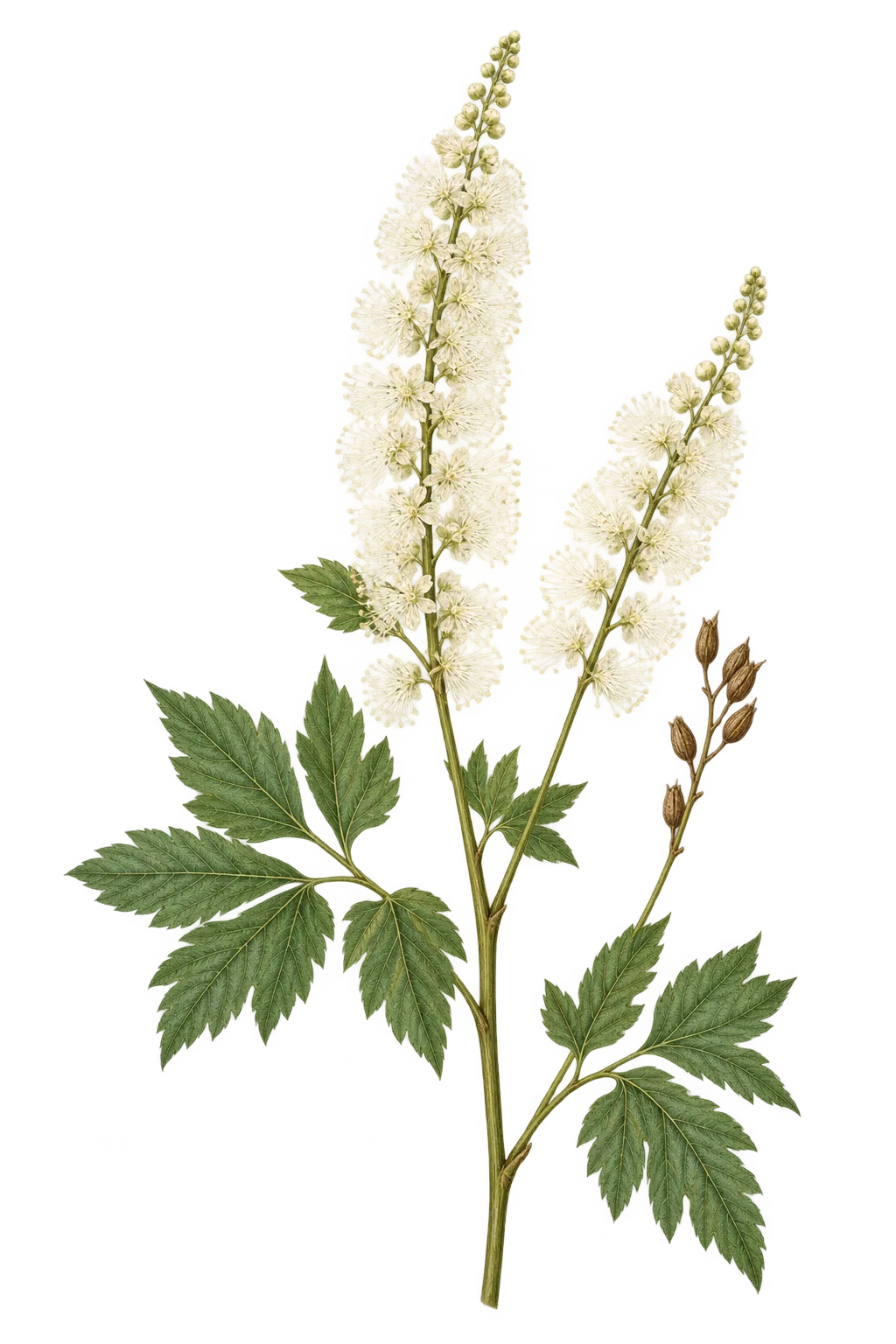
Botanical name
Kew accepts Actaea arizonica and explicitly lists Cimicifuga arizonica S.Watson as its homotypic synonym, linking the older flora treatment to this species. Kew Plants of the World Online: Actaea arizonica
Recognizing the plant
Tall stems carry large, repeatedly divided leaves with toothed edges; the central terminal leaflet commonly has three lobes. Above them, slender branching flower clusters create a lighter outline. Cream-colored inner sepals and numerous stamens contribute to the flowers’ appearance. Petals can be absent or reduced to two small structures. The fruit develops as dry follicles rather than fleshy berries. Flora of North America: Cimicifuga arizonica
Bloom window
Arizona
Flowering is recorded in July and August in Arizona, followed by fruit development into late summer. Flora of North America: Cimicifuga arizonicaArizona Rare Plant Field Guide: Arizona bugbane
Native range
The species is native to northern and central Arizona. Flora of North America places it in rich loamy ground at the transition between riparian vegetation and conifer forest, describing it as adapted to deep shade and not spreading broadly into the surrounding forest. Kew Plants of the World Online: Actaea arizonicaFlora of North America: Cimicifuga arizonica
Botanical sources
- Kew Plants of the World Online: Actaea arizonica
- Flora of North America: Cimicifuga arizonica
- Arizona Rare Plant Field Guide: Arizona bugbane
Reviewed 2026-10-11. Seasonal development varies with location and growing conditions.