Arizona cliffrose
Purshia subintegra (Kearney) Henrickson
Arizona cliffrose is a low, spreading woody perennial plant of the northern Sonoran Desert. Its older branches develop pale gray, shredding bark, while young shoots are reddish brown and hairy. The shrub is generally broader than it is tall. U.S. Fish and Wildlife Service: Arizona Cliffrose Recovery Plan, 1995
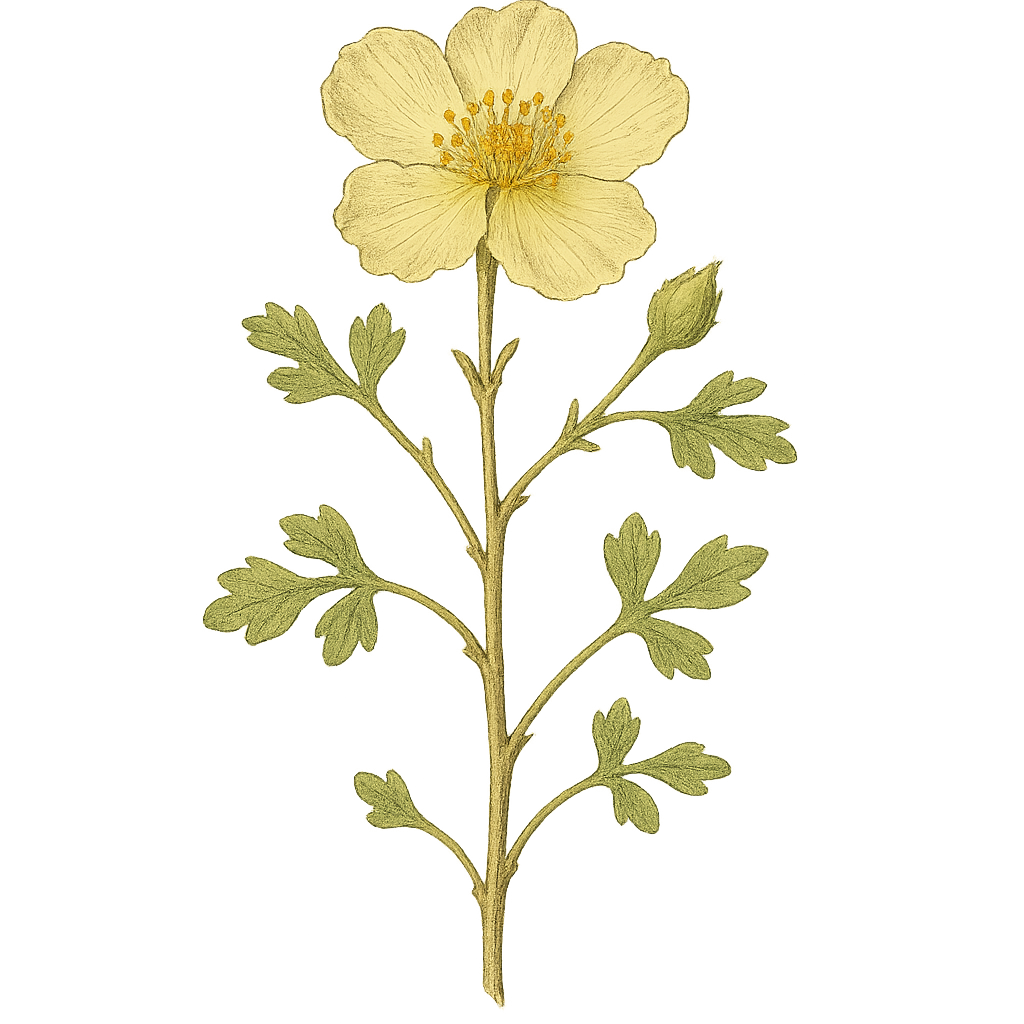
Botanical name
This profile follows Kew and Flora of North America in recognizing Purshia subintegra as a species. ITIS retains the hybrid-marked name supplied by the database; both treatments connect it to Cowania subintegra Kearney. Kew Plants of the World Online: Purshia subintegraFlora of North America: Purshia subintegraITIS: Purshia ×subintegra, TSN 195903
Recognizing the plant
The narrow leaves have rolled-under edges and woolly undersides, with green upper surfaces. Some leaves are unlobed; others carry one or two small teeth or lobes. Pale cream petals surround numerous stamens. Each small, dry fruit retains a long, feathery style, producing a conspicuous plume after the petals have fallen. Flora of North America: Purshia subintegra
Bloom window
Arizona
Flora of North America records flowering from March into early June in Arizona. Flora of North America: Purshia subintegra
Native range
This Arizona native occupies whitish, lime-rich soils derived from ancient lake deposits at 600–1,100 metres. Its four principal population areas lie near Burro Creek, Cottonwood, Horseshoe Reservoir, and Bylas. Flora of North America: Purshia subintegra
Ecological relationships
At Cottonwood, a 1991 study found that bees were the principal pollinators, including several native species and introduced honeybees. U.S. Fish and Wildlife Service: Arizona Cliffrose Recovery Plan, 1995
Botanical sources
- Kew Plants of the World Online: Purshia subintegra
- Flora of North America: Purshia subintegra
- U.S. Fish and Wildlife Service: Arizona Cliffrose Recovery Plan, 1995
- ITIS: Purshia ×subintegra, TSN 195903
Reviewed 2026-10-11. Seasonal development varies with location and growing conditions.