Arnold buckeye
Aesculus ×arnoldiana Sarg.
Arnold buckeye combines three North American buckeyes in one cultivated tree, originating at the Arnold Arboretum in Massachusetts. It develops a broad, rounded crown with low branches and typically reaches about 4.5–10.5 metres in height. Spring flowers stand above the leaves at branch ends. Kew POWO: Aesculus ×arnoldianaNC State Extension: Arnold buckeye
Botanical name
Kew and USDA GRIN identify Aesculus ×arnoldiana as the artificial hybrid of A. flava, A. glabra and A. pavia. Kew POWO: Aesculus ×arnoldianaUSDA GRIN: Aesculus ×arnoldiana
Recognizing the plant
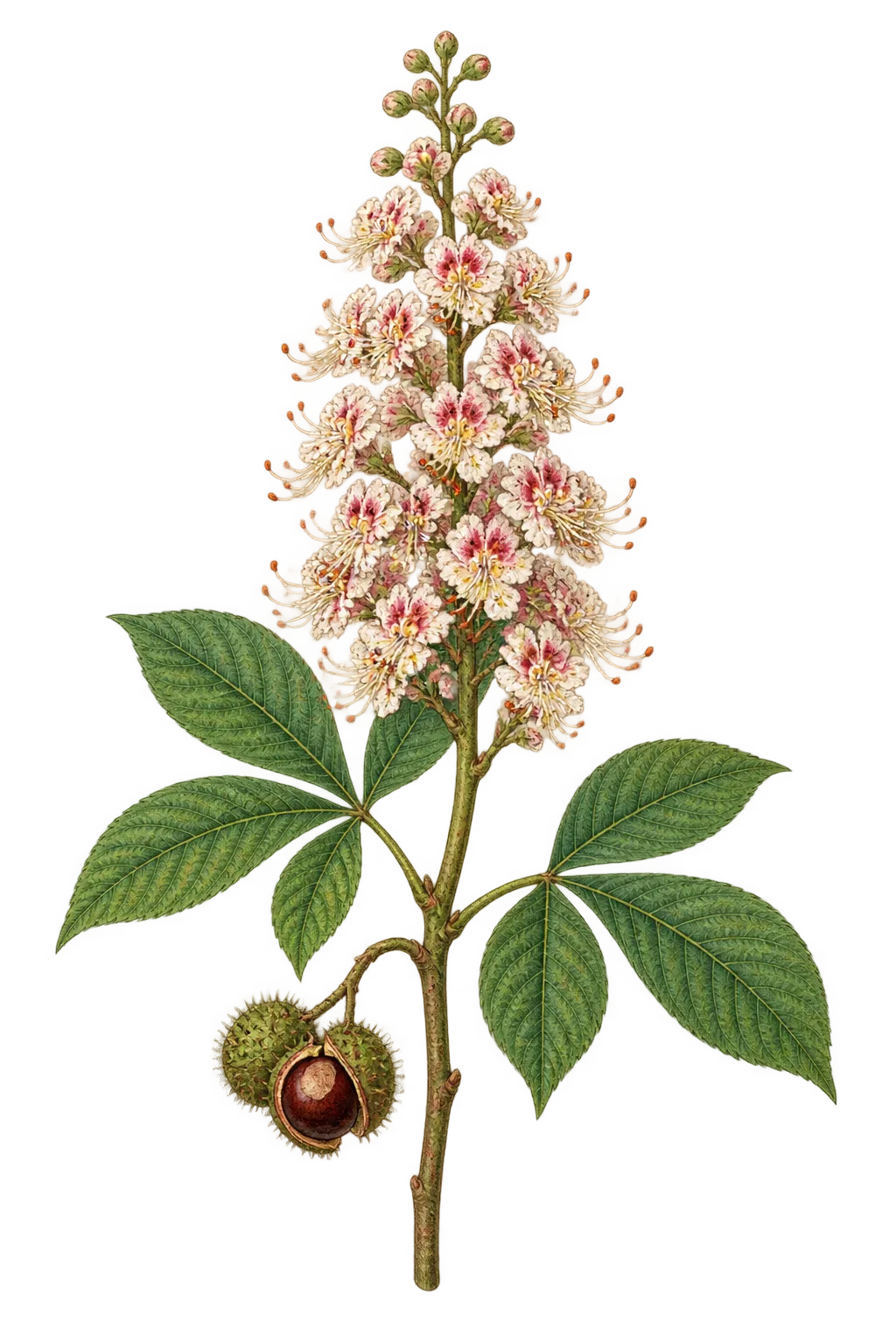
The opposite, compound leaves each divide into five pointed leaflets with finely toothed edges. Young leaflets have soft hairs; as they mature, the upper surface becomes smooth while hairs remain along veins beneath. Thick yellow-brown capsules later enclose glossy brown seeds. The mature leaves are dark green above and paler beneath, turning yellow or orange in autumn. NC State Extension: Arnold buckeye
Bloom window
North Carolina horticultural account
North Carolina State Extension records spring flowering in its horticultural account. Dense, upright panicles, about fifteen centimetres high, hold yellowish tubular flowers with red markings. The fruits develop into an autumn display. NC State Extension: Arnold buckeye
Native range
Aesculus ×arnoldiana is an artificial hybrid of A. flava, A. glabra and A. pavia. USDA GRIN records it only in cultivation, without a separate wild native range. Kew POWO: Aesculus ×arnoldianaUSDA GRIN: Aesculus ×arnoldiana
Botanical sources
Reviewed 2026-10-11. Seasonal development varies with location and growing conditions.