Atlantic poison oak
Toxicodendron pubescens Mill.
Atlantic poison oak is usually a low, upright deciduous shrub, often about 2–4 feet tall. Underground rhizomes allow several shoots to form a colony. Despite its common name and lobed foliage, it belongs to the cashew family rather than the oaks. All parts contain urushiol, which can cause severe contact dermatitis; avoid touching or burning the plant. NC State Extension: Toxicodendron pubescens
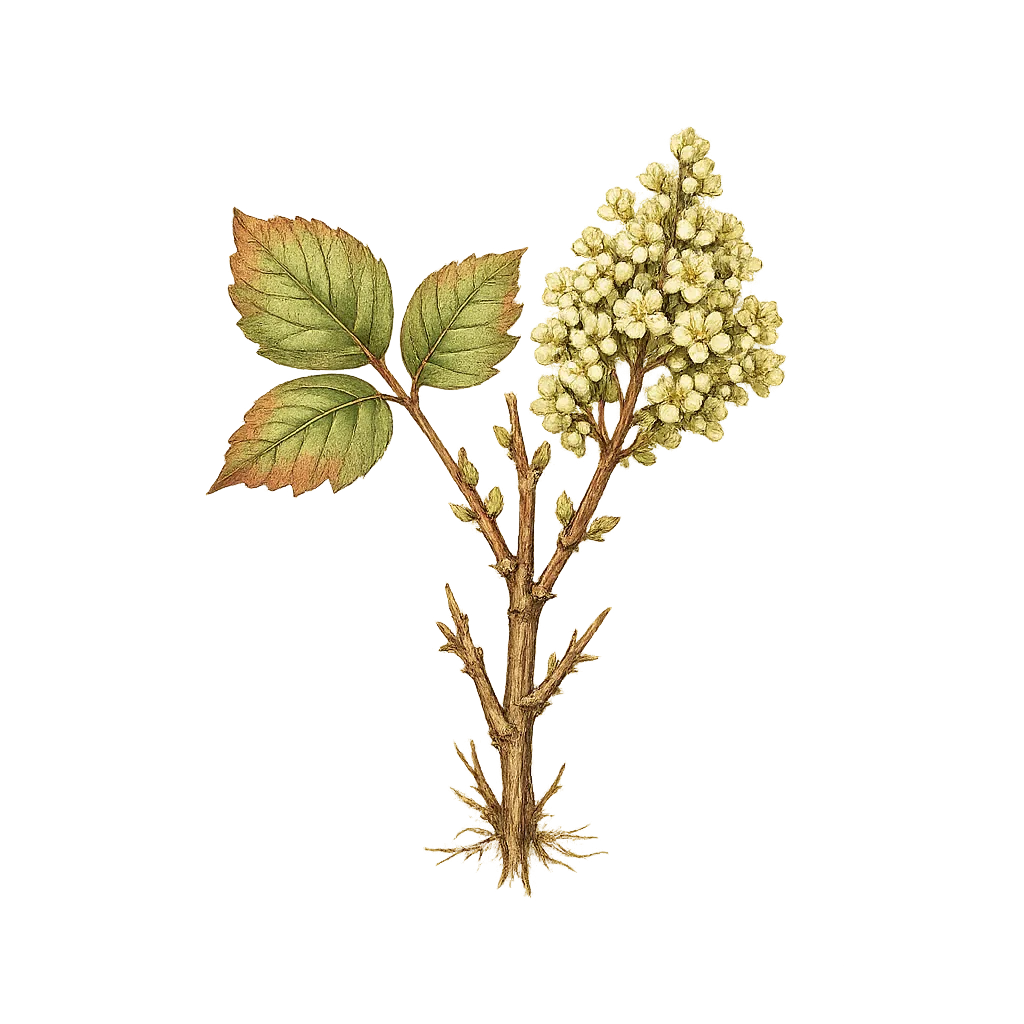
Botanical name
Toxicodendron pubescens Mill. is an accepted species in Anacardiaceae. Older poison-oak names have sometimes been confused with names applied to poison ivy. US Forest Service FEIS: Toxicodendron pubescens
Recognizing the plant
Each alternate leaf consists of three leathery leaflets. Their irregular lobes or teeth suggest small oak leaves, and hairs cover both surfaces. Leaves often crowd toward the shoot tips and turn orange or red in autumn. Fine hairs also cover the stems and buds. Small yellow-green flowers occur in loose clusters; the rounded fruits mature from greenish white to tan-white and retain a hairy surface. NC State Extension: Toxicodendron pubescens
Bloom window
North Carolina
In North Carolina, the inconspicuous flowers appear in spring. NC State Extension: Toxicodendron pubescens
Native range
Its native range extends through the central and eastern United States, from New Jersey south to Florida and west toward eastern Texas and southeastern Kansas. Dry, sandy woods and thickets are characteristic habitats. US Forest Service FEIS: Toxicodendron pubescensNC State Extension: Toxicodendron pubescens
Botanical sources
Reviewed 2026-10-11. Seasonal development varies with location and growing conditions.