Aztec marigold
Tagetes erecta L.
Aztec marigold combines finely divided foliage with substantial flower heads. Cultivated forms have been selected into many colors and sizes, and double forms pack the head with additional ray florets. It is a familiar cut flower as well as a bedding plant, with an upright annual habit. NC State Extension: Tagetes erecta
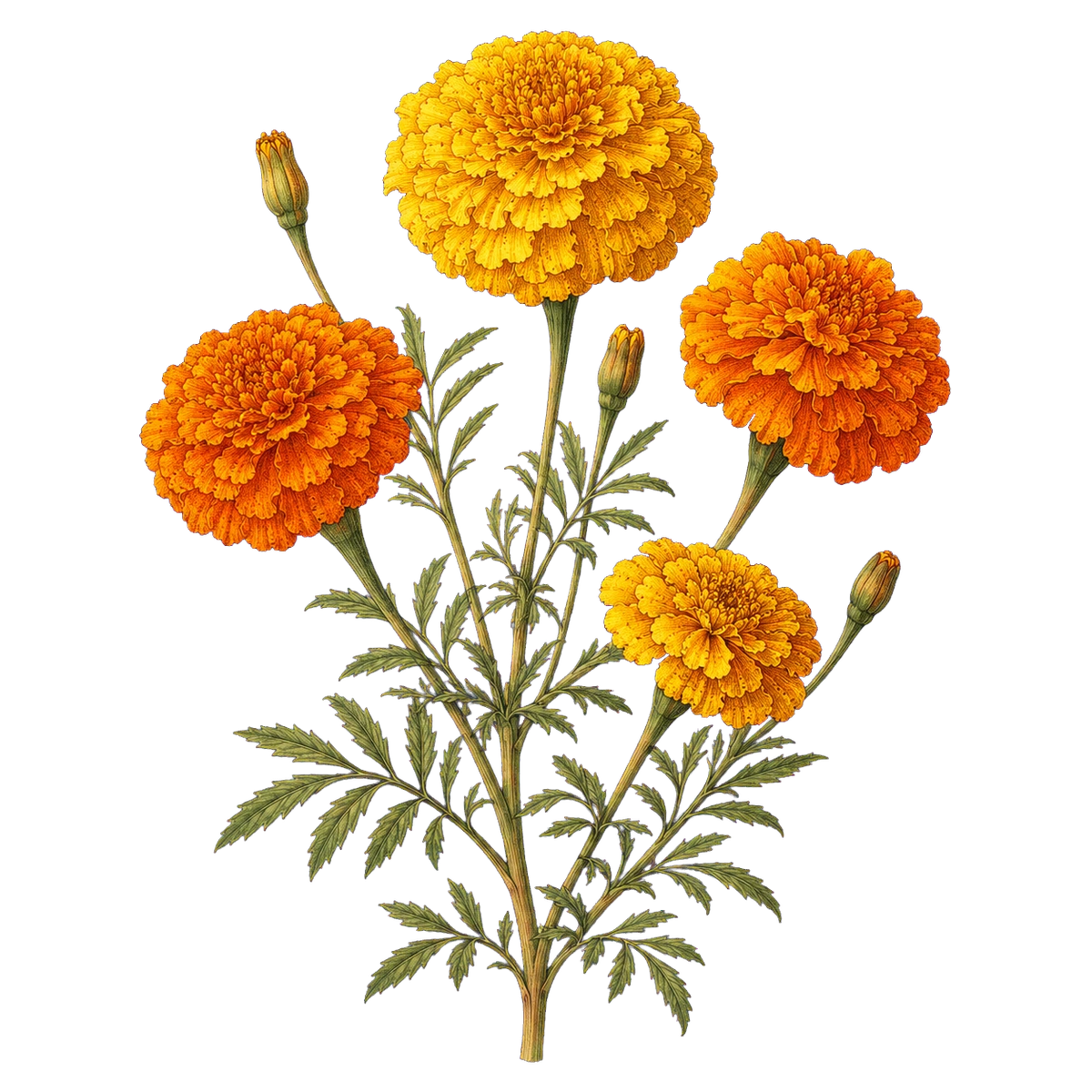
Botanical name
Kew accepts Tagetes erecta and includes T. patula within it. Identification here follows North Carolina’s narrower T. erecta treatment, which distinguishes the swollen flower stalk below the head. Kew Plants of the World Online: Tagetes erectaVascular Plants of North Carolina: Tagetes erecta
Recognizing the plant
The leaves are gland-dotted and aromatic, arranged opposite one another low on the stem and alternately higher up. Their narrow divisions have toothed edges. Each solitary head sits above the foliage on a long stalk; in the narrower regional concept of Tagetes erecta, that stalk widens conspicuously just beneath the head. Yellow or orange rays surround the central florets, although cultivated forms can include cream, reddish and mixed colors. The dry, dark fruits are slender. NC State Extension: Tagetes erectaVascular Plants of North Carolina: Tagetes erectaFlora of North America: Tagetes erecta
Bloom window
North Carolina, cultivated plants
The garden flowering season extends from early summer into early fall. NC State Extension: Tagetes erecta
Native range
Kew places the native range in Mexico and Guatemala. The species has been introduced widely; outside cultivation in North Carolina it is recorded from roadsides, railway edges and waste ground. Kew Plants of the World Online: Tagetes erectaVascular Plants of North Carolina: Tagetes erecta
Ecological relationships
The flowers attract visiting butterflies and hummingbirds. NC State Extension: Tagetes erecta
Botanical sources
- Kew Plants of the World Online: Tagetes erecta
- NC State Extension: Tagetes erecta
- Vascular Plants of North Carolina: Tagetes erecta
- Flora of North America: Tagetes erecta
Reviewed 2026-10-11. Seasonal development varies with location and growing conditions.