begonia
Begonia L.
A genus overview; characteristics vary between its species.
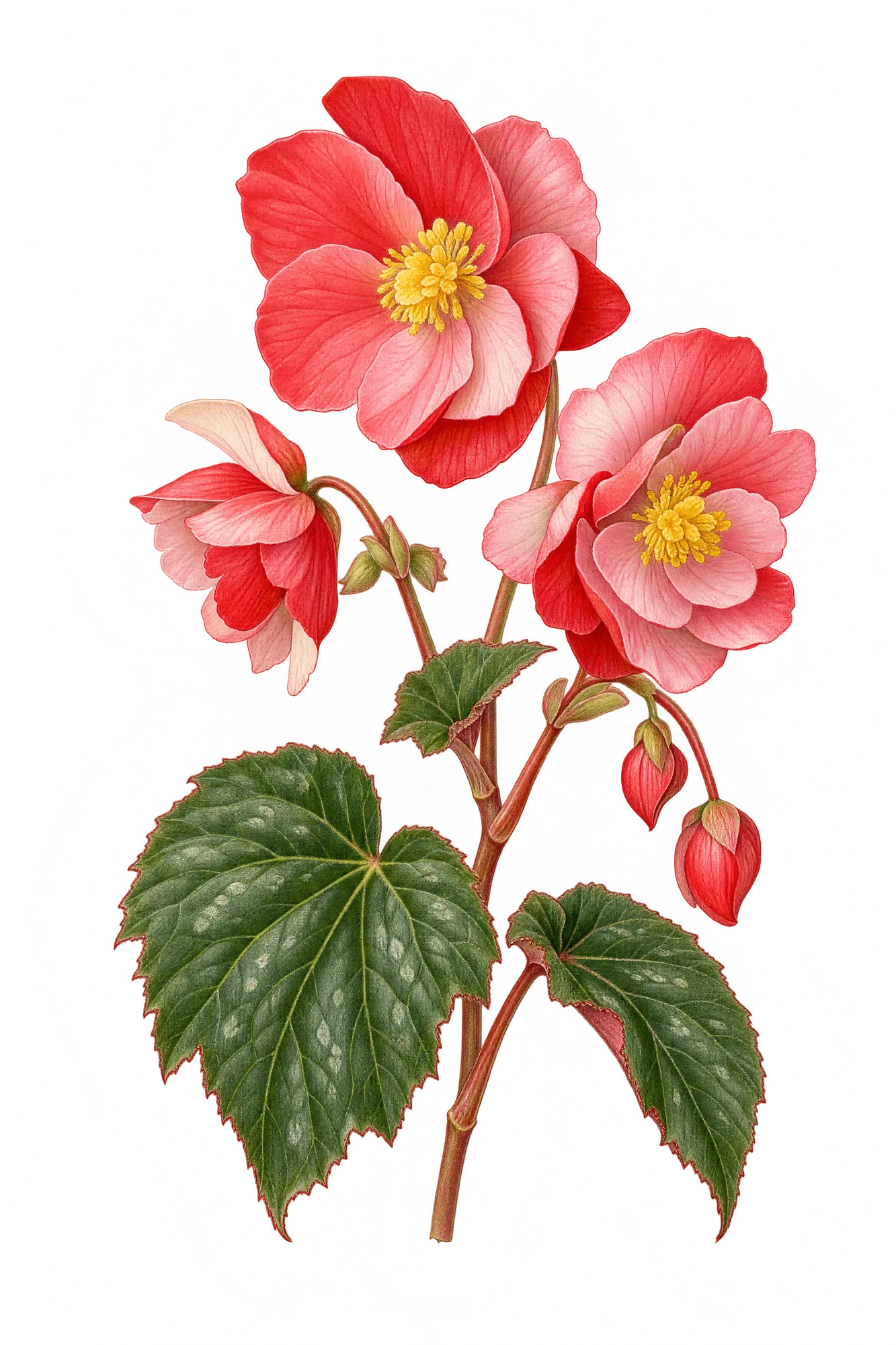
A begonia leaf often gives the first clue to its identity: its two sides do not quite match. Cultivated plants may be upright, mounding or trailing. Their flowers can be single or double, in colours including pink, red, orange, yellow and white. Many rhizomatous groups have showy foliage. NC State Extension: Begonia
Botanical name
The cited authority recognizes Begonia L. as a genus. Kew POWO: Begonia
Recognizing the plant
That uneven base appears across a remarkably varied genus, whose members can carry rounded, heart-shaped or star-like leaves in green, bronze, burgundy or patterned combinations. Some have upright, cane-like stems; others spread from creeping rhizomes or grow from tubers. Their fruits are often winged capsules containing numerous tiny seeds. NC State Extension: Begonia
Seasonality across the genus
North Carolina horticultural guidance
NC State’s horticultural account lists summer and autumn flowering for commonly cultivated begonias; timing varies among the species and garden groups covered by that account. NC State Extension: Begonia
Native range
Begonia is native across tropical and subtropical regions of the Americas, Africa and Asia, with its range reaching central China. Many species are forest-understorey plants, a background reflected in the sheltered conditions preferred by many cultivated forms. Kew POWO: BegoniaNC State Extension: Begonia
Botanical sources
Reviewed 2026-10-11. Seasonal development varies with location and growing conditions.