black chokeberry
Aronia melanocarpa (Michx.) Elliott
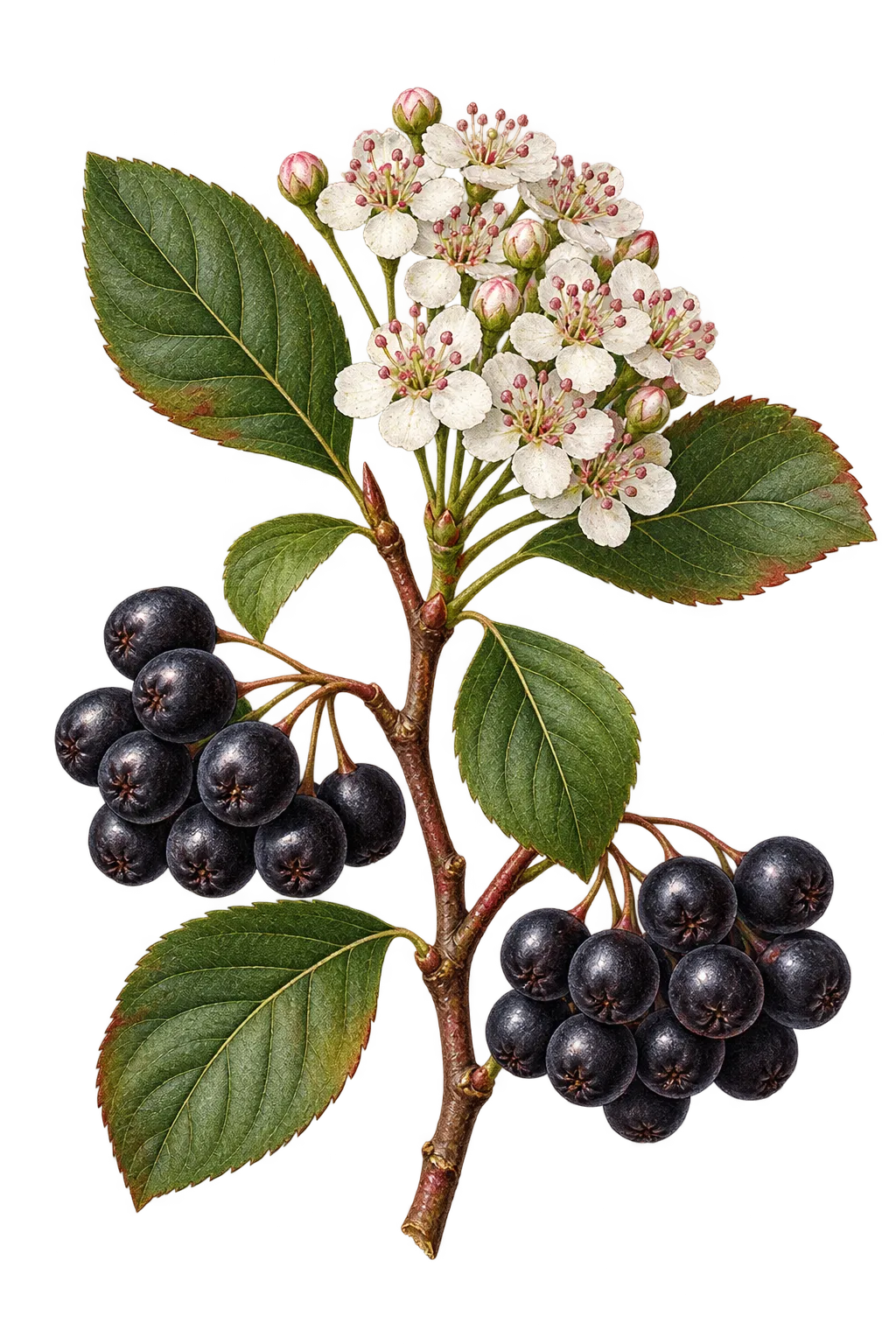
Black chokeberry takes its scientific epithet, melanocarpa, from its dark ripe fruits: the name means black-fruited. Its common name refers to their strong astringency. The deciduous shrub can spread freely by suckers, forming patches that widen as new stems develop around the original plant. NC State Extension: Aronia melanocarpa
Botanical name
Aronia melanocarpa (Michx.) Elliott is accepted by Kew, matching the catalog name and authorship. Kew POWO: Aronia melanocarpa
Recognizing the plant
Plants have several stems and an upright to rounded crown that can become open toward the base with age. Glossy, finely toothed leaves alternate along the stems and are usually elliptical, about two-and-a-half to seven-and-a-half centimetres long. The shiny blackish-purple fruits are roughly a centimetre across. Although commonly called berries, they are botanically pomes. NC State Extension: Aronia melanocarpa
Seasonal development
North Carolina Extension regional account
In North Carolina Extension’s account, small clusters of five-petalled, whitish to pink flowers appear in May and June. Later, the shrub develops dark, shiny fruits, followed by red to burgundy autumn foliage before the leaves fall. NC State Extension: Aronia melanocarpa
Native range
Native from eastern Canada into the north-central and eastern United States, it is a deciduous member of the rose family. Kew POWO: Aronia melanocarpaNC State Extension: Aronia melanocarpa
Ecological relationships
Birds are attracted to the dark fruit, according to North Carolina Extension. NC State Extension: Aronia melanocarpa
Botanical sources
Reviewed 2026-10-11. Seasonal development varies with location and growing conditions.