blackgum
Nyssa sylvatica Marshall
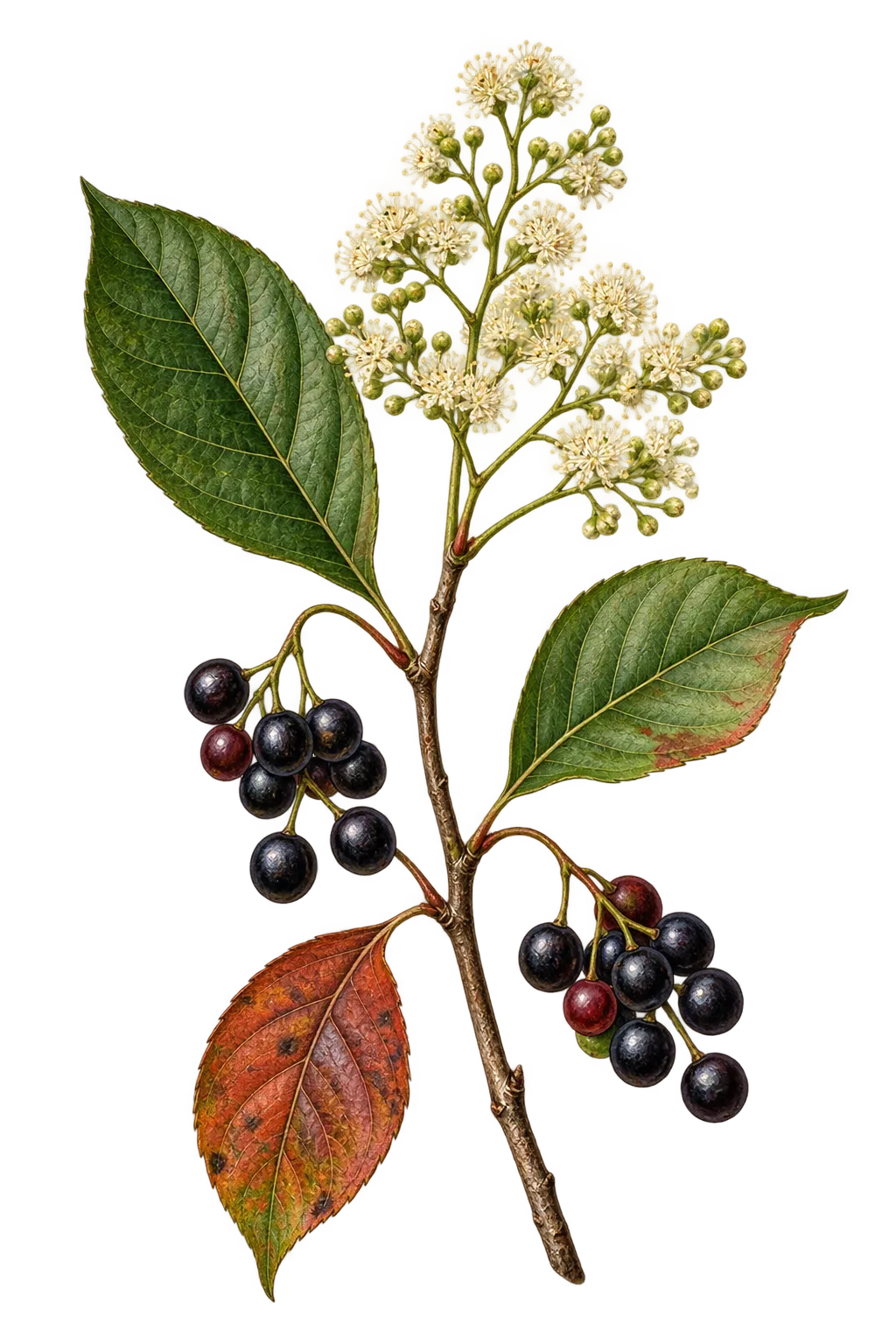
Blackgum’s seasonal transformation is one of its strongest characters: glossy green summer leaves can turn brilliant scarlet, purple or orange in autumn. Mature trees develop a straight trunk and a dense crown. Their deeply broken bark forms irregular ridges and plates, offering another way to recognise the tree after the leaves have fallen. NC State Extension: Nyssa sylvaticaUSDA NRCS Plant Guide: Blackgum
Botanical name
Kew accepts Nyssa sylvatica Marshall in Nyssaceae, matching the catalog species. Kew POWO: Nyssa sylvatica
Recognizing the plant
Simple, leathery leaves alternate along the branchlets. Small greenish-white flowers occur singly or in clusters. Trees commonly carry mostly male or mostly female flowers, although some flowers contain both reproductive functions. Fruit production therefore varies between individuals. The egg-shaped blue-black fruits are drupes, each with a hard stone surrounding the seed. NC State Extension: Nyssa sylvaticaUSDA NRCS Plant Guide: Blackgum
Seasonal development
North Carolina
Blue-black fruits are conspicuous in September and October, followed by the colourful autumn foliage. NC State Extension: Nyssa sylvatica
Native range
It is native from southern Ontario into the central and eastern United States and Mexico. North Carolina records include dry upland forests and slopes associated with oaks and hickories, as well as some low-lying sites. Kew POWO: Nyssa sylvaticaNC State Extension: Nyssa sylvatica
Ecological relationships
Wood ducks, wild turkeys, robins and black bears are among the animals that eat its fruits. USDA NRCS Plant Guide: Blackgum
Bees also collect nectar from the flowers. NC State Extension: Nyssa sylvatica
Botanical sources
Reviewed 2026-10-11. Seasonal development varies with location and growing conditions.