bracted passionflower
Passiflora affinis Engelm.
Bracted passionflower climbs over trees, shrubs, rocky outcrops and cliffs. At Amistad National Recreation Area in Texas, botanists recorded it near San Pedro campground and North Oak Tree Camp canyon, describing it as locally common at one site despite being rare across their survey area. Poole (2013): An inventory of the vascular plants of Amistad National Recreation Area
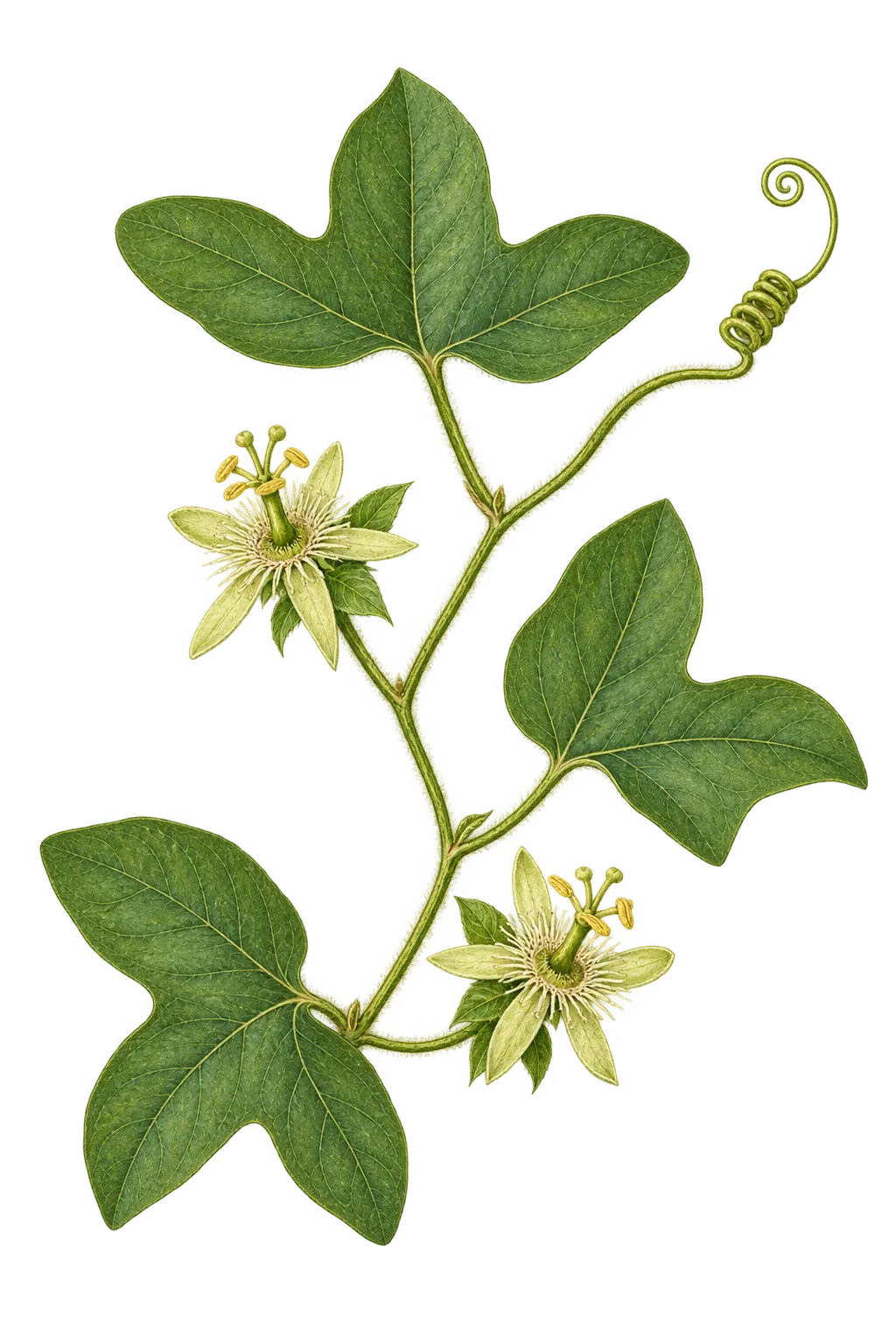
Botanical name
Kew lists Passiflora affinis Engelm. as an accepted species of Passiflora in Passifloraceae; the database name needs no taxonomic replacement. Kew Plants of the World Online: Passiflora, accepted species list
Recognizing the plant
This species has three-lobed, sometimes five-lobed leaves with smooth, unbroken margins and small circular nectar glands underneath. Its pale green to white flowers carry slender bracts and two rings of corona filaments. The outer filaments have club-shaped tips and purple, white and green sections. Ripe berries are purple-black. Floral bracts and leaf nectaries help separate it from the similar Passiflora lutea. Flora of North America: Passiflora affinis
Bloom window
Central Texas, United States
In the North American flora area, flowers appear from June through October, occasionally beginning in May. Flora of North America: Passiflora affinis
Native range
The native distribution comprises central Texas and northeastern Mexico, including Coahuila, Nuevo León and Tamaulipas. It inhabits oak-juniper woodland, shrubland and savanna, usually in loamy soil over limestone at elevations of about 100–800 metres. Flora of North America: Passiflora affinis
Ecological relationships
In Texas, bracted passionflower is a host for Gulf fritillary caterpillars; the University of Texas identifies this species among the passion vines used by the butterfly. University of Texas Biodiversity Center: Austin’s Other Orange Butterfly, the Gulf Fritillary
Botanical sources
- Kew Plants of the World Online: Passiflora, accepted species list
- Flora of North America: Passiflora affinis
- Poole (2013): An inventory of the vascular plants of Amistad National Recreation Area
- University of Texas Biodiversity Center: Austin’s Other Orange Butterfly, the Gulf Fritillary
Reviewed 2026-10-11. Seasonal development varies with location and growing conditions.