candelabra aloe
Aloe arborescens Mill.
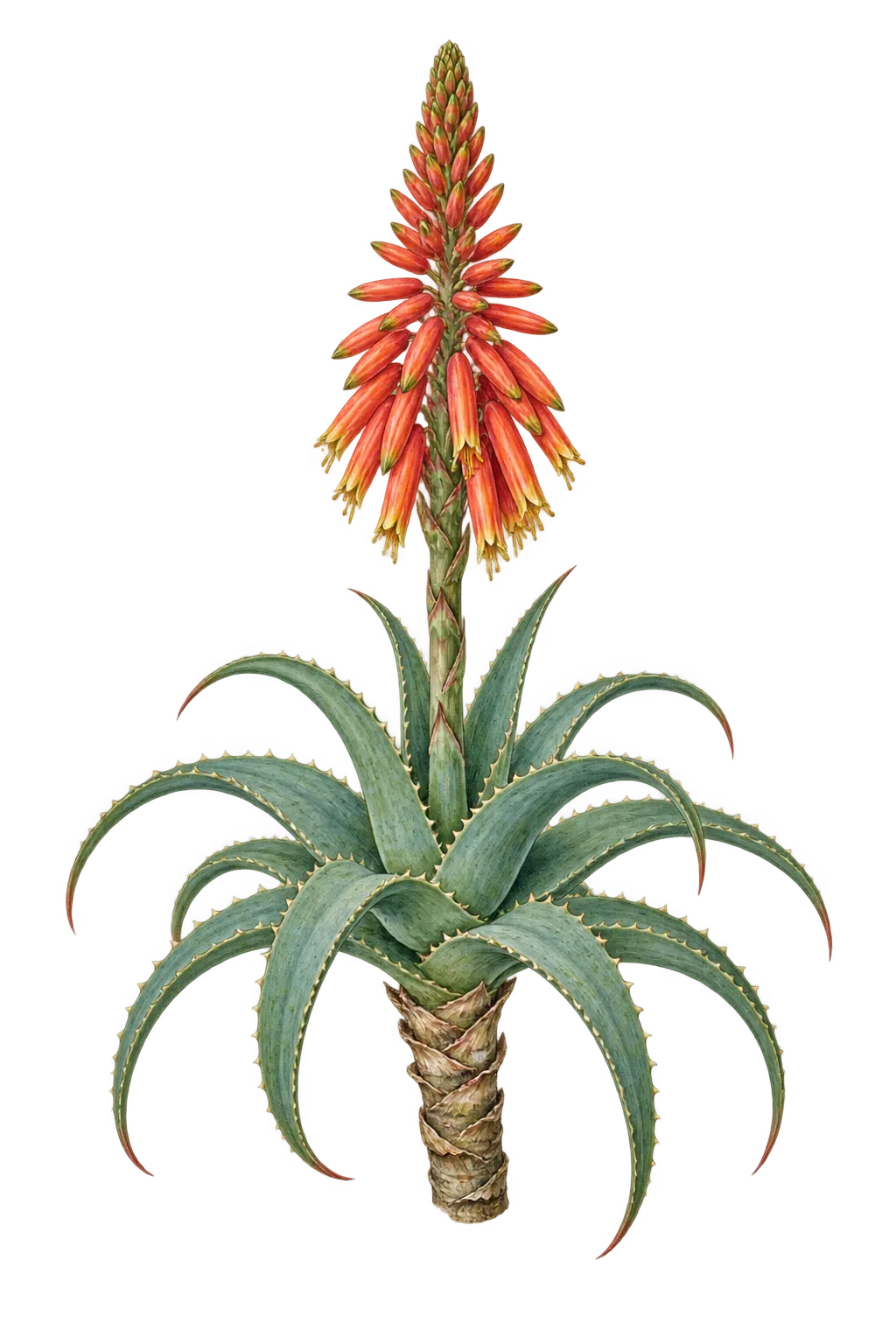
Candelabra aloe earns its outline through branching. Several heads of gray-green leaves develop into a substantial shrub, often two to three metres tall. Each rosette is edged with conspicuous pale teeth. Its persistent, densely branching growth has also led to its use as a living fence around livestock enclosures in South Africa. SANBI PlantZAfrica: Aloe arborescens
Botanical name
Aloe arborescens Mill is accepted in the cited taxonomic treatment. The supplied database name identifies the same species. Kew Plants of the World Online: Aloe arborescens
Recognizing the plant
The flower-bearing stalks are usually unbranched, with two or more arising from a single rosette. Dense racemes carry tubular flowers, commonly deep orange, though yellow and mixed orange-red-and-yellow forms occur. The cliff-dwelling form formerly called Aloe mutabilis has smaller, less-branched rosettes and conspicuously bicoloured spikes. It is included within Aloe arborescens in the SANBI account. SANBI PlantZAfrica: Aloe arborescens
Bloom window
South Africa
In South Africa the main flowering display falls in the cold months of May to July. SANBI PlantZAfrica: Aloe arborescens
Native range
Aloe arborescens ranges from South Africa north into Mozambique, Zimbabwe and Malawi. It occurs from the coast into mountains, particularly on exposed rocky ridges and outcrops, and also in dense bush. Most of its South African distribution lies in eastern summer-rainfall areas. The name krantz aloe refers to its rocky ridge or cliff habitats. SANBI PlantZAfrica: Aloe arborescensKew Plants of the World Online: Aloe arborescens
Ecological relationships
SANBI records sunbirds, other birds and bees visiting the nectar-bearing flowers. SANBI PlantZAfrica: Aloe arborescens
Botanical sources
Reviewed 2026-10-11. Seasonal development varies with location and growing conditions.