Carolina rose
Rosa carolina L.
Carolina rose often forms a loose colony as new stems rise from spreading roots. Its modest stature suits open ground and woodland edges: plants may remain ankle-high or develop into shrubs several feet tall. The deciduous canopy changes through the year from fresh green growth to autumn color. NC State Extension: Rosa carolina
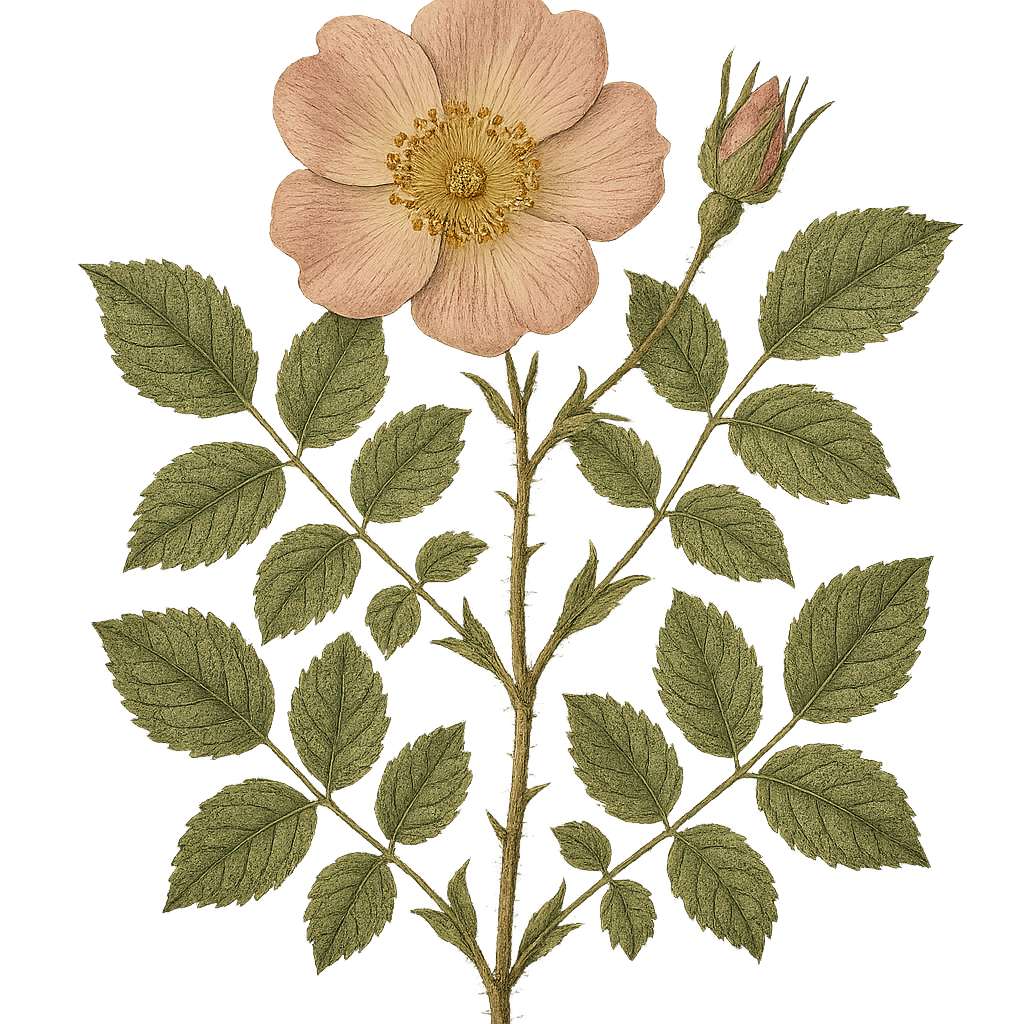
Botanical name
Native Plant Trust’s regional flora recognizes Rosa carolina L. Native Plant Trust Go Botany: Rosa carolina
Recognizing the plant
Each compound leaf usually carries five to seven toothed leaflets. Slender, straight prickles occur along the stems, often paired near the nodes, while bristles can be conspicuous on the leaf stalks. Fragrant flowers have five pink petals, occasionally white, arranged around a crowded center of yellow stamens. Green, pointed sepals and glandular hairs on the flower stalk offer further details to examine. The rounded red hips remain after the petals have fallen. NC State Extension: Rosa carolinaNative Plant Trust Go Botany: Rosa carolina
Bloom window
North Carolina
Flowers appear in May and June; hips color from August through October. NC State Extension: Rosa carolina
Native range
This rose is native to eastern and central North America. Regional records include meadows, fields, open woods and disturbed or maintained habitats. NC State Extension: Rosa carolinaNative Plant Trust Go Botany: Rosa carolina
Ecological relationships
The plant supports larvae of the Polyphemus moth. NC State Extension: Rosa carolina
Butterflies visit the fragrant flowers. Native Plant Trust Go Botany: Rosa carolina
Birds are attracted to the ripe hips. Native Plant Trust Go Botany: Rosa carolina
Botanical sources
Reviewed 2026-10-11. Seasonal development varies with location and growing conditions.