carrot
Daucus carota subsp. sativus (Hoffm.) Schübl. & G.Martens
The familiar carrot root is only the first chapter of a biennial plant. Gardeners usually harvest this cool-season vegetable during its first year, before it flowers. Left to complete its life cycle, the plant produces a flowering stem in its second year and then dies. NC State Extension: Garden Carrot
Botanical name
Kew accepts the cultivated subspecies and lists Daucus carota var. sativus Hoffm. as its homotypic synonym. Kew POWO: cultivated carrot
Recognizing the plant
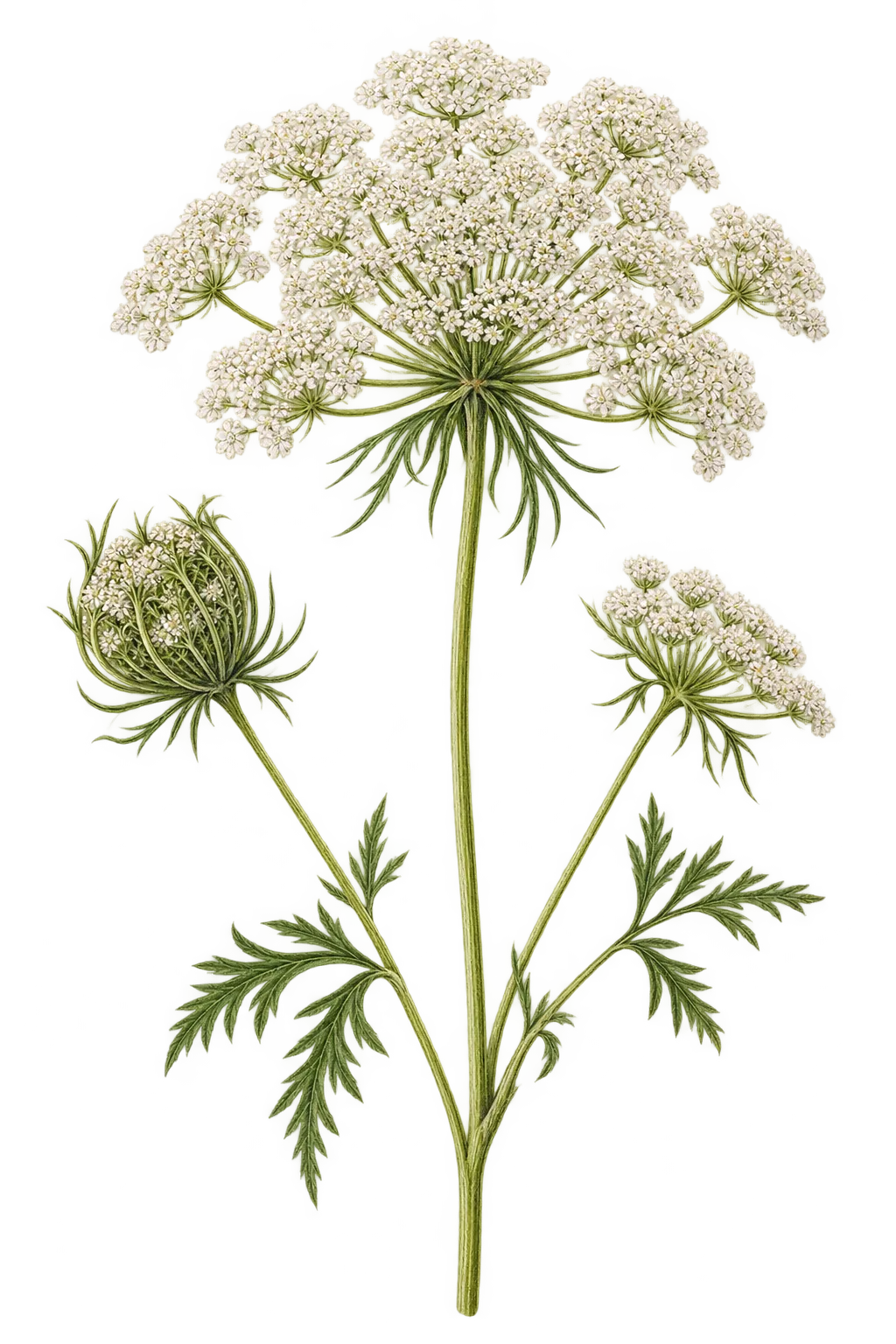
Feathery green leaves rise from a thick, fleshy taproot. The leaves divide repeatedly into narrow segments, while cultivated roots vary in shape and colour beyond the familiar orange. Small, five-petalled white flowers form broad, lacy umbels. The dry fruits are ribbed and bristly, a very different texture from the succulent root beneath the soil. NC State Extension: Garden Carrot
Bloom window
North Carolina horticultural account
NC State lists summer and autumn flowering for plants allowed to reach their second year; vegetable crops are usually removed before this display. NC State Extension: Garden Carrot
Native range
Kew describes this carrot as a cultigen originating in Central Asia to Afghanistan, listing Afghanistan and Uzbekistan in its native distribution. Its present cultivated range extends far beyond that region. Kew POWO: cultivated carrot
Botanical sources
Reviewed 2026-10-11. Seasonal development varies with location and growing conditions.