Chinese silvergrass
Miscanthus sinensis Andersson
Chinese silvergrass builds a large clump from branching underground rhizomes. Its shoots remain connected below ground, and established stands can develop a ring of living growth around an aging center. In Japan it is an important component of grasslands, sometimes forming their tallest layer above a varied community of shorter herbs. US Forest Service: Chinese silvergrass
Botanical name
Miscanthus sinensis is an accepted perennial grass species; the hybrid Miscanthus × giganteus is a different taxon. Kew: Miscanthus sinensis
Recognizing the plant
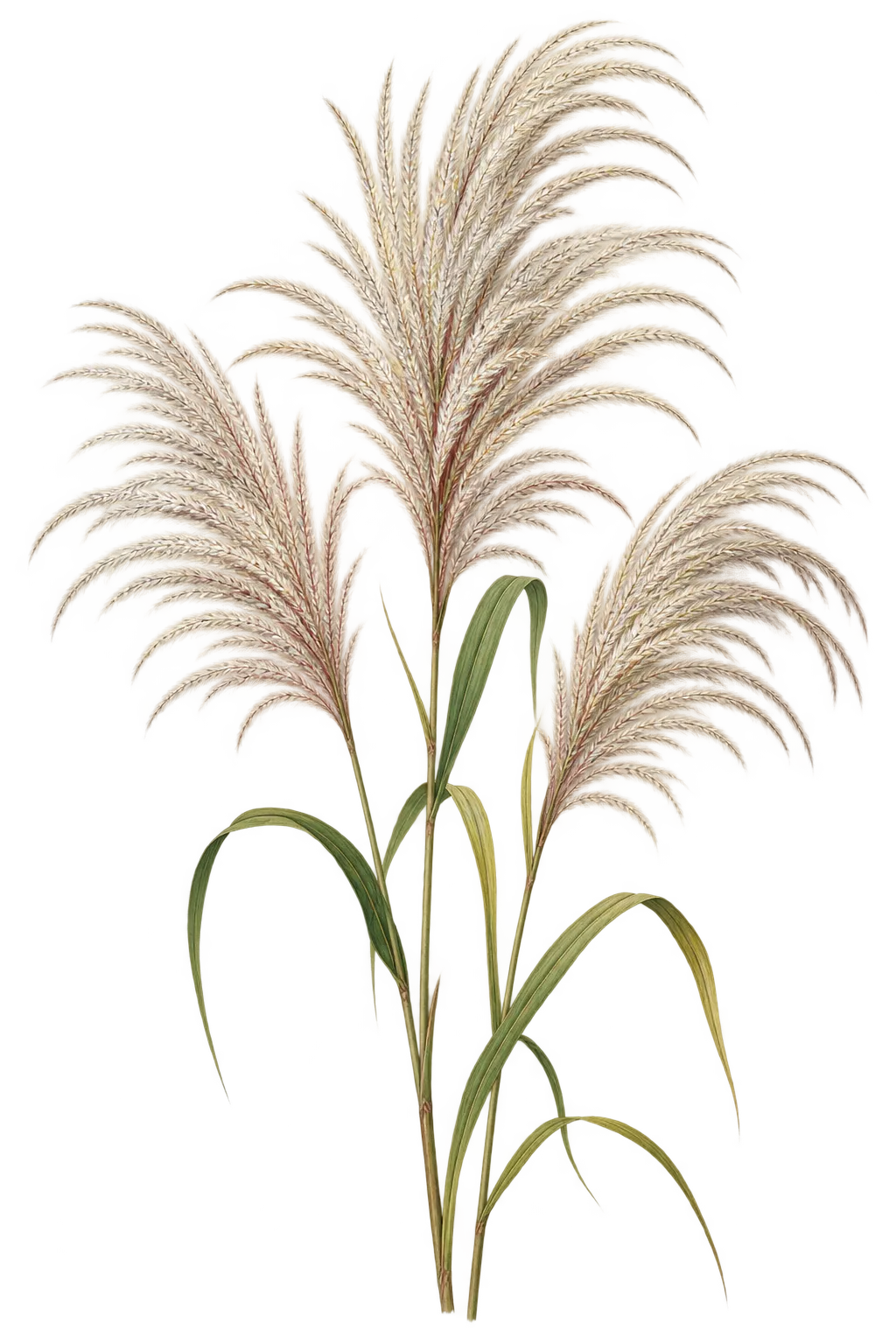
Flowering stems commonly reach one to three meters, depending on climate and growing conditions. Long leaf blades arch away from the stems. The flower head is a branched panicle made up of many slender racemes. Each small spikelet bears an awn and a tuft of beige, reddish or pink hairs, approximately as long as the spikelet itself. These hairy flowering units give the open plumes their distinctive texture. University of Minnesota: Miscanthus sinensis identificationUS Forest Service: Chinese silvergrass
Bloom window
Northeastern United States and the Carolinas
Regional floras record flowering from September through November. US Forest Service: Chinese silvergrass
Native range
The species is native across a broad part of eastern Asia and extends into Malesia. Ornamental introductions have established outside gardens in North America, especially in disturbed ground along roads, railways and abandoned fields. Kew: Miscanthus sinensisUS Forest Service: Chinese silvergrass
Ecological relationships
Wind carries its pollen; the seeds are also dispersed by wind. US Forest Service: Chinese silvergrass
Botanical sources
- Kew: Miscanthus sinensis
- University of Minnesota: Miscanthus sinensis identification
- US Forest Service: Chinese silvergrass
Reviewed 2026-10-11. Seasonal development varies with location and growing conditions.