coffee
Coffea L.
A genus overview; characteristics vary between its species.
Coffee begins as a fruit-bearing shrub or small tree, and Coffea names the whole genus rather than one commercial crop. The familiar beans are seeds inside fruits commonly called cherries. Arabica and robusta are cultivated examples, but the genus also contains many wild species with different leaf sizes, fruits and ecological settings. A genus-level record should leave that diversity visible. Kew POWO: CoffeaFlora of China 19: Coffea
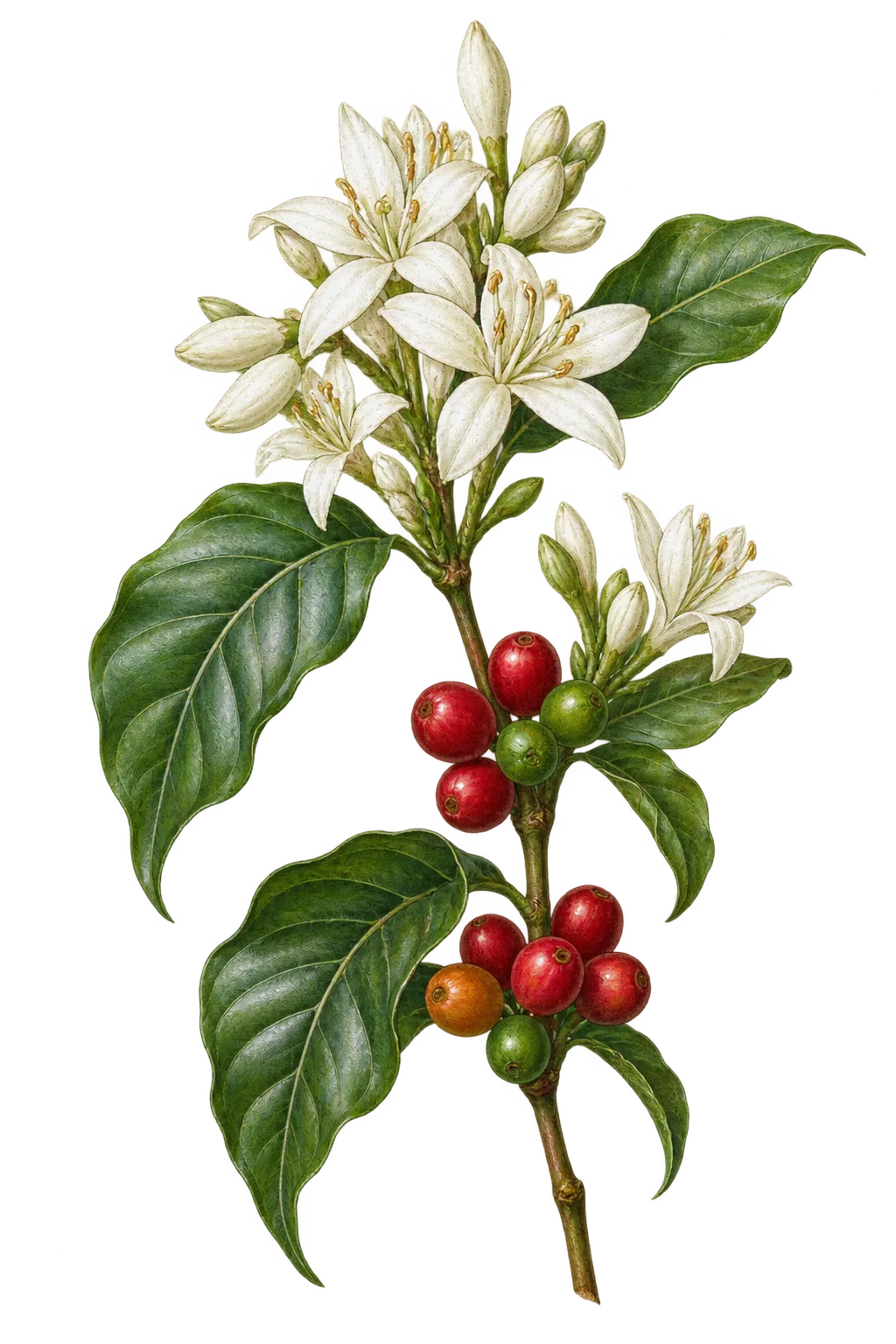
Botanical name
Kew accepts Coffea L. as a genus in Rubiaceae and includes Psilanthus in its synonymy. Kew POWO: Coffea
Recognizing the plant
Flora of China describes the familiar coffee group as unarmed woody plants with usually horizontal side branches. Leaves are generally opposite, and small persistent stipules join the stem between them. Flower clusters arise in leaf axils; the corollas are white or pink and have a tube opening into spreading lobes. Fruits are botanically drupaceous, typically with two seed-bearing compartments and longitudinally grooved seeds. These are useful structural clues beyond the beverage connection. Flora of China 19: Coffea
Native range
Under Kew’s current, expanded circumscription, Coffea is native in tropical and southern Africa, western Indian Ocean islands, and tropical Asia east to Queensland. Older floras excluding Psilanthus give a narrower African and island range. Plantations outside the native range represent cultivation, not evidence that every coffee species originated there. Kew POWO: CoffeaFlora of China 19: Coffea
Botanical sources
Reviewed 2026-10-11. Seasonal development varies with location and growing conditions.