common balm
Melissa officinalis L.
Common balm, often called lemon balm, is a bushy perennial grown for its lemon-scented leaves. It forms a loose mound of branching stems and can spread through both rhizomes and seedlings. The aromatic foliage has long made it useful in herb gardens, where leaves and flowers are used to flavour teas and food. NC State Extension Gardener Plant Toolbox: Melissa officinalis
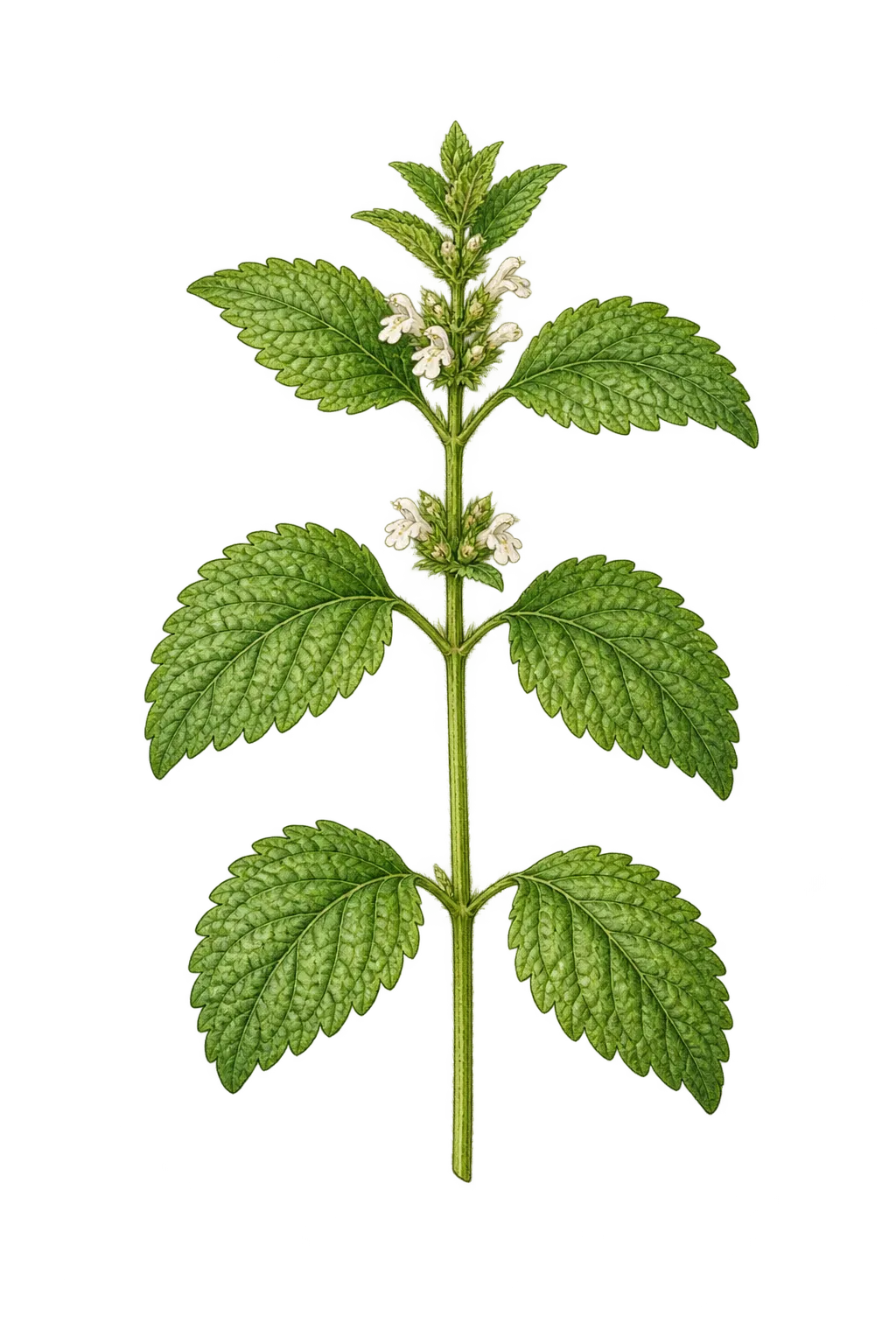
Botanical name
Kew accepts Melissa officinalis L. in Lamiaceae. Kew Plants of the World Online: Melissa officinalis
Recognizing the plant
Broadly egg-shaped leaves have scalloped margins and deeply impressed veins that give the surface a quilted appearance. The flowers are small, tubular and two-lipped, usually creamy white or sometimes pale purple. These modest blossoms contrast with the prominent texture of the foliage. Singapore NParks Flora & Fauna Web: Melissa officinalis
Bloom window
North Carolina horticultural account
NC State describes small white flowers appearing throughout summer, in whorls at the axils of the upper leaves. NC State Extension Gardener Plant Toolbox: Melissa officinalis
Native range
Its native range runs from the Mediterranean into Central Asia, including North Africa, southern Europe and western Asian regions eastward to Tajikistan and Uzbekistan. Cultivation has carried it far beyond that range: Kew records introductions through much of North America, northern Europe, New Zealand and parts of South America. Kew Plants of the World Online: Melissa officinalis
Ecological relationships
The flowers attract bees, according to the same extension account. NC State Extension Gardener Plant Toolbox: Melissa officinalis
Botanical sources
- Kew Plants of the World Online: Melissa officinalis
- NC State Extension Gardener Plant Toolbox: Melissa officinalis
- Singapore NParks Flora & Fauna Web: Melissa officinalis
Reviewed 2026-10-11. Seasonal development varies with location and growing conditions.