common persimmon
Diospyros virginiana L.
Common persimmon offers useful identification clues in more than one season. Mature bark divides into dark, chunky blocks separated by deep furrows, creating a pattern visible even after the leaves fall. In autumn, rounded fruits and changing foliage add another layer to the tree’s appearance. NC State Extension: Diospyros virginiana
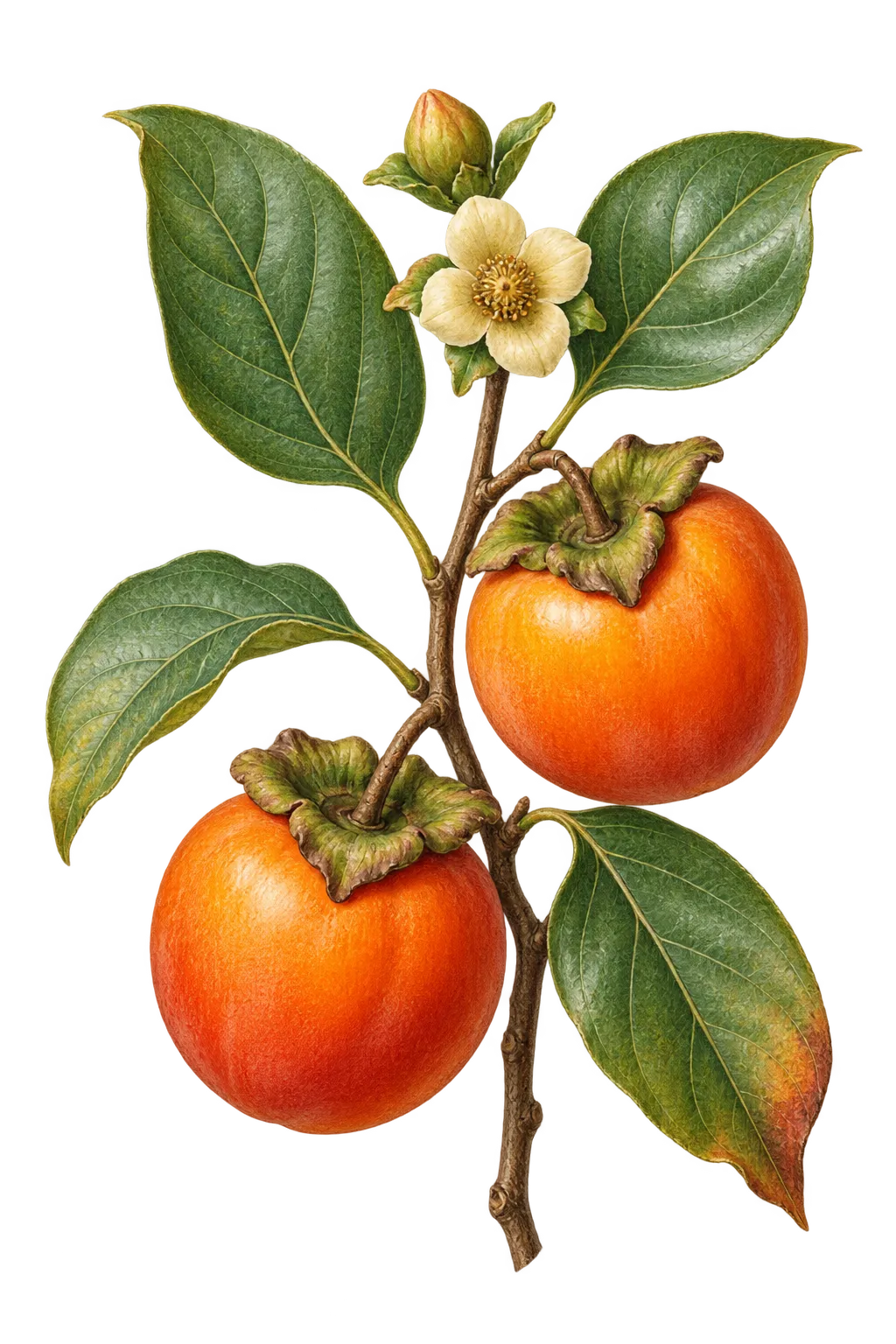
Botanical name
Kew accepts Diospyros virginiana in Ebenaceae. This is common persimmon, distinct from Asian persimmon, Diospyros kaki. Plants of the World Online: Diospyros virginiana
Recognizing the plant
This deciduous member of the ebony family can become a substantial tree, although poor conditions may keep it much smaller and shrublike. Male and female flowers usually occur on separate trees. The fruit retains an enlarged calyx, and a small tip marks the remains of the floral style. Leaves can turn yellow, orange or red, while some fruits remain attached after leaf fall. The species may also produce shoots from its roots. NC State Extension: Diospyros virginiana
Bloom window
North Carolina and nearby eastern United States
The regional account describes spring to early-summer flowering and autumn fruiting. NC State Extension: Diospyros virginiana
Native range
Its native home is central and eastern North America. NC State describes a distribution from New England south to Florida and westward to Texas and Kansas. Plants of the World Online: Diospyros virginianaNC State Extension: Diospyros virginiana
Ecological relationships
Birds, raccoons, foxes, deer and black bears are among the animals reported feeding on the fruits. NC State Extension: Diospyros virginiana
Botanical sources
Reviewed 2026-10-11. Seasonal development varies with location and growing conditions.