common sunflower
Helianthus annuus L.
Common sunflower combines a wild North American ancestry with a long history of cultivation for food and oil. Many wild plants branch, whereas familiar crop forms may have a single dominant stem and head. Young developing heads can track the sun, but open, mature heads generally settle facing east rather than continuing to follow it. Kew Species Profile: Helianthus annuus
Botanical name
Helianthus annuus L. is accepted in Asteraceae. Wild and cultivated forms belong to the species, although cultivation and ancient human movement complicate fine-scale native-range boundaries. Kew Plants of the World Online: Helianthus annuus
Recognizing the plant
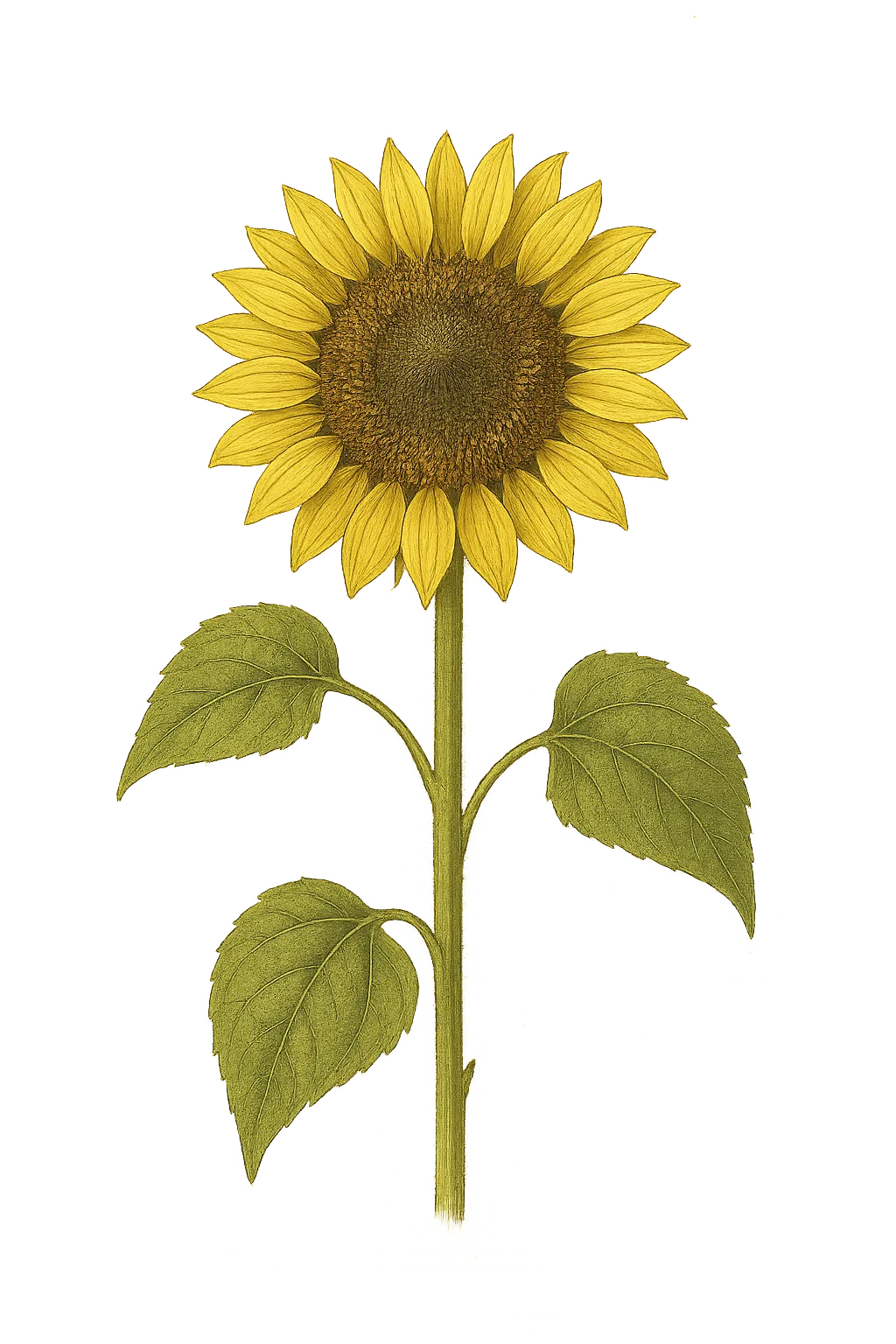
The rough leaves are broad and often heart-shaped, with toothed edges and bristly surfaces. Lower leaves occur in opposite pairs; higher ones become alternately arranged. The apparent flower is a composite head: yellow ray florets surround many fertile brownish disk florets arranged in spirals. Each fertilized disk floret can develop a dry, one-seeded fruit, the familiar sunflower “seed.” Kew Species Profile: Helianthus annuusUSDA Forest Service: A Field Guide to Plants
Native range
The species is native to North America. Kew’s current checklist places its native core in the southwestern United States and Mexico, while extensive cultivation and naturalization have carried it far beyond that area. Wild or escaped plants commonly occupy roadsides and other disturbed open ground. Kew Plants of the World Online: Helianthus annuusUSDA Forest Service: A Field Guide to Plants
Ecological relationships
Bees pollinate the flowers. Kew Species Profile: Helianthus annuus
Mature seeds also provide food for birds, including mourning doves in North American sunflower stands. USDA Forest Service: A Field Guide to Plants
Botanical sources
- Kew Plants of the World Online: Helianthus annuus
- Kew Species Profile: Helianthus annuus
- USDA Forest Service: A Field Guide to Plants
Reviewed 2026-10-11. Seasonal development varies with location and growing conditions.