corky spindletree
Euonymus alatus (Thunb.) Siebold var. apterus Regel
The name apterus marks a striking variation within burning bush: its branches lack the corky wings that make typical Euonymus alatus so recognisable. In cultivation, Bean’s dendrological account also describes a looser habit and leaves that are thinner and usually longer than those of the usual form. Trees and Shrubs Online: Euonymus alatus and var. apterus
Botanical name
ITIS accepts Euonymus alatus var. apterus Regel at variety rank. Trees and Shrubs Online includes it within E. alatus while retaining its distinctive wingless description. ITIS: Euonymus alatus var. apterusTrees and Shrubs Online: Euonymus alatus and var. apterus
Recognizing the plant
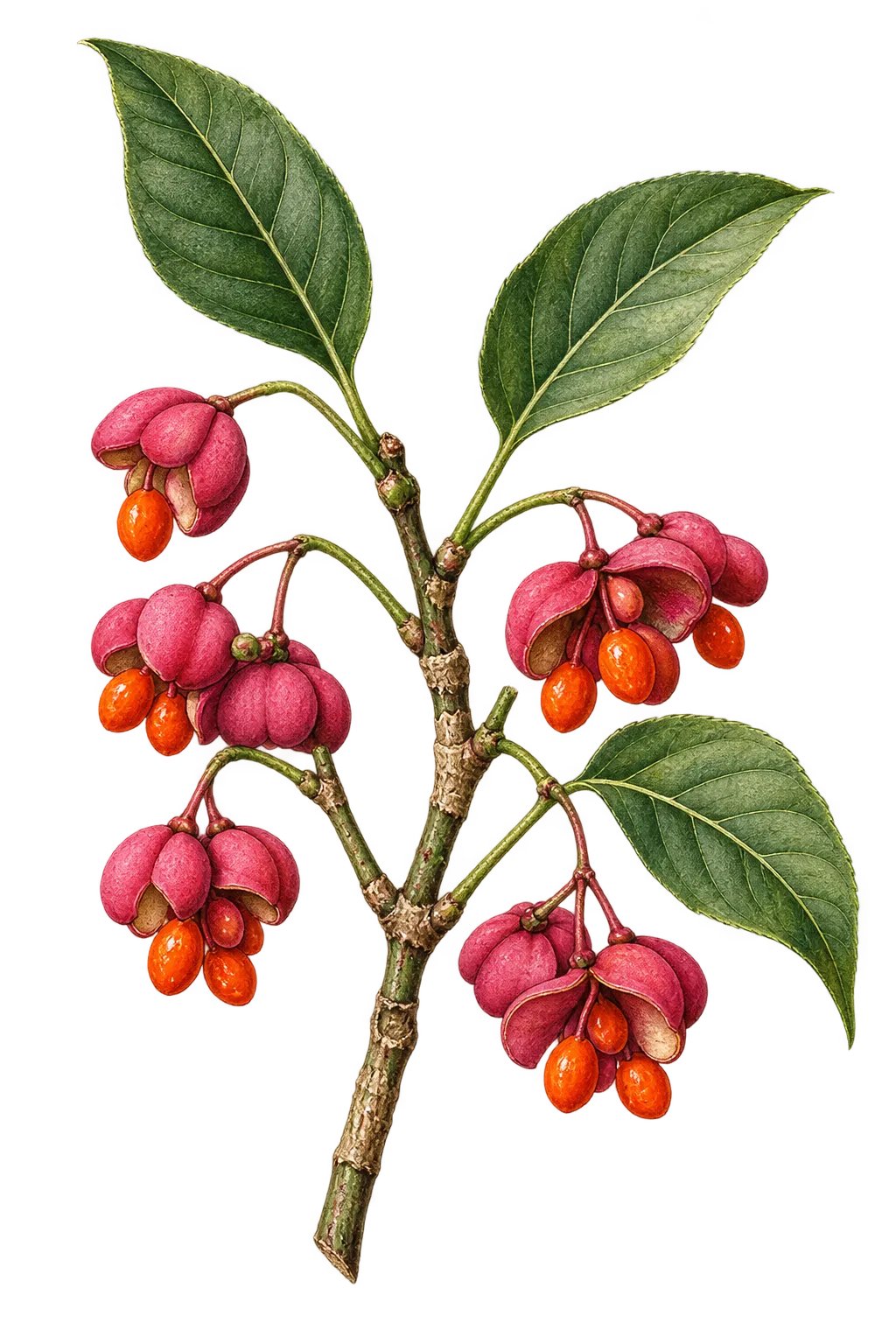
The species’ leaves are finely toothed, tapered toward both ends and carried on very short stalks. Small greenish-yellow to pale-green flowers appear in groups of up to three. Purplish fruits normally develop four rounded compartments joined near the base, although fewer may mature. A bright fleshy covering surrounds the seed. Flora of North America describes the deciduous foliage turning vivid red or reddish purple before it falls. Trees and Shrubs Online: Euonymus alatus and var. apterusFlora of North America: Euonymus alatus
Seasonal development
Britain, cultivated Euonymus alatus
Bean’s British garden account highlights the rosy-scarlet autumn foliage of the species. Trees and Shrubs Online: Euonymus alatus and var. apterus
Native range
The broader species is native to eastern Asia, with Kew’s range extending from southern Siberia through China to Japan. That species-level range includes populations in Korea, the Russian Far East and several adjoining island groups. Kew POWO: Euonymus alatus
Botanical sources
- ITIS: Euonymus alatus var. apterus
- Trees and Shrubs Online: Euonymus alatus and var. apterus
- Flora of North America: Euonymus alatus
- Kew POWO: Euonymus alatus
Reviewed 2026-10-11. Seasonal development varies with location and growing conditions.