cunjevoi
Alocasia brisbanensis (F.M. Bailey) Domin
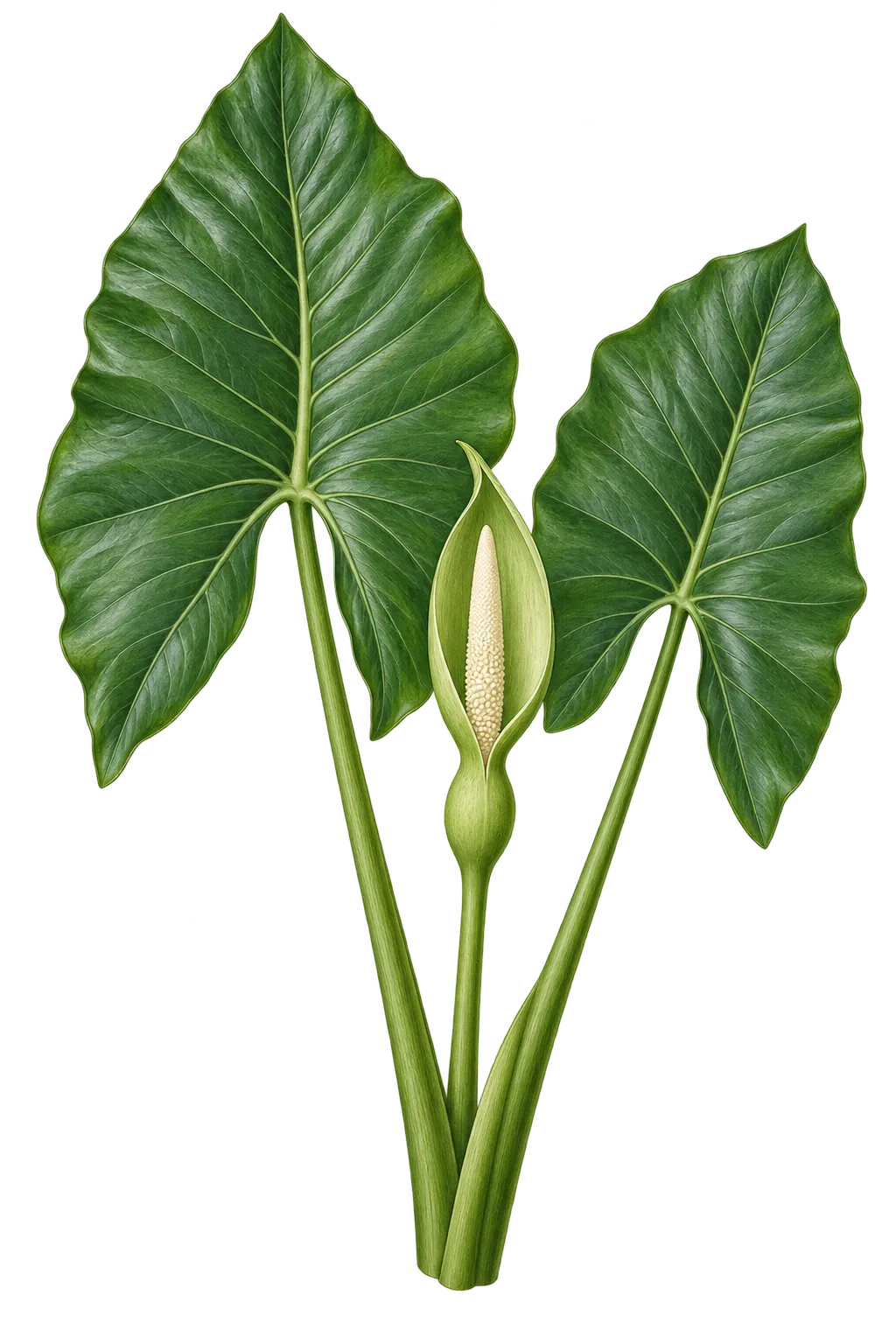
Cunjevoi is a substantial rainforest herb whose leafy and flowering structures operate on very different scales. Its glossy green leaves have an arrow-shaped outline and can approach seventy centimetres long and sixty centimetres wide. Stalks reach about 1.1 metres and vary from green to purplish brown. A thick stem remains clothed in old leaf bases. National Herbarium of New South Wales PlantNET: Alocasia brisbanensis
Botanical name
Alocasia brisbanensis (F.M. Bailey) Domin is accepted in the cited taxonomic treatment. The supplied database name identifies the same species. Kew Plants of the World Online: Alocasia brisbanensis
Recognizing the plant
A green, spoon-like spathe surrounds a tapering, strongly scented spadix. The spathe is a specialised bract; the actual flowers are small and grouped along the central axis. Red fruits later develop together, enclosed at the base by the remaining lower spathe. The flower-bearing spike and surrounding bract therefore have distinct roles in the reproductive structure. National Herbarium of New South Wales PlantNET: Alocasia brisbanensisPlants of South Eastern New South Wales: Alocasia brisbanensis
Bloom window
New South Wales, Australia
In New South Wales, flowering occurs mainly in early summer. National Herbarium of New South Wales PlantNET: Alocasia brisbanensis
Native range
Alocasia brisbanensis is native to northern and eastern Queensland and eastern New South Wales. In New South Wales it grows mainly in coastal districts north from the Illawarra region, extending inland to Dorrigo and the upper Clarence River. Rainforest margins and the forest understorey are characteristic habitats. National Herbarium of New South Wales PlantNET: Alocasia brisbanensisKew Plants of the World Online: Alocasia brisbanensis
Botanical sources
- National Herbarium of New South Wales PlantNET: Alocasia brisbanensis
- Kew Plants of the World Online: Alocasia brisbanensis
- Plants of South Eastern New South Wales: Alocasia brisbanensis
Reviewed 2026-10-11. Seasonal development varies with location and growing conditions.