dawn redwood
Metasequoia glyptostroboides Hu & W.C.Cheng
Dawn redwood sheds its needles each autumn, an unusual habit among conifers. Its modern scientific story began with fossils: botanists recognized the genus in fossil material before living trees in China were identified during the 1940s. Seeds distributed through the Arnold Arboretum subsequently helped establish it in botanical collections around the world. Arnold Arboretum: Dawn Redwood
Botanical name
Kew accepts Metasequoia glyptostroboides Hu & W.C.Cheng in Cupressaceae. Kew Plants of the World Online: Metasequoia glyptostroboides
Recognizing the plant
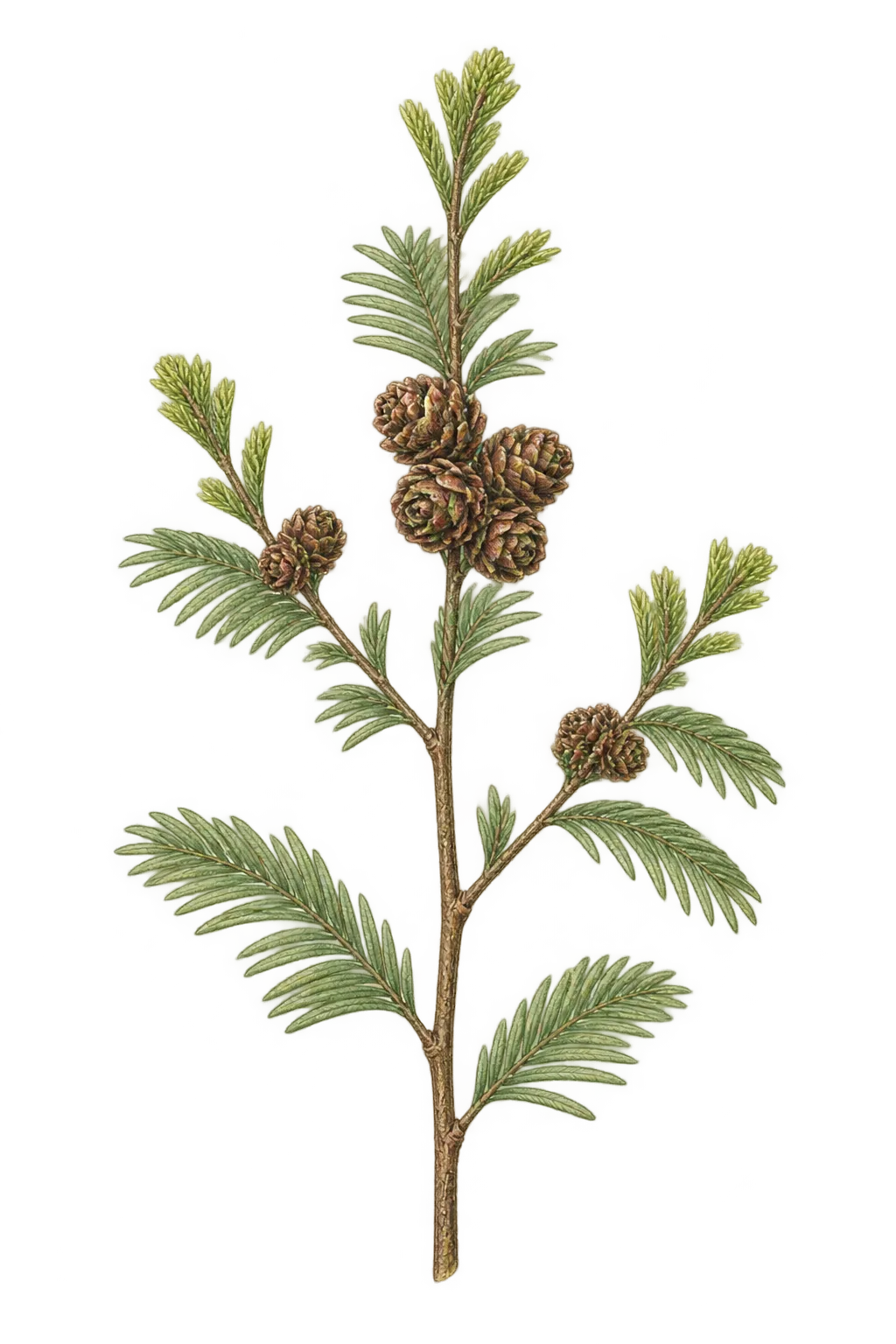
A mature tree can reach 50 metres, with a broadening conical crown and a buttressed trunk. The short leafy branchlets are opposite and fall with their leaves. Flat, narrow needles turn orange or red in autumn. Rounded seed cones mature to roughly two centimetres across, contrasting with the much smaller pollen cones. Flora of China, volume 4, page 60: Metasequoia glyptostroboides
Cones and seasonal development
China
In China, pollination occurs in February and March before the leaves emerge; seeds mature in October and November. Flora of China, volume 4, page 60: Metasequoia glyptostroboides
Native range
Its native range is restricted to China’s Chongqing, Hubei and Hunan. Wild trees occupy moist ravine bottoms and river-valley floors; the Flora of China notes that conversion of valley land to rice cultivation has reduced this habitat. Kew Plants of the World Online: Metasequoia glyptostroboidesFlora of China, volume 4, page 60: Metasequoia glyptostroboides
Botanical sources
- Kew Plants of the World Online: Metasequoia glyptostroboides
- Flora of China, volume 4, page 60: Metasequoia glyptostroboides
- Arnold Arboretum: Dawn Redwood
Reviewed 2026-10-11. Seasonal development varies with location and growing conditions.