desert rose
Adenium Roem. & Schult.
A genus overview; characteristics vary between its species.
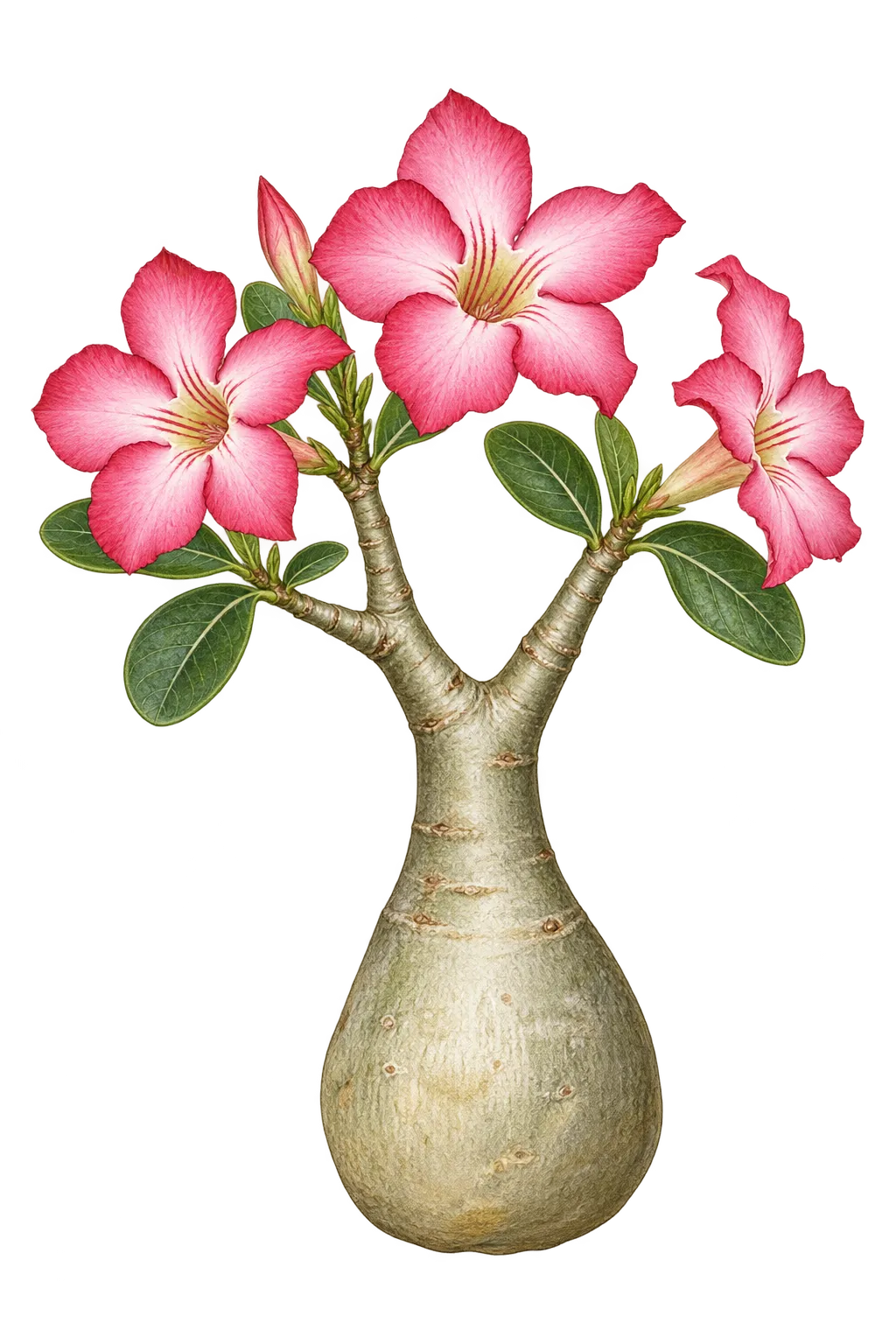
Adenium combines a swollen body with delicate-looking flowers. Members store water in thickened stems or underground structures, enabling survival in hot, dry conditions. Stem shapes, flower colours and size vary substantially between species. The genus has poisonous sap. SANBI PlantZAfrica: Adenium
Botanical name
Kew accepts Adenium Roem. & Schult. as a genus; this record does not identify a particular species. Kew POWO: Adenium
Recognizing the plant
Members range from low shrublets to small trees. The stems are smooth and fleshy, and may be largely hidden underground. Leaves are alternate or arranged in spirals, often gathering near branch tips. Clusters of funnel- or cup-shaped flowers appear in shades of pink, red, purple or white. Long, narrow fruits split open to release seeds with tufts of hair at both ends. SANBI PlantZAfrica: Adenium
Seasonality across the genus
Southern Africa, explicitly named species examples
In southern Africa, Adenium multiflorum flowers mainly from May to August, while A. swazicum flowers from January to April. Many adeniums shed their leaves during winter or the dry season. SANBI PlantZAfrica: Adenium
Native range
The genus is native to tropical and southern Africa, the Arabian Peninsula and Socotra. Its southern African species occupy sunny, sandy places. Kew POWO: AdeniumSANBI PlantZAfrica: Adenium
Botanical sources
Reviewed 2026-10-11. Seasonal development varies with location and growing conditions.