dogwood
Cornus ×arnoldiana Rehder
Arnold dogwood arose naturally among cultivated shrubs at the Arnold Arboretum. Alfred Rehder described it in 1905 from plants growing in a row there, giving this cross a name tied to the collection where botanists first recognized it. Kew identifies its parents as Cornus obliqua and Cornus racemosa, two North American shrubby dogwoods. Kew POWO: Cornus ×arnoldianaArnold Arboretum: Hybrids Hiding in Plain SightArnold Arboretum Bulletin: native dogwoods and Cornus Arnoldiana
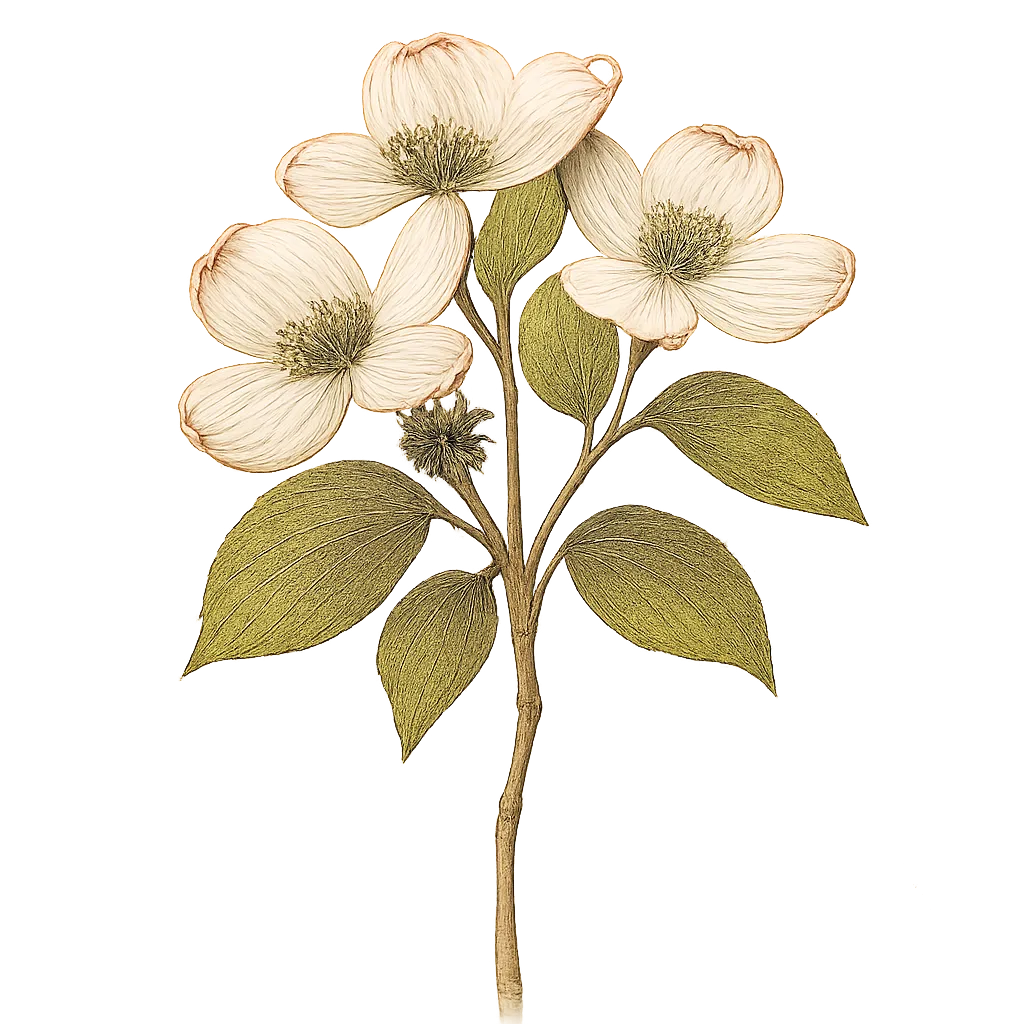
Botanical name
Kew accepts Cornus ×arnoldiana Rehder as C. obliqua × C. racemosa and lists Swida ×arnoldiana as a synonym. Kew POWO: Cornus ×arnoldiana
Recognizing the plant
An early Arboretum bulletin describes the oldest plants as about ten feet tall and nearly as broad, with erect stems. Their flower clusters were larger than those of either parent, making the flowering display their chief ornamental feature. The same plants produced little fruit. The writer therefore considered them less showy in autumn than Cornus racemosa, whose fruit display was particularly admired in the collection. These observations record the appearance of established Arboretum plants. Arnold Arboretum Bulletin: native dogwoods and Cornus Arnoldiana
Native range
Beyond its documented garden origin, Kew records the hybrid as native in the eastern United States, listing Massachusetts, Missouri, Ohio and Pennsylvania. The name thus connects an Arboretum discovery with a wider eastern American distribution. Kew POWO: Cornus ×arnoldiana
Botanical sources
- Kew POWO: Cornus ×arnoldiana
- Arnold Arboretum: Hybrids Hiding in Plain Sight
- Arnold Arboretum Bulletin: native dogwoods and Cornus Arnoldiana
Reviewed 2026-10-11. Seasonal development varies with location and growing conditions.