draba
Draba Dill. ex L.
A genus overview; characteristics vary between its species.
Draba brings together annuals, biennials and perennial herbs, with some species developing a woody base. Many form compact leaf rosettes. The genus is especially prominent in cold landscapes, where individual mountain ranges can shelter locally restricted species. Its reproductive diversity includes self-pollination, cross-pollination and, in some species, seed production without fertilization. Flora of North America: DrabaColorado Natural Heritage Program: Botany A to Z, Draba
Botanical name
Draba is an accepted genus in Brassicaceae. Kew gives the fuller author citation Dill. ex L.; the supplied Draba L. identifies the same genus. Kew Plants of the World Online: Draba
Recognizing the plant
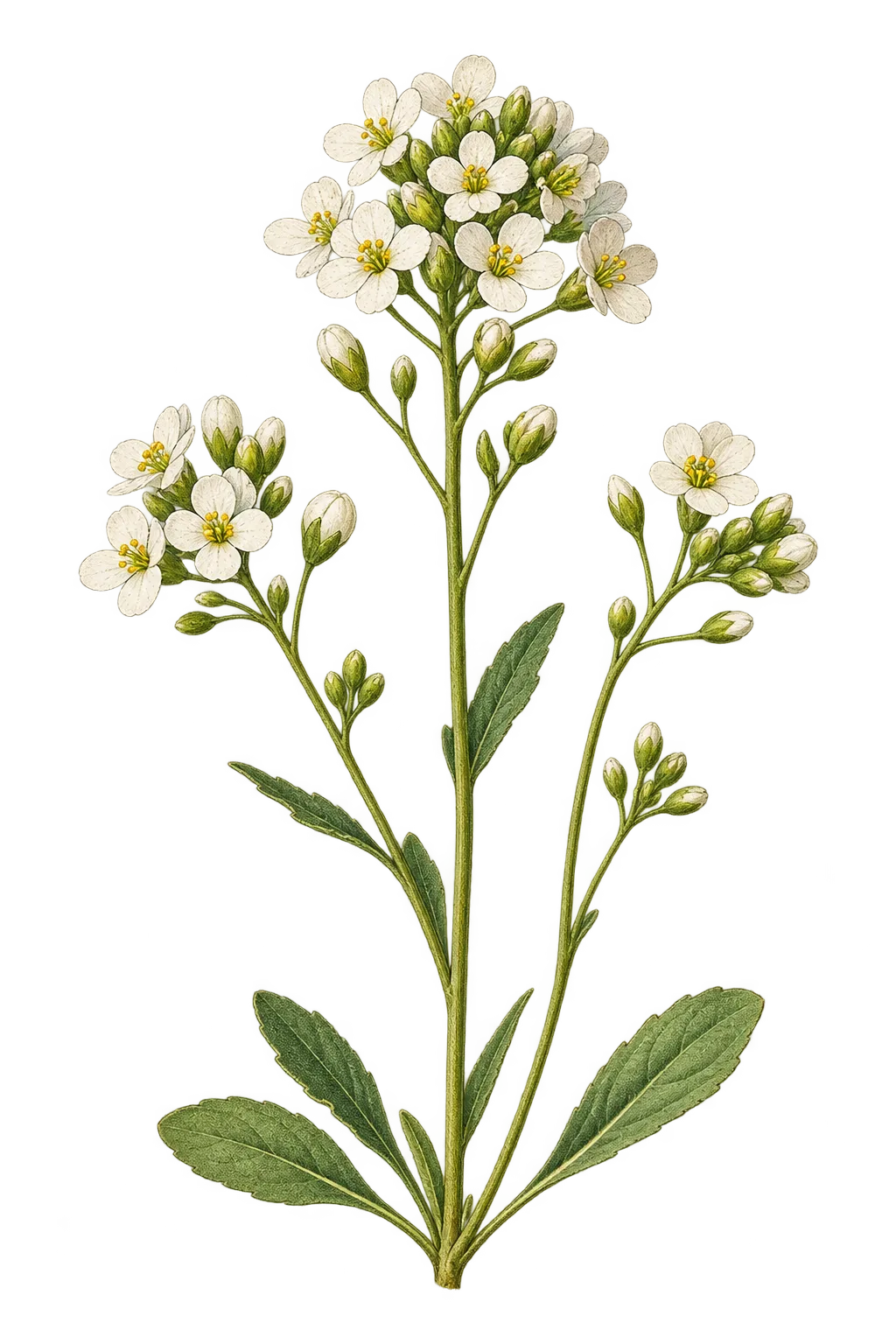
Leaf hairs provide unusually useful clues: they may be simple, forked, star-shaped or branched like miniature trees. Basal leaves commonly have stalks, while stem leaves can be few or entirely absent. Flowers form racemes that either remain compact or lengthen as the fruits develop. Petals include white and yellow, but other species have pink, purple or orange tones. The dry fruits vary from short pods to longer, flattened structures; some become spirally twisted. Seeds are commonly flattened and arranged in two rows. Flora of North America: Draba
Native range
The genus occurs across temperate, subalpine and subarctic regions of both hemispheres. Its distribution includes North America, the Andes, Europe, Asia and northwestern Africa. High elevations and high latitudes are especially characteristic settings, although the genus also includes plants of lower temperate country. Kew Plants of the World Online: DrabaFlora of North America: DrabaColorado Natural Heritage Program: Botany A to Z, Draba
Botanical sources
- Kew Plants of the World Online: Draba
- Flora of North America: Draba
- Colorado Natural Heritage Program: Botany A to Z, Draba
Reviewed 2026-10-11. Seasonal development varies with location and growing conditions.