English yew
Taxus baccata L.
English yew can persist for centuries, building a massive trunk beneath a densely branching evergreen crown. Ancient trees are familiar features of British churchyards, while nearly pure yew woods survive on some southern English chalk landscapes. Its growth form has also made it a longstanding subject for hedges and clipped topiary. Kew Species Profiles and POWO: Taxus baccata
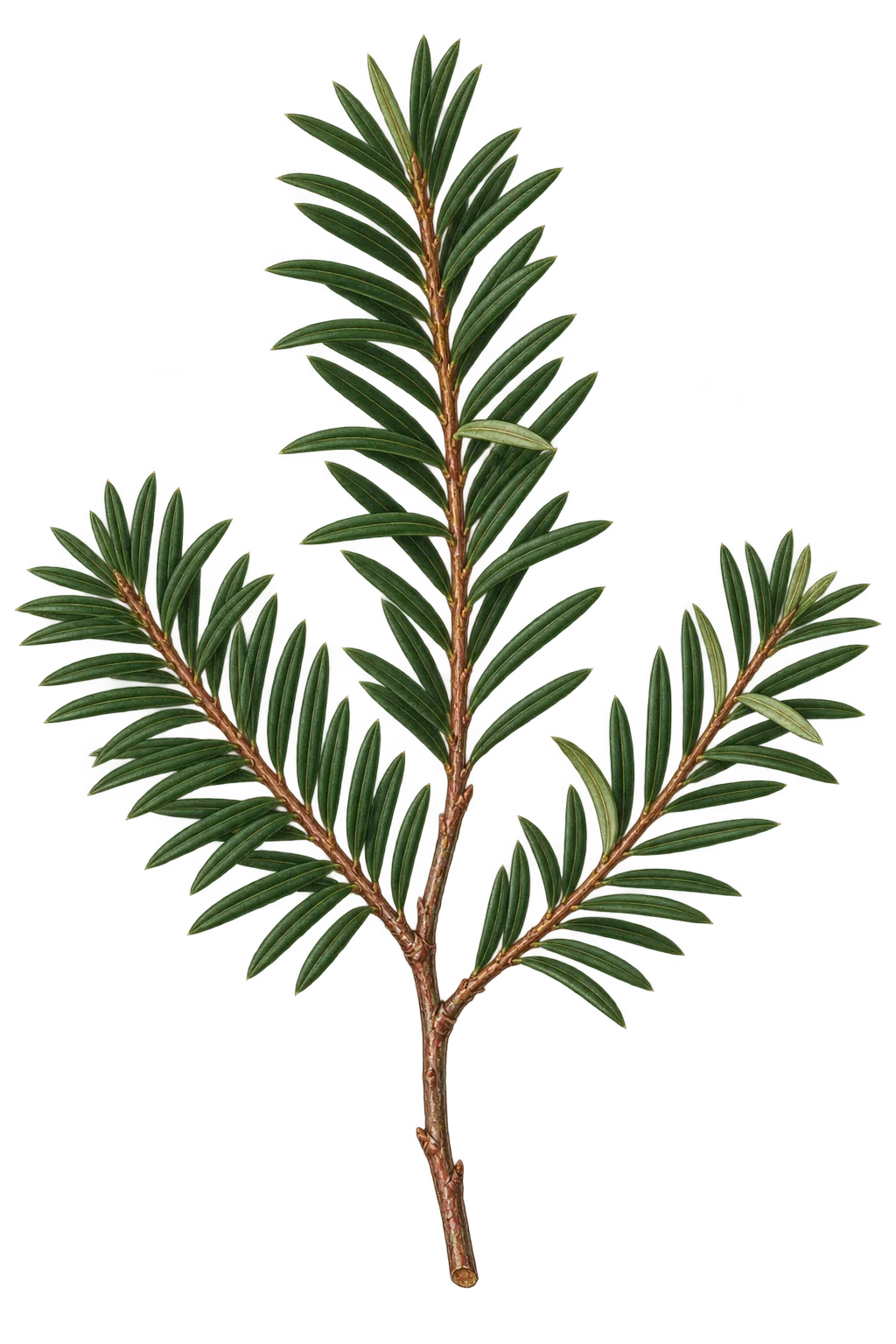
Botanical name
Kew accepts Taxus baccata L., the European or English yew. Kew Species Profiles and POWO: Taxus baccata
Recognizing the plant
The narrow, pointed needles appear in two ranks along the shoots. Their upper surfaces are dark green, with a paler yellow-green underside. Thin reddish-brown bark breaks into scales. Male plants carry small pollen-producing cones in the leaf axils; female plants develop individual seeds partly enclosed by fleshy red cups called arils. The exposed seed at the top of each cup helps distinguish this structure from a berry. Leaves, bark and seeds are highly poisonous. NC State Extension: Taxus baccata
Native range
The species is native from the Azores through Europe to northern Iran, and in northwestern Africa. In Britain it occurs in oak and beech woods, often over chalk or limestone. Kew Species Profiles and POWO: Taxus baccata
Ecological relationships
Birds eat the fleshy arils and disperse the seeds, connecting the tree’s conspicuous red structures with its spread through woodland. NC State Extension: Taxus baccata
Botanical sources
Reviewed 2026-10-11. Seasonal development varies with location and growing conditions.