fabiana
Fabiana Ruiz & Pav.
A genus overview; characteristics vary between its species.
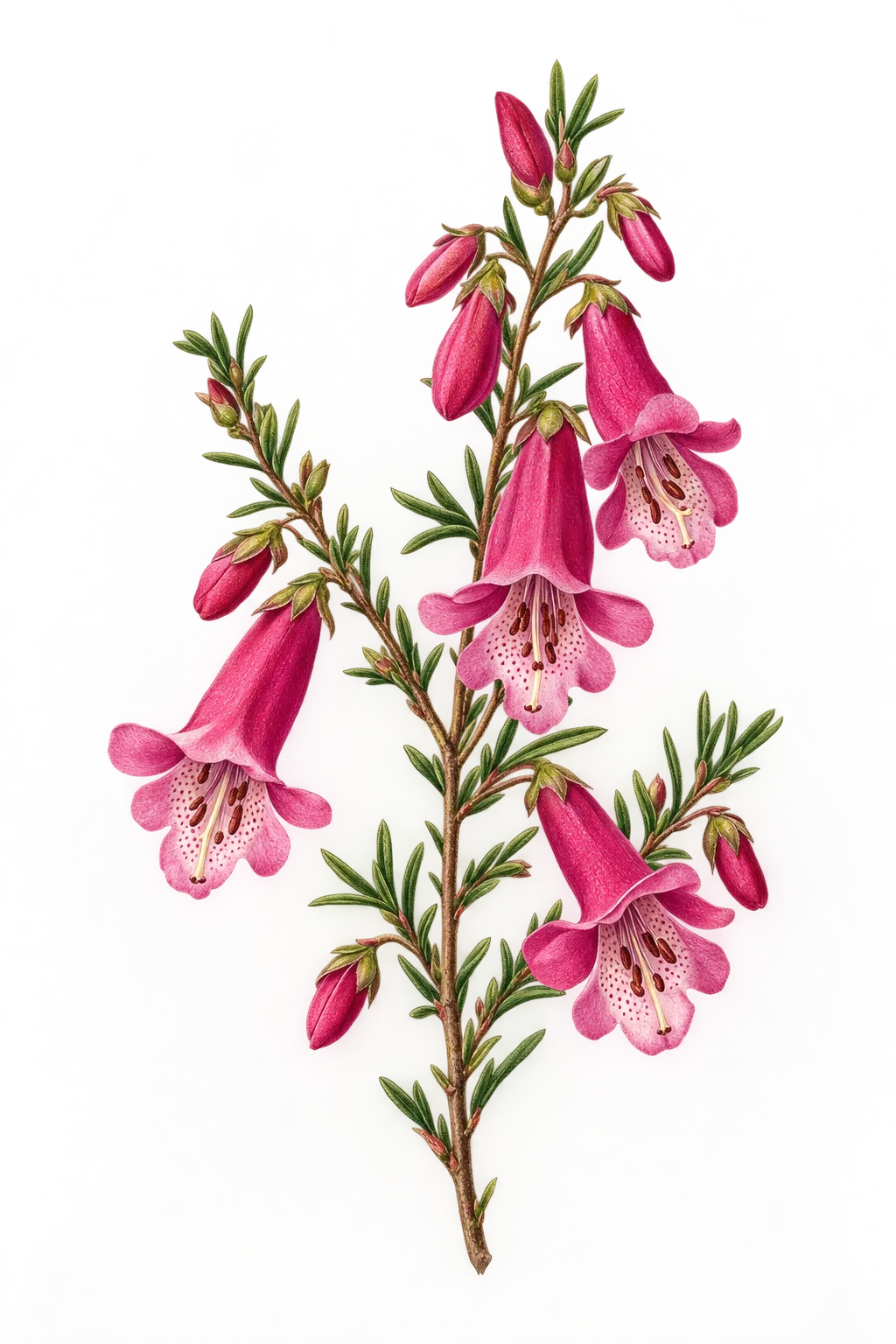
Fabiana belongs to the nightshade family, yet some members have the fine-textured appearance of heathers. The familiar garden species Fabiana imbricata illustrates that resemblance with tiny evergreen leaves densely covering its branches, which has earned it the name false heath. Cambridge University Botanic Garden: Fabiana imbricata
Botanical name
Kew accepts Fabiana Ruiz & Pav. as a genus in Solanaceae. Fabiana imbricata is used below only as a named example within that genus. Kew Plants of the World Online: Fabiana Ruiz & Pav.
Recognizing the plant
Across the genus, growth forms range from low cushions to shrubs around three metres tall. Many are resinous, with glandular hairs. Leaves can be persistent or shed early, and some plants appear nearly leafless. The five-lobed flowers have tubular, funnel-shaped or salver-shaped corollas; colours include white, cream, yellow and violet. Capsules contain numerous small seeds. Alaria and Peralta (2013): Las especies de Fabiana que crecen en Chile
Seasonality across the genus
Argentine Patagonia; named example Fabiana imbricata
A documented seasonal example comes from Argentine Patagonia: Fabiana imbricata flowers in late spring and early summer. In that regional account, its blossoms are pale yellow-white to bluish violet and occur singly at the ends of short branches. Argentina National Parks Biodiversity Information System: Fabiana imbricata
Native range
Fabiana is a South American genus extending from southern Peru to Argentina. Its native distribution also includes Bolivia and northern, central and southern Chile, linking Andean regions with the southern part of the continent. Kew Plants of the World Online: Fabiana Ruiz & Pav.
Botanical sources
- Kew Plants of the World Online: Fabiana Ruiz & Pav.
- Alaria and Peralta (2013): Las especies de Fabiana que crecen en Chile
- Argentina National Parks Biodiversity Information System: Fabiana imbricata
- Cambridge University Botanic Garden: Fabiana imbricata
Reviewed 2026-10-11. Seasonal development varies with location and growing conditions.