false lily of the valley
Maianthemum dilatatum (Alph.Wood) A.Nelson & J.F.Macbr.
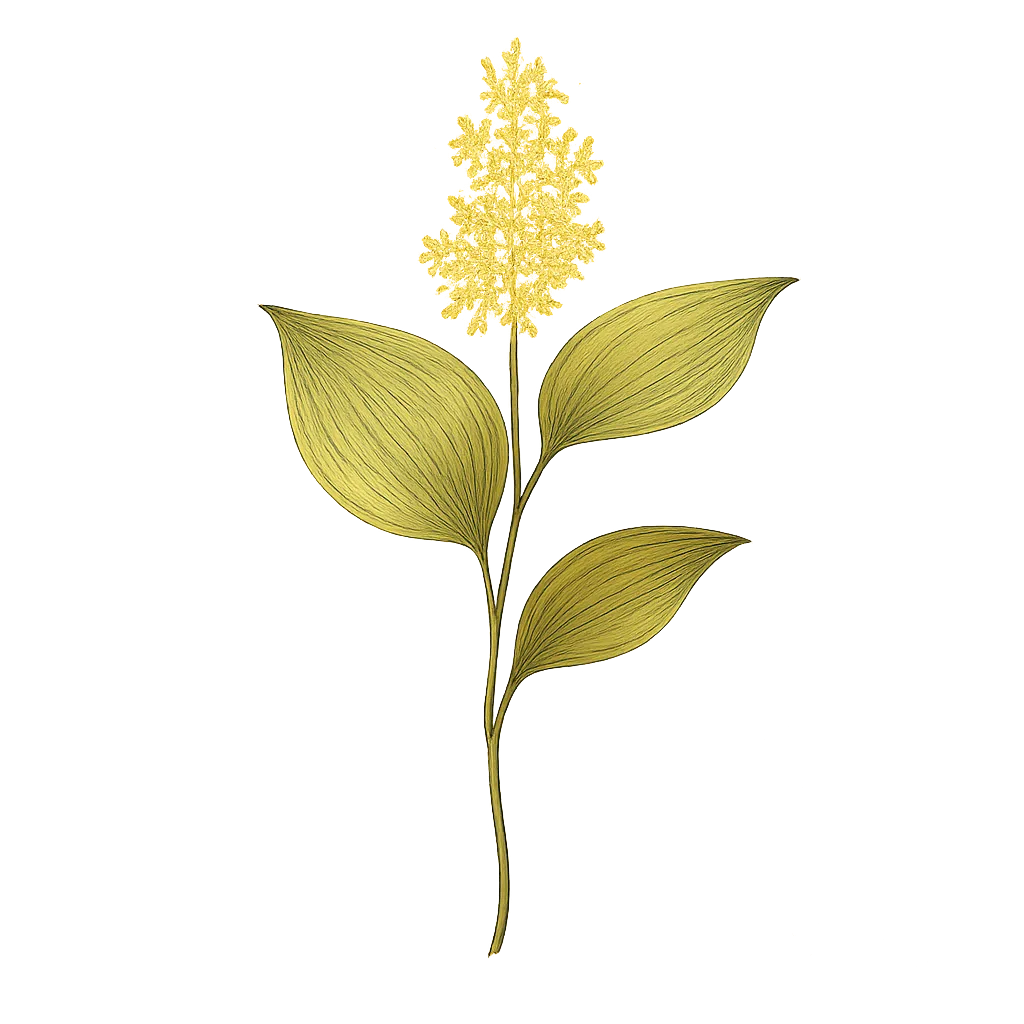
False lily of the valley spreads through branching underground rhizomes to form leafy woodland carpets. Its heart-shaped green foliage and small white flowers belong to a low perennial of damp, shaded forest floors and streambanks. Marion Soil and Water Conservation District: False Lily-of-the-Valley
Botanical name
Kew accepts this species in Asparagaceae; the stored author citation represents the same name, with spacing differences. Kew Plants of the World Online: Maianthemum dilatatum
Recognizing the plant
Flowering stems are erect and unbranched, usually carrying two stalked, heart-shaped leaves. The short flower cluster bears tiny blossoms with four white tepals and four stamens. Rounded berries become red; young fruits can be green with red mottling before they reach their translucent mature colour. University of Washington Burke Herbarium: Maianthemum dilatatum
Bloom window
Washington, United States
In Washington, the flowering period is May through July, in moist woodland from sea level to middle mountain elevations. University of Washington Burke Herbarium: Maianthemum dilatatum
Native range
Its native range spans northern Pacific regions, from Mongolia east to Japan and from Alaska south to northwestern California. Kew describes it as a rhizomatous plant of temperate climates. Kew Plants of the World Online: Maianthemum dilatatum
Ecological relationships
A study in Vladivostok, Russia, identified hoverflies as effective pollinators: they regularly visited the flowers and carried Maianthemum pollen. Vislobokov and Nikandrova (2023): Pollination biology of Maianthemum s.s. in different parts of its range
The same Russian study recorded numerous ant visitors, along with longhorn beetles and several fly families. Vislobokov and Nikandrova (2023): Pollination biology of Maianthemum s.s. in different parts of its range
The flowers also provide an early nectar resource for pollinating insects in woodland habitats. Marion Soil and Water Conservation District: False Lily-of-the-Valley
Birds feed on the fruits, adding a later food resource to the woodland. Marion Soil and Water Conservation District: False Lily-of-the-Valley
Botanical sources
- Kew Plants of the World Online: Maianthemum dilatatum
- University of Washington Burke Herbarium: Maianthemum dilatatum
- Marion Soil and Water Conservation District: False Lily-of-the-Valley
- Vislobokov and Nikandrova (2023): Pollination biology of Maianthemum s.s. in different parts of its range
Reviewed 2026-10-11. Seasonal development varies with location and growing conditions.