feltleaf willow
Salix alaxensis (Andersson) Coville
Feltleaf willow is often among the first tall shrubs to occupy a new river gravel bar. Its tiny seeds arrive by wind or water and germinate rapidly on moist mineral soil. Broken stems can also root when buried in damp sediment, allowing floods to carry both seeds and living pieces of the plant downstream. US Forest Service FEIS: Salix alaxensis
Botanical name
Salix alaxensis (Andersson) Coville is accepted in Salicaceae. Kew recognizes two varieties within the species. Kew Plants of the World Online: Salix alaxensis
Recognizing the plant
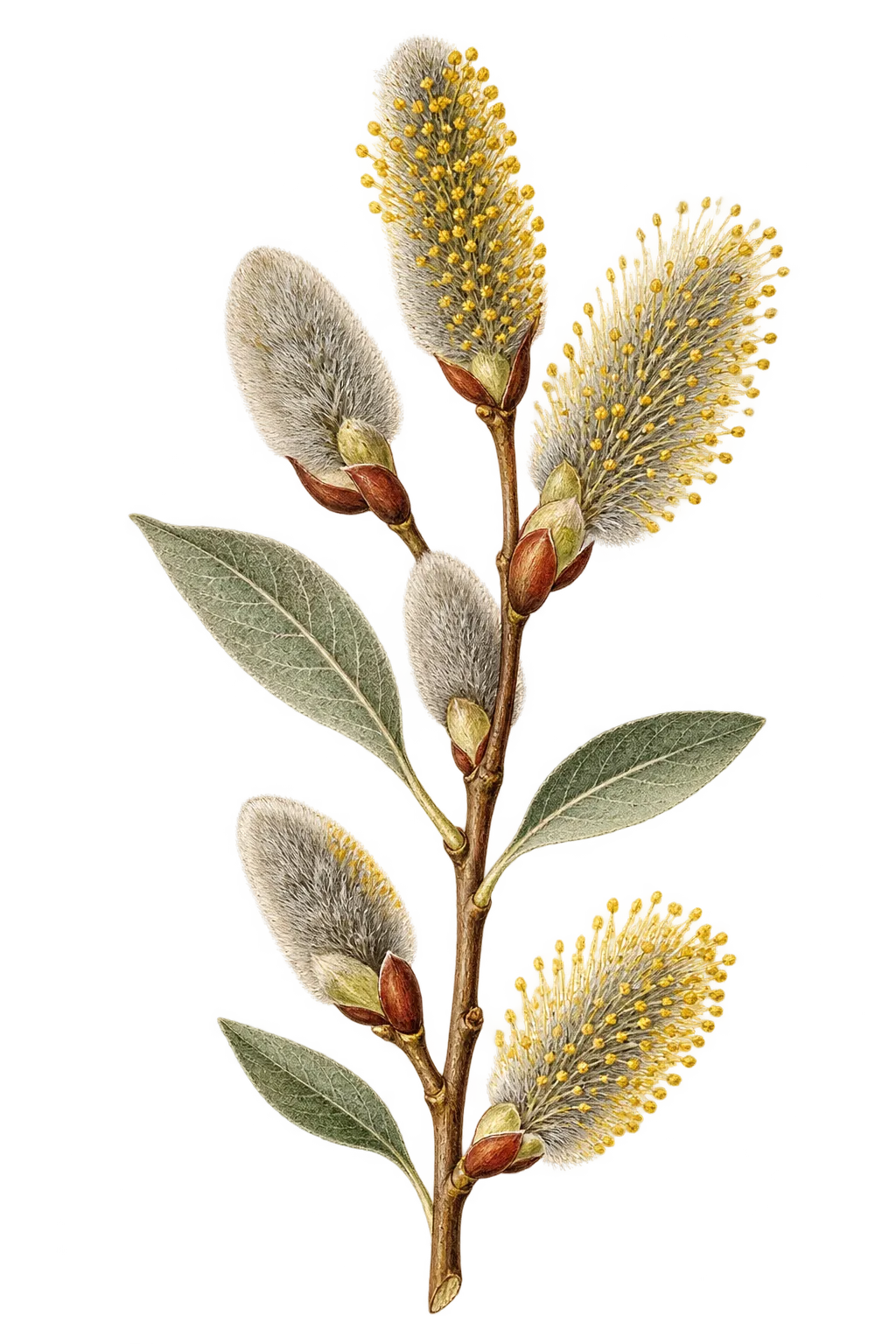
Plants range from low shrubs to trees approaching 10 m. The leaves are simple and alternate, green above but densely covered with pale, feltlike hairs underneath. Long female catkins stand upright and attach directly to the stem. Mature capsules split to release seeds equipped with tufts of hairs. Male and female flowers occur on separate plants. US Forest Service FEIS: Salix alaxensisUS Fish and Wildlife Service: Willows of Interior Alaska
Bloom window
Interior Alaska
In interior Alaska’s lowlands, catkins appear from mid-April to mid-May, before the leaves; alpine plants may flower as late as mid-June. US Fish and Wildlife Service: Willows of Interior Alaska
Native range
Its native range joins Siberia and the Russian Far East with Alaska and northern Canada. It favors bright, open sites, especially riverbanks, floodplain deposits and other recently disturbed ground; shade from later forest growth can eventually suppress it. Kew Plants of the World Online: Salix alaxensisUS Forest Service FEIS: Salix alaxensis
Ecological relationships
Bumblebees are documented pollinators of feltleaf willow. US Forest Service FEIS: Salix alaxensis
Botanical sources
- Kew Plants of the World Online: Salix alaxensis
- US Forest Service FEIS: Salix alaxensis
- US Fish and Wildlife Service: Willows of Interior Alaska
Reviewed 2026-10-11. Seasonal development varies with location and growing conditions.