fig
Ficus Tourn. ex L.
A genus overview; characteristics vary between its species.
The fig genus includes far more than familiar orchard trees. Its members may be shrubs, vines, large trees or plants that begin life on other plants. Strangler figs are one distinctive form, sometimes eventually overwhelming the tree that supported them. Smithsonian Gardens: The Fruitful Fig
Botanical name
The stored Ficus L. identifies the fig genus. Flora of China uses Ficus Linnaeus, while Kew accepts the fuller author citation Ficus Tourn. ex L. in Moraceae. Kew Plants of the World Online: Ficus Tourn. ex L.Flora of China 5 (2003): Ficus
Recognizing the plant
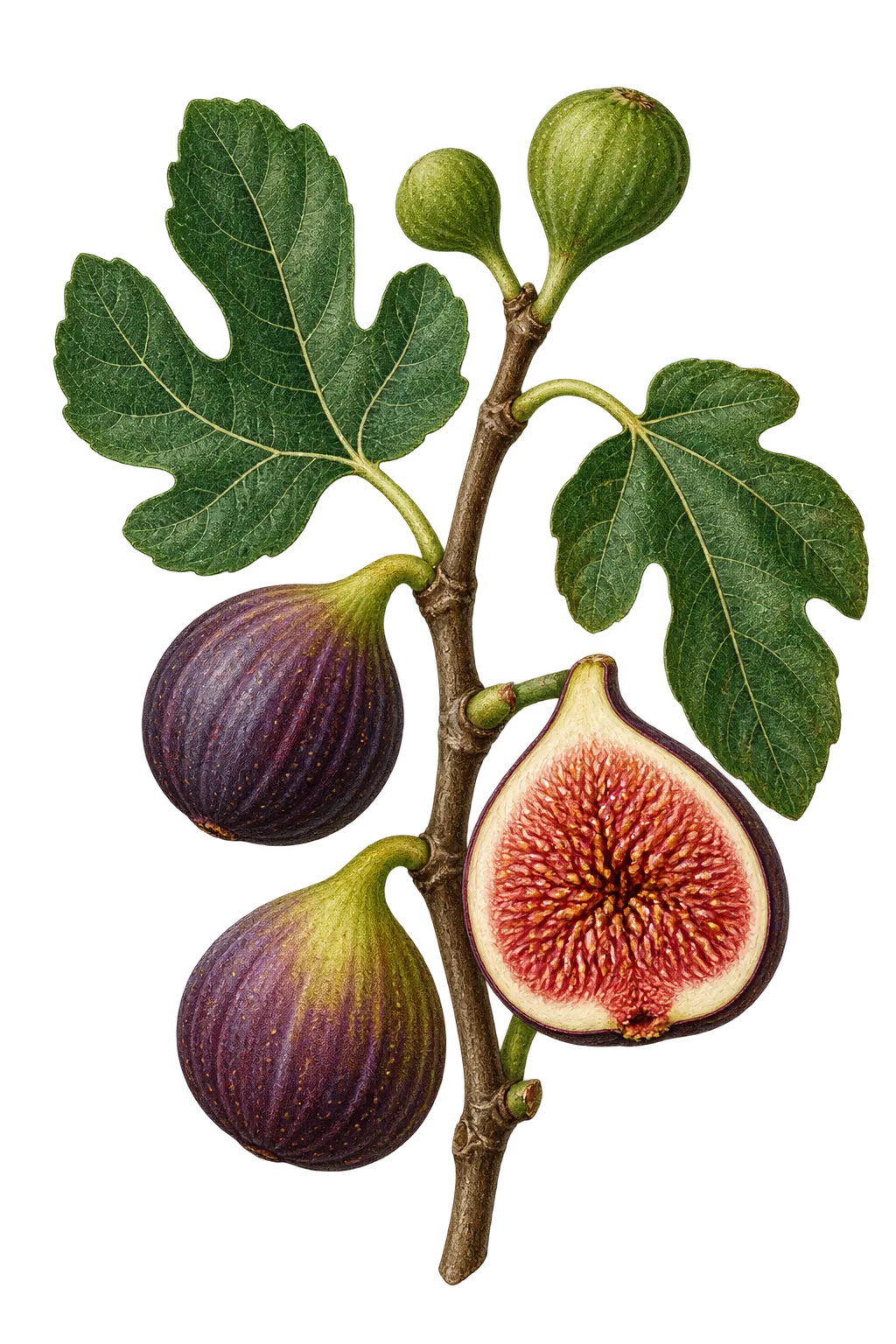
Their defining structure is the syconium: a hollow receptacle lined inside with many tiny flowers, communicating with the outside through a small opening. The plants contain latex and may be evergreen or deciduous. Leaves are usually alternate, with blades ranging from simple to lobed. Flora of China 5 (2003): Ficus
Seasonality across the genus
Tropical forests
At the tropical-forest community scale, figs provide fruit through the year. This broad pattern helps explain their ecological importance, especially during periods when other kinds of fruit are scarce. Smithsonian Gardens: The Fruitful Fig
Native range
Ficus is native throughout the tropics and subtropics. Its collective distribution spans the Americas, Africa, Asia, Australia and Pacific islands, with different species occupying different portions of that extensive range. Kew Plants of the World Online: Ficus Tourn. ex L.
Ecological relationships
Specialized fig wasps of the family Agaonidae pollinate the enclosed flowers; their life cycles are closely coordinated with the development of figs. Flora of China 5 (2003): Ficus
Fig-wasp larvae develop by feeding on short-styled female flowers or specialized gall flowers, depending on the fig’s reproductive system. Flora of China 5 (2003): Ficus
The ripe figs feed animals including birds, fruit bats, monkeys and rodents, linking the trees to a much wider forest food community. Smithsonian Gardens: The Fruitful Fig
Botanical sources
- Kew Plants of the World Online: Ficus Tourn. ex L.
- Flora of China 5 (2003): Ficus
- Smithsonian Gardens: The Fruitful Fig
Reviewed 2026-10-11. Seasonal development varies with location and growing conditions.