fountain butterflybush
Buddleja alternifolia Maxim.
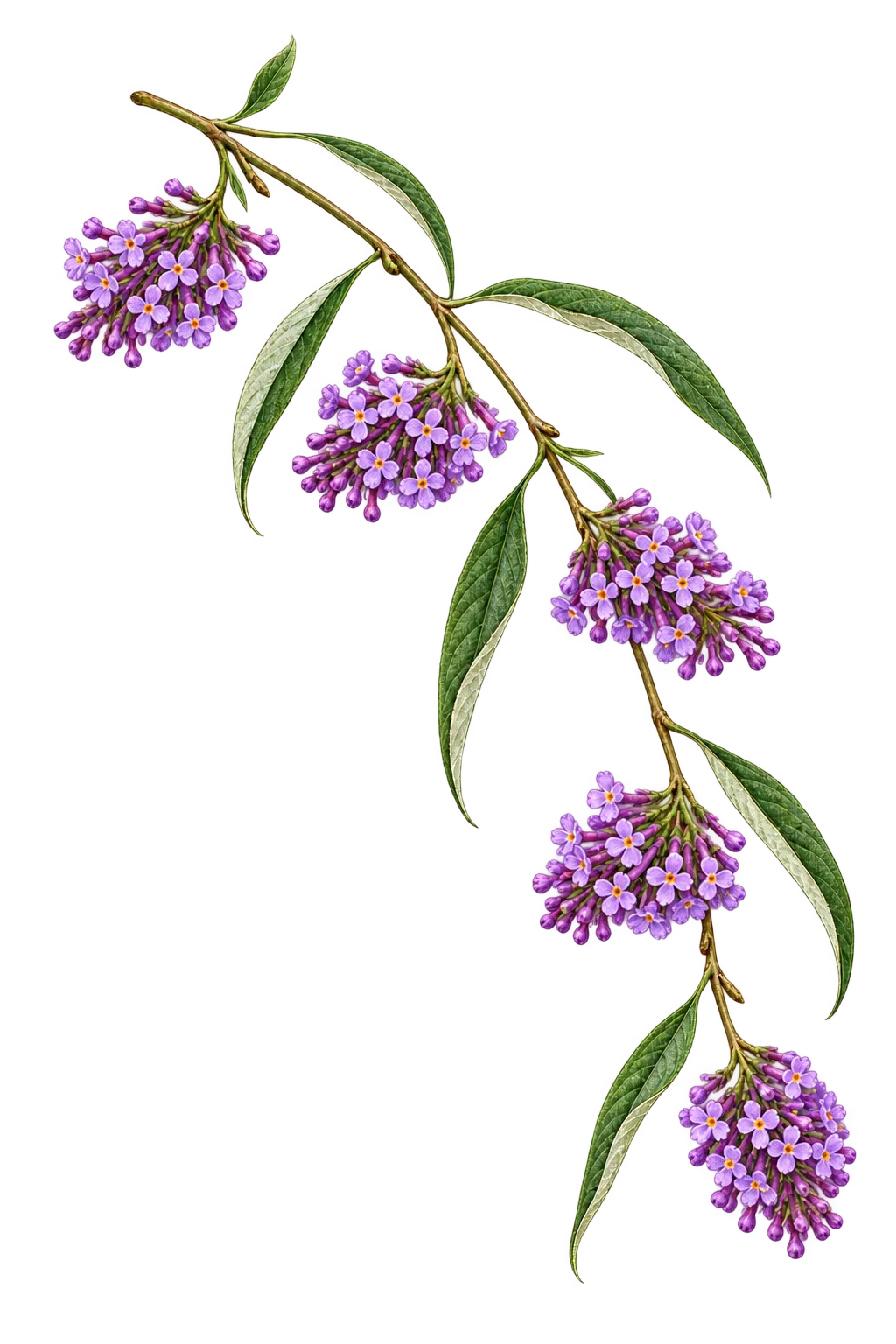
Fountain butterflybush makes its name visible in the shape of its branches. Long, arching stems spill outward from a large deciduous shrub, with clusters of lilac-purple flowers arranged along them. The effect comes from many small tubular blossoms packed together, rather than one continuous flower. Their sweet fragrance adds another dimension to the display. NC State Extension: Buddleja alternifolia
Botanical name
Buddleja alternifolia Maxim is accepted in the cited taxonomic treatment. The supplied database name identifies the same species. Kew POWO: Buddleja alternifolia
Recognizing the plant
Its narrow leaves are placed alternately along the stems, unlike familiar butterflybushes with opposite leaves. Upper leaf surfaces range from dark to silvery green, with woollier gray undersides. Blossoms develop on the previous year’s growth, lining mature shoots rather than appearing solely at the tips of new stems. This combination of leaf arrangement and flowering position is useful for recognising the species. NC State Extension: Buddleja alternifoliaIowa State University Extension: Growing Butterfly Bush in Iowa
Bloom window
Iowa and North Carolina, United States
In Iowa gardens, flowering is recorded in June; North Carolina's extension account gives the broader interval of late spring to early summer. NC State Extension: Buddleja alternifoliaIowa State University Extension: Growing Butterfly Bush in Iowa
Native range
Buddleja alternifolia is native from Tibet into northern and east-central China. Thickets beside rivers and dry riverbeds are characteristic habitats described in the extension account. Its use in gardens extends beyond this Asian range, where the drooping branches give mature plants their fountain-like outline. NC State Extension: Buddleja alternifoliaKew POWO: Buddleja alternifolia
Botanical sources
- NC State Extension: Buddleja alternifolia
- Kew POWO: Buddleja alternifolia
- Iowa State University Extension: Growing Butterfly Bush in Iowa
Reviewed 2026-10-11. Seasonal development varies with location and growing conditions.