fuchsia
Fuchsia Plum. ex L.
A genus overview; characteristics vary between its species.
Fuchsias include shrubs, small trees and trailing plants, with garden forms shaped by a long history of hybridisation. Their name commemorates the German botanist Leonhart Fuchs. The familiar hanging-basket plants represent only part of this varied genus, whose cultivated forms can also be trained as standards or other formal shapes. Royal Botanic Gardens Victoria, HortFlora: Fuchsia
Botanical name
Kew accepts the genus as Fuchsia Plum. ex L.; HortFlora uses the shortened author form Fuchsia L. supplied by the database. Both describe the same genus. Kew Plants of the World Online: FuchsiaRoyal Botanic Gardens Victoria, HortFlora: Fuchsia
Recognizing the plant
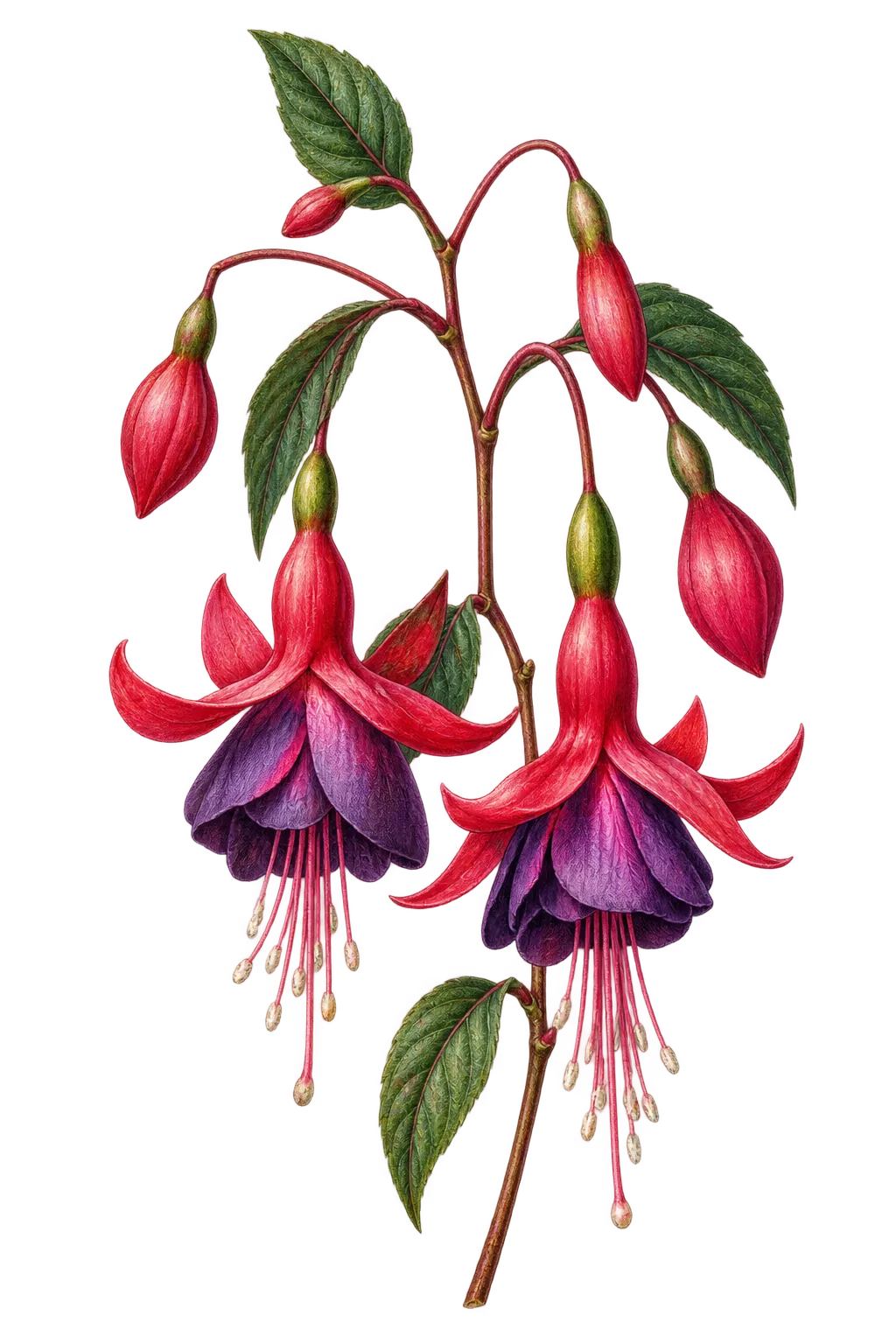
The flowers commonly hang from leaf axils and combine four colourful sepals with four petals. Eight stamens and the style often project beyond the flower. The ovary sits below the petals and sepals, later becoming a soft, four-chambered berry. Leaves are simple and may be opposite, alternate or arranged in whorls. Flower colours include white, pink, red and purple. Royal Botanic Gardens Victoria, HortFlora: Fuchsia
Native range
Fuchsia has a strikingly separated native distribution: Mexico and tropical America, New Zealand, and the Society Islands of the Pacific. These distant regions are part of the genus’s natural range. Kew Plants of the World Online: Fuchsia
Ecological relationships
Hummingbirds are important pollinators of American fuchsias. San Diego Zoo Wildlife Alliance: Fuchsia
Bees and butterflies also visit fuchsia flowers. San Diego Zoo Wildlife Alliance: Fuchsia
Botanical sources
- Kew Plants of the World Online: Fuchsia
- Royal Botanic Gardens Victoria, HortFlora: Fuchsia
- San Diego Zoo Wildlife Alliance: Fuchsia
Reviewed 2026-10-11. Seasonal development varies with location and growing conditions.