garden dewberry
Rubus flagellaris Willd.
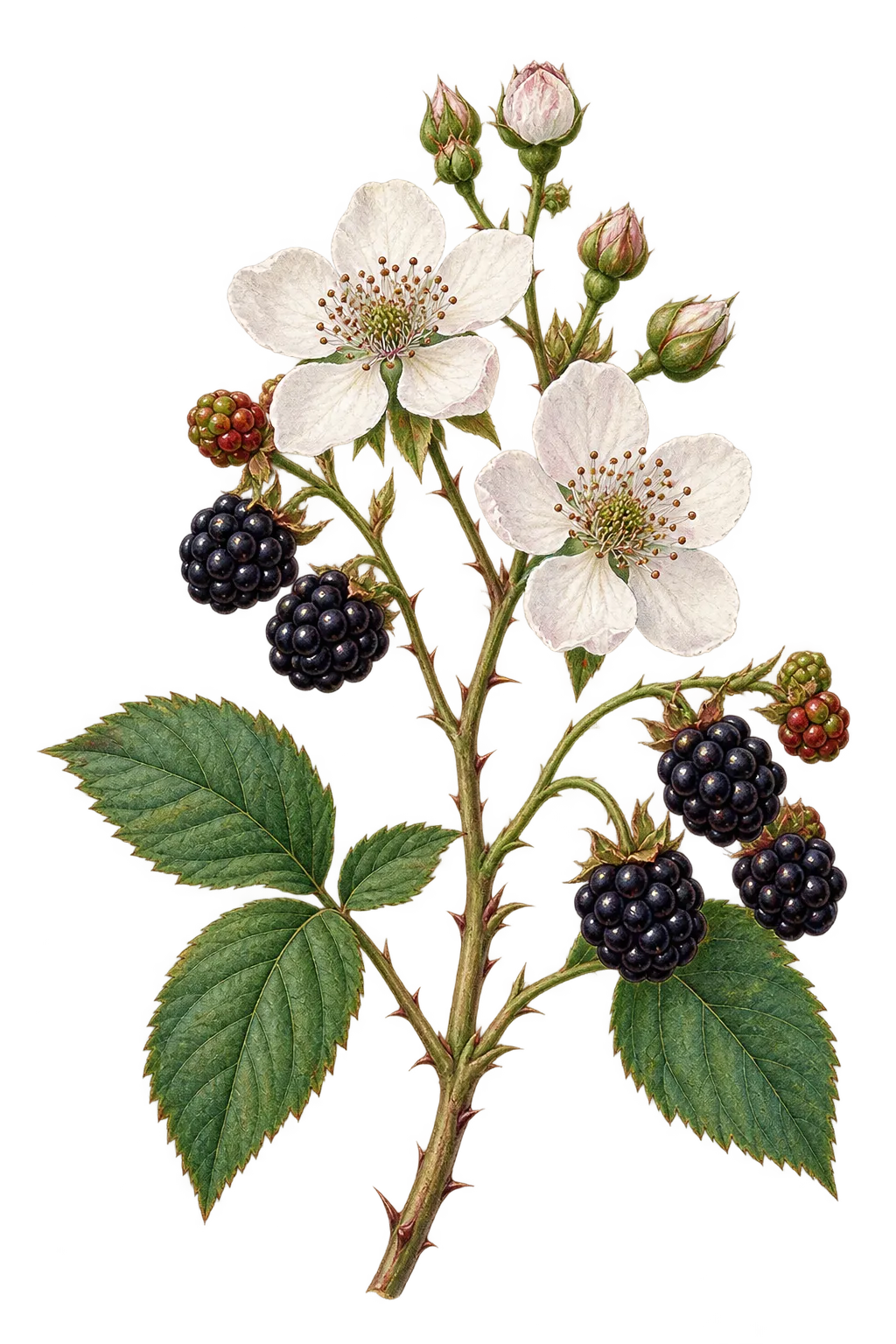
Garden dewberry spreads close to the ground, its long canes trailing over neighboring vegetation or lying on the soil. Stem tips can root, helping a plant extend its patch. In the Texas flora’s treatment of Rubus aboriginum, the undersides of the leaflets are often densely soft-haired and velvety, though some plants have much sparser hairs. Botanical Research Institute of Texas: Illustrated Flora of North Central Texas, Rubus
Botanical name
Kew places Rubus aboriginum Rydb. within Rubus flagellaris Willd. The description retains the narrower garden-dewberry concept used in the Illustrated Flora of North Central Texas. Kew Plants of the World Online: Rubus flagellaris
Recognizing the plant
The short stem prickles are hooked and about 2–3 mm long. Flowering branchlets usually carry one to three flowers, occasionally five, on erect or ascending stalks. Flowers measure about 20–25 mm across. The mature blackberry-like aggregate fruit reaches at least 15 mm long. These features help separate the Texas garden-dewberry concept from the smaller-fruited Rubus apogaeus, whose prickles are often straighter and longer. Botanical Research Institute of Texas: Illustrated Flora of North Central Texas, Rubus
Bloom window
North-central Texas
The Texas flora records flowering in April within its regional treatment. Botanical Research Institute of Texas: Illustrated Flora of North Central Texas, Rubus
Native range
Under this narrower name, the North Central Texas flora records plants in the eastern half of Texas, including sandy woods, fencerows and roadsides. Kew incorporates this regional taxon into the more widely distributed northern dewberry, Rubus flagellaris. Kew Plants of the World Online: Rubus flagellarisBotanical Research Institute of Texas: Illustrated Flora of North Central Texas, Rubus
Botanical sources
- Kew Plants of the World Online: Rubus flagellaris
- Botanical Research Institute of Texas: Illustrated Flora of North Central Texas, Rubus
Reviewed 2026-10-11. Seasonal development varies with location and growing conditions.