garden tomato
Solanum lycopersicum L.
Garden tomato is a warm-season crop whose familiar harvest is botanically a berry. Cultivated forms vary greatly in fruit size and shape, with small to large fruits in shades of yellow, red or purple. Plants can persist as perennials in frost-free climates. NC State Extension Gardener Plant Toolbox: Solanum lycopersicum
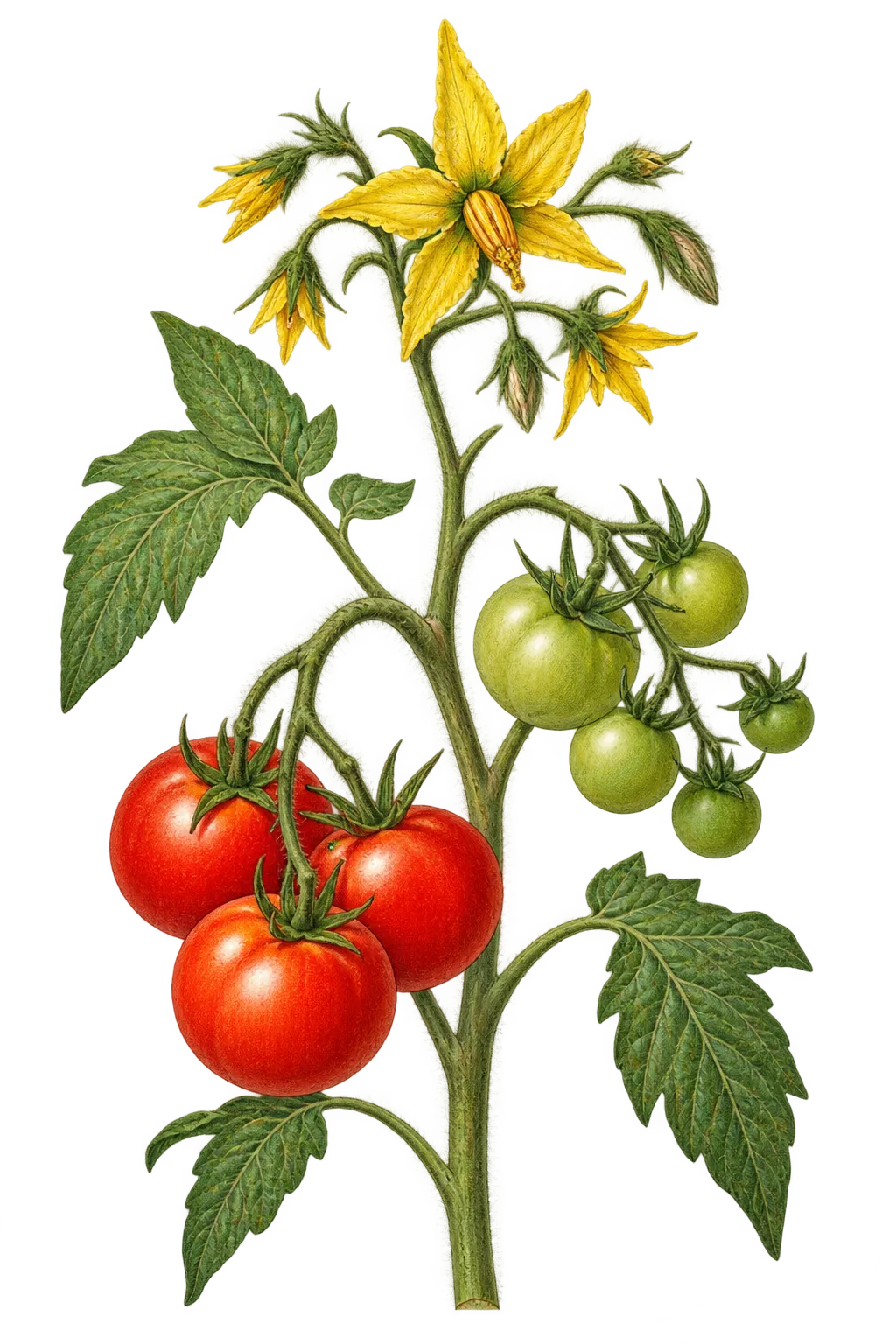
Botanical name
Kew accepts Solanum lycopersicum L. in Solanaceae. Lycopersicon esculentum Mill., still encountered in older horticultural accounts, is a synonym of this same tomato species. Kew Plants of the World Online: Solanum lycopersicum
Recognizing the plant
Tender green stems carry dense, sticky hairs. The alternate, compound leaves usually have five to nine toothed leaflets and are hairy too. Small yellow flowers open into a five-pointed star. Determinate selections form bushier plants, while indeterminate selections continue extending their stems. NC State Extension Gardener Plant Toolbox: Solanum lycopersicum
Seasonal development
North Carolina, United States; outdoor cultivation
In North Carolina, outdoor planting follows the last frost. Hot summer conditions can cause blossoms to drop before fruit develops, while indeterminate plants can continue producing until frost ends the season. NC State Extension Gardener Plant Toolbox: Solanum lycopersicum
Native range
Kew treats the cultivated tomato as a cultigen from Peru. Its distribution outside that origin is now extensive, with introduced records across tropical and temperate regions in the Americas, Europe, Africa, Asia and the Pacific. Kew Plants of the World Online: Solanum lycopersicum
Ecological relationships
Bumble bees grip the flower cone and vibrate their flight muscles, shaking pollen loose. University of Maryland field observations describe this buzz pollination as beneficial to fruit set, even though wind movement can also pollinate tomato flowers. University of Maryland Extension: Tomato Pollination and Bumblebee Visits
Botanical sources
- Kew Plants of the World Online: Solanum lycopersicum
- NC State Extension Gardener Plant Toolbox: Solanum lycopersicum
- University of Maryland Extension: Tomato Pollination and Bumblebee Visits
Reviewed 2026-10-11. Seasonal development varies with location and growing conditions.