giant blue iris
Iris giganticaerulea Small
Giant blue iris has a seed-dispersal mechanism closely tied to water. After flowering, its stalk lengthens and bends down, bringing the capsule into the water. As the capsule wall breaks down and the seed attachments separate, the corky seeds rise to the surface. Flora of North America, volume 26, page 394: Iris giganticaerulea
Botanical name
Kew accepts Iris giganticaerulea Small as a species. Kew Plants of the World Online: Iris giganticaerulea
Recognizing the plant
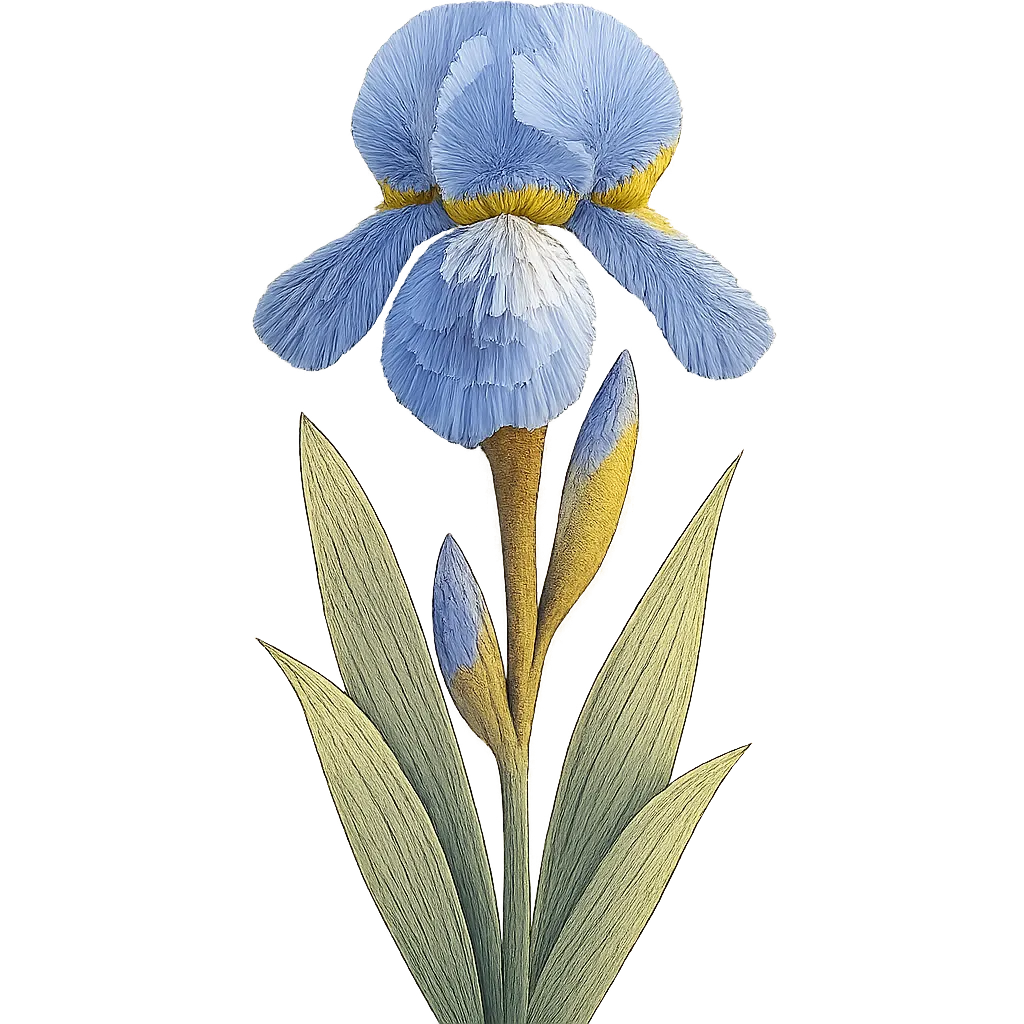
Extensively branching rhizomes form large clumps. Flowering stems generally stand one to one-and-a-half metres high, sometimes exceeding two metres. The bright-green, sword-shaped leaves are long and upright. Blue to blue-purple flowers carry broad outer segments marked with white streaks around a raised yellow ridge; the narrower inner petals stand upright or spread slightly. Flora of North America, volume 26, page 394: Iris giganticaerulea
Bloom window
Louisiana, United States
In Louisiana, the US Geological Survey records flowering during March and April, when blue and purple blooms rise above the wetland foliage. US Geological Survey, Plants of Louisiana: Iris giganticaerulea
Native range
Native to the southeastern United States, this wetland perennial is recorded by Flora of North America in Alabama, Louisiana and Mississippi, in shallow water and very wet ditches. Louisiana’s USGS account describes freshwater habitat with some tolerance of brackish water. Kew Plants of the World Online: Iris giganticaeruleaFlora of North America, volume 26, page 394: Iris giganticaeruleaUS Geological Survey, Plants of Louisiana: Iris giganticaerulea
Botanical sources
- Kew Plants of the World Online: Iris giganticaerulea
- Flora of North America, volume 26, page 394: Iris giganticaerulea
- US Geological Survey, Plants of Louisiana: Iris giganticaerulea
Reviewed 2026-10-11. Seasonal development varies with location and growing conditions.