ginger
Zingiber Mill.
A genus overview; characteristics vary between its species.
Zingiber is a diverse genus of aromatic, rhizomatous herbs. Branched underground stems give rise to upright leafy shoots, with leaves arranged in two ranks. The familiar spice ginger, Zingiber officinale, is one cultivated member; its thick, strongly scented rhizomes illustrate a feature shared more broadly across the genus. Flora of China: Zingiber, volume24 p.323Flora of China: Zingiber officinale
Botanical name
Kew accepts Zingiber Mill. in Zingiberaceae. The catalog’s genus identity is retained, rather than narrowed to culinary ginger. Kew POWO: Zingiber
Recognizing the plant
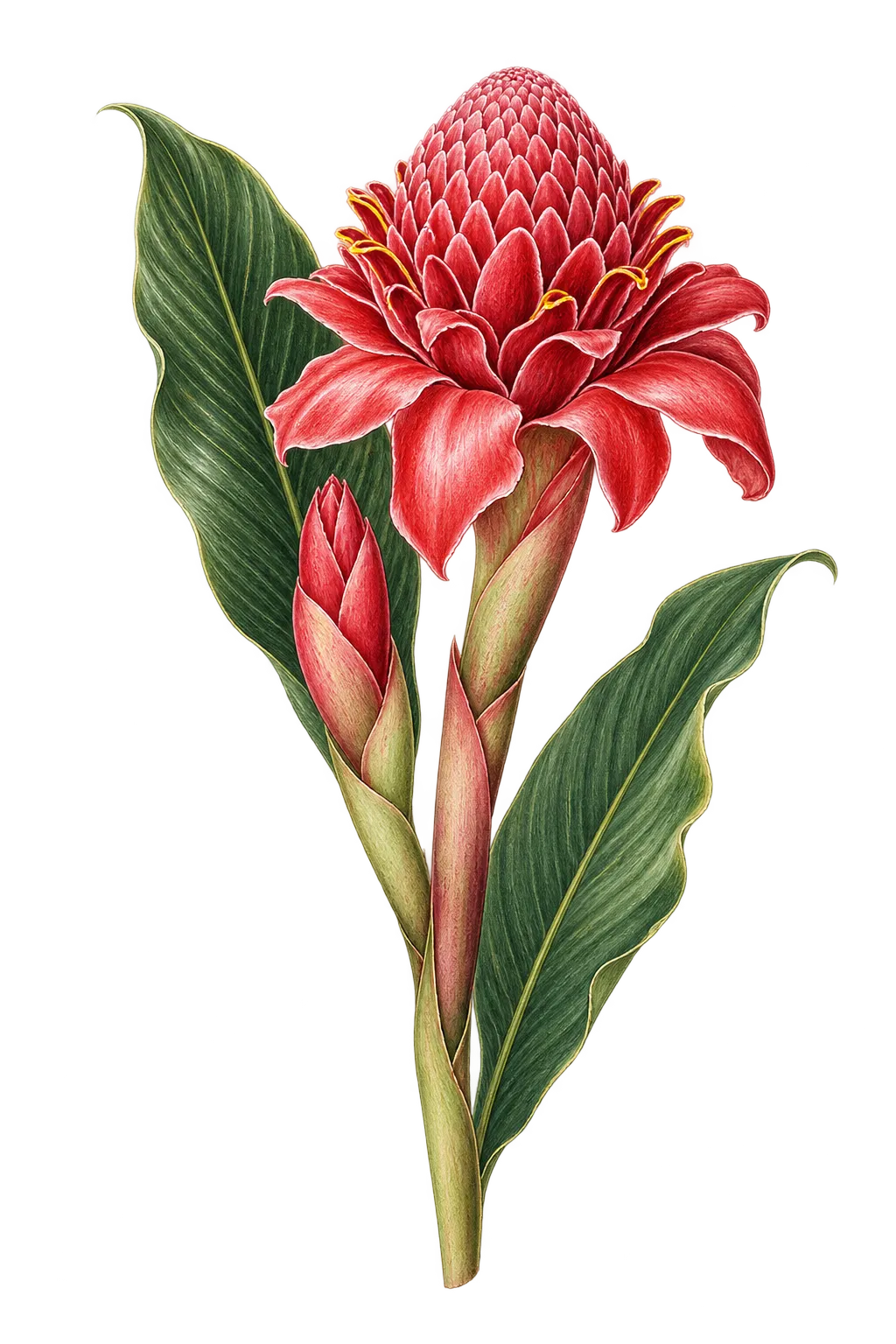
Flower clusters commonly rise separately from the rhizome on stalks clothed in scale-like sheaths. Closely overlapping bracts surround the individual flowers. A conspicuous lip is formed from modified sterile stamens, and an elongated appendage on the anther wraps around the slender style. The fruits are capsules that split open, exposing black seeds with a pale covering called an aril. Flora of China: Zingiber, volume24 p.323
Native range
Kew places the genus across tropical and subtropical Asia, including the Indian subcontinent, China, Japan, Southeast Asia and New Guinea. This broad range belongs to the genus collectively; individual species occupy much smaller areas. Kew POWO: Zingiber
Ecological relationships
One studied species, Zingiber densissimum in Yunnan, is pollinated by Macropis hedini and Amegilla zonata bees. They contact different flower surfaces while reaching nectar, demonstrating one species-specific interaction within this diverse genus. Fan, Kress and Li, 2015: Secondary pollen presentation in Zingiber densissimum
Botanical sources
- Kew POWO: Zingiber
- Flora of China: Zingiber, volume24 p.323
- Flora of China: Zingiber officinale
- Fan, Kress and Li, 2015: Secondary pollen presentation in Zingiber densissimum
Reviewed 2026-10-11. Seasonal development varies with location and growing conditions.